
Bicolor-spined Porcupine
Coendou bicolor
Red List assessment
Least Concernon the IUCN Red List
- EXExtinct
- EWExtinct in the Wild
- CRCritically Endangered
- ENEndangered
- VUVulnerable
- NTNear Threatened
- LCLeast Concern
The Bicolor-spined Porcupine is recorded in 6 countries across South America. The IUCN Red List assesses the Bicolor-spined Porcupine as Least Concern. No precise global population estimate exists, but the species is considered common within suitable habitat; overall population trend is believed to be stable to slightly declining due to habitat loss
- Family
- Erethizontidae
- Order
- Rodentia
- Genus
- Coendou
- Countries recorded
- 6
- Continents
- South America
- Red List category
- Least Concern
- Data updated
- August 9, 2026
What is the Bicolor-spined Porcupine?
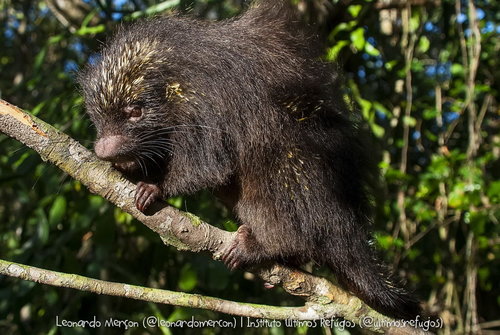
The bicolor-spined porcupine is a medium-sized, arboreal New World porcupine native to the tropical forests of the Amazon Basin. It is named for its distinctive two-toned spines, typically dark at the base and pale at the tip. This nocturnal, slow-moving rodent spends most of its life in trees, using its prehensile tail for climbing. It is a lesser-known member of the Erethizontidae family, remarkable for its quill-based defense system unique among South American mammals.
Where does the Bicolor-spined Porcupine live?
Amazon Basin countries including Peru, Bolivia, Brazil, Ecuador, Colombia, and Venezuela
Distributed across the western and central Amazon Basin, spanning Peru, Bolivia, Brazil, Ecuador, Colombia, and parts of Venezuela. Its range is closely tied to the extent of contiguous tropical forest in these regions.
Altitude and depth
Typically found from lowland forests up to around 1000-1500 meters elevation, occasionally higher in Andean foothill forests
Seasonal movements
No significant migratory behavior or hibernation; activity levels may vary slightly with wet and dry season food availability but the species remains active year-round
Habitat of the Bicolor-spined Porcupine
Primarily found in humid tropical and subtropical lowland forests, including primary and secondary rainforest with dense canopy cover. Also inhabits forest edges and riparian zones with abundant vegetation for foraging and climbing.
Adaptations to its environment
Possesses a prehensile tail and specialized grasping feet for arboreal locomotion in dense forest canopy. Sharp, barbed quills provide defense against predators, while nocturnal habits reduce exposure to daytime predators and heat.
Conservation status and numbers
Listed as Least Concern (LC) by the IUCN due to its wide distribution across the Amazon Basin and presumed large population, though localized declines from habitat loss are a concern in some areas
Estimated population
No precise global population estimate exists, but the species is considered common within suitable habitat; overall population trend is believed to be stable to slightly declining due to habitat loss
What threatens the Bicolor-spined Porcupine?
Deforestation and habitat fragmentation from logging, agriculture, and cattle ranching represent the primary threats. Hunting for bushmeat in some regions and incidental capture also pose localized risks.
Diseases and parasites
Specific studies on diseases are limited, but like other rodents it may host external parasites such as ticks and mites, as well as internal parasites including nematodes
What is being done to protect it?
Benefits indirectly from protected areas and national parks within the Amazon Basin, such as Manu National Park in Peru. No species-specific conservation programs are currently in place given its LC status.
Recommended actions
Continued protection of intact Amazonian forest habitat, monitoring of population trends in areas facing deforestation pressure, and further taxonomic and ecological research to clarify subspecies status and distribution.
What the Bicolor-spined Porcupine looks like
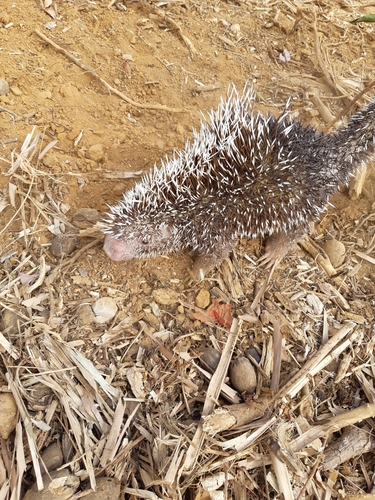
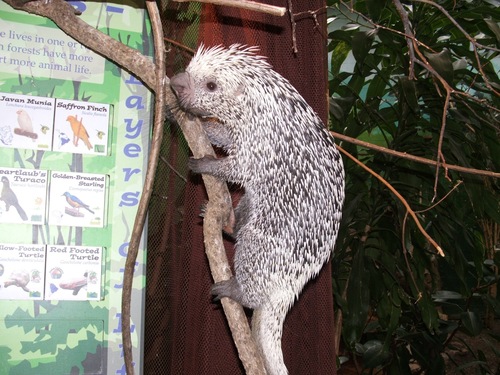
Covered in dense, sharp quills that are typically dark brown or blackish at the base with pale yellowish or whitish tips, giving a distinctive bicolored appearance. The face and underparts often have softer fur mixed with shorter spines, and the tail is long, muscular, and prehensile with a bare grasping tip.
Size
Body length typically ranges from 30-50 cm, with a prehensile tail adding an additional 25-40 cm
Weight
Adults typically weigh between 1.5 and 3.5 kg, with limited evidence of significant sexual size difference
Distinctive features
Distinguished from other Coendou species primarily by its characteristic two-toned quill coloration and specific quill length and density patterns. Body size and skull morphology also help differentiate it from closely related sympatric porcupine species.
Behaviour and diet of the Bicolor-spined Porcupine
Generally solitary, coming together only briefly for mating; individuals maintain separate home ranges within forest canopy
When it is active
Strictly nocturnal, resting in tree hollows or dense foliage during the day and becoming active to forage after dusk
Diet
Herbivorous, feeding primarily on leaves, fruits, bark, and occasionally flowers found in the forest canopy
Communication
Communicates primarily through scent marking and limited vocalizations such as grunts or squeaks, along with quill-rattling as a warning display when threatened
Interactions with other species
Predators include large forest raptors, felids such as ocelots and jaguars, and occasionally large snakes, though quills provide substantial defense. Competes with other arboreal folivores for food resources within its forest habitat.
Role in its ecosystem
Plays a role in seed dispersal and vegetation pruning within Amazonian forest ecosystems through its folivorous and frugivorous feeding habits
Reproduction and lifecycle
Breeding can occur year-round in tropical habitats, with gestation lasting approximately 150-210 days typical of erethizontid porcupines. Litter size is usually a single offspring, occasionally twins.
Raising the young
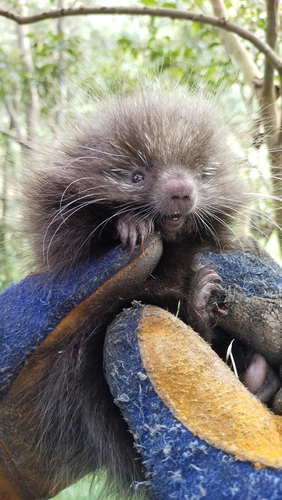
The mother provides sole care for the young, nursing and protecting the offspring until it is capable of independent climbing and foraging, typically over several months
Maturity and lifespan
Sexual maturity is typically reached around 1-2 years of age; lifespan in the wild is estimated at up to 10-12 years, with slightly longer lifespans possible in captivity
Taxonomy and naming of the Bicolor-spined Porcupine
Classification
Class Mammalia > Order Rodentia > Family Erethizontidae > Genus Coendou > Species Coendou bicolor
Subspecies
Several subspecies have been proposed historically, including C. b. bicolor and C. b. sinesis, though taxonomic status of subspecies remains debated and is not widely settled in current literature
Scientific synonyms
Sphiggurus bicolor; formerly classified under genus Sphiggurus before taxonomic revision placed it in Coendou
What research says
Recent studies
Recent taxonomic studies using molecular genetics have helped clarify relationships within the genus Coendou and refine species boundaries among previously conflated South American porcupine taxa
Compared with similar species
Similar to other Coendou species such as Coendou prehensilis, but distinguished by its distinctive bicolored quill pattern and generally smaller body size compared to the Brazilian porcupine
The Bicolor-spined Porcupine and people
Despite popular belief, porcupines cannot shoot their quills; they rely on contact-based defense. The bicolor-spined porcupine's prehensile tail allows it to hang securely from branches while foraging, freeing its hands for feeding.
Where and how to see it
Best observed at night using a spotlight or headlamp while searching tree canopies in undisturbed Amazonian rainforest, particularly in protected reserves in Peru or Ecuador. Guided night walks in areas like the Tambopata region increase chances of sighting.
Risks to humans
No notable risk to humans beyond potential injury from quills if handled or approached carelessly
Human uses
Occasionally hunted for bushmeat by local indigenous communities in parts of its range, though it is not a major target species commercially
Countries where the Bicolor-spined Porcupine is recorded
The 6 countries named in the range description of its IUCN Red List assessment.
Questions about the Bicolor-spined Porcupine
Where does the Bicolor-spined Porcupine live?
The Bicolor-spined Porcupine is recorded in Bolivia, Brazil, Colombia, Ecuador and Peru, among 6 countries in total across South America. These countries come from the range description of its IUCN Red List assessment, and they are what place the species on the interactive map.
Is the Bicolor-spined Porcupine endangered?
The IUCN Red List assesses the Bicolor-spined Porcupine as Least Concern. The species is widespread and abundant enough not to qualify for any threatened category. It does not mean the species is safe forever, only that nothing in the current data raises an alarm.
How many are left in the wild?
No precise global population estimate exists, but the species is considered common within suitable habitat; overall population trend is believed to be stable to slightly declining due to habitat loss This figure comes from the species assessment on the IUCN Red List; population estimates for wild mammals are ranges, not counts, and are revised at each assessment.
What habitat does the Bicolor-spined Porcupine live in?
Primarily found in humid tropical and subtropical lowland forests, including primary and secondary rainforest with dense canopy cover.
What is the scientific name of the Bicolor-spined Porcupine?
The Bicolor-spined Porcupine is Coendou bicolor, in the family Erethizontidae, order Rodentia.
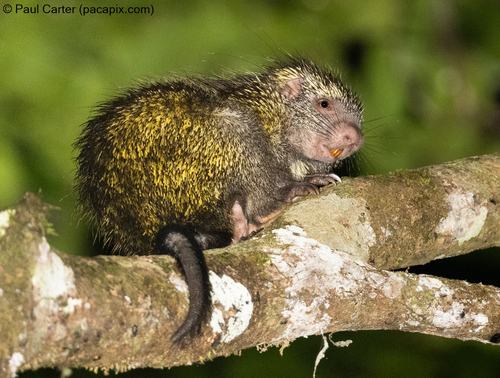
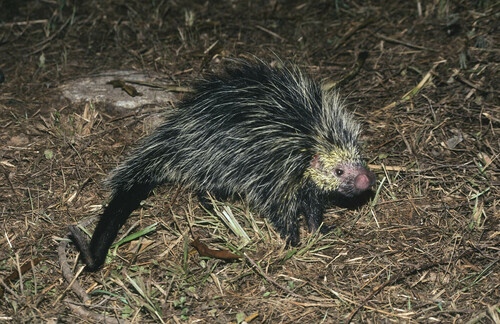
Other species in the genus Coendou
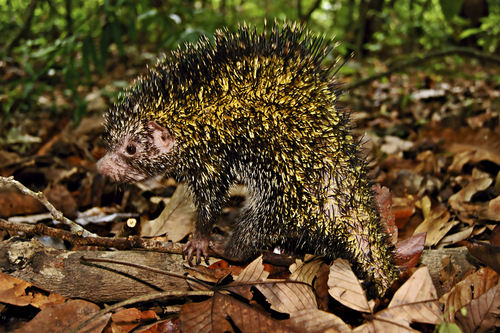
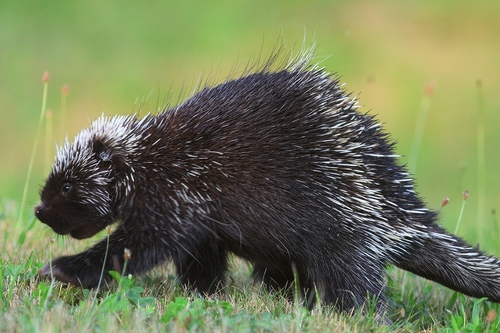
Other species in the family Erethizontidae
Species that share its range
Sources
Conservation status, range description and population estimate come from the IUCN Red List assessment for Coendou bicolor. Countries are derived from that range description, not from a mapped country list. Last refreshed on .
The distribution map is drawn from the IUCN Red List spatial data compiled in 2008. IUCN (International Union for Conservation of Nature)