
Beluga Whale
Delphinapterus leucas
Red List assessment
Least Concernon the IUCN Red List
- EXExtinct
- EWExtinct in the Wild
- CRCritically Endangered
- ENEndangered
- VUVulnerable
- NTNear Threatened
- LCLeast Concern
The Beluga Whale is recorded in 5 countries across Europe and North America. The IUCN Red List assesses the Beluga Whale as Least Concern. Global population estimated at 150,000-200,000 individuals, with overall trend considered stable, though some regional populations like Cook Inlet (fewer than 350 individuals) are declining.
- Family
- Monodontidae
- Order
- Cetartiodactyla
- Genus
- Delphinapterus
- Countries recorded
- 5
- Continents
- Europe and North America
- Red List category
- Least Concern
- Data updated
- August 9, 2026
What is the Beluga Whale?
The beluga whale is a medium-sized toothed whale renowned for its all-white adult coloration and highly flexible neck. It inhabits Arctic and sub-Arctic waters, often forming large pods and undertaking seasonal migrations tied to sea ice. Known as the 'canary of the sea' for its extensive vocal repertoire, it is one of the most vocally active cetaceans.
Where does the Beluga Whale live?
Arctic and sub-Arctic waters of Russia, Canada, USA (Alaska), Greenland, and Norway
Circumpolar distribution across the Arctic, including the coasts of Alaska, Canada (Hudson Bay, St. Lawrence Estuary), Greenland, Svalbard (Norway), and Russia (White Sea, Sea of Okhotsk). Some populations are resident in specific estuaries while others migrate seasonally with ice cover.
Altitude and depth
Typically dives to 20-300m, but capable of dives exceeding 700m; mostly forages in shallow coastal and shelf waters
Seasonal movements
Many populations migrate seasonally, moving to river estuaries and coastal areas in summer for calving and molting, then dispersing to deeper offshore or ice-associated waters in winter.
Habitat of the Beluga Whale
Coastal Arctic and sub-Arctic waters, estuaries, bays, and river mouths; also found in offshore pack ice zones during certain seasons. Prefers shallow, cold waters but can dive to significant depths in open ocean areas.
Adaptations to its environment
Lacks a dorsal fin, an adaptation for swimming under ice; possesses a thick blubber layer (up to 40% of body weight) for insulation in freezing waters. Its flexible neck vertebrae allow head movement for navigating ice floes, and echolocation aids in finding breathing holes.
Conservation status and numbers
Least Concern (LC) globally according to IUCN, though several regional subpopulations (e.g., Cook Inlet) are classified as Critically Endangered or Endangered due to localized threats and small population sizes.
Estimated population
Global population estimated at 150,000-200,000 individuals, with overall trend considered stable, though some regional populations like Cook Inlet (fewer than 350 individuals) are declining.
What threatens the Beluga Whale?
Climate change and sea ice loss, industrial noise and habitat disturbance, pollution (including heavy metals and PCBs), historical overhunting, and entanglement in fishing gear.
Diseases and parasites
Susceptible to various parasites including nematodes and trematodes, as well as diseases such as morbillivirus; pollution-related health issues like tumors have been documented in some populations (e.g., St. Lawrence Estuary).
What is being done to protect it?
Protected under various national laws including the US Marine Mammal Protection Act; subject to co-management agreements with Indigenous communities in Canada and Alaska; some populations protected under CITES Appendix II.
Recommended actions
Strengthen protections for critically endangered subpopulations, reduce industrial noise and shipping traffic in critical habitats, monitor and mitigate pollution sources, and continue collaborative research with Indigenous knowledge holders.
What the Beluga Whale looks like
Adults are entirely white or creamy-white, lacking a dorsal fin but possessing a distinct dorsal ridge. Calves are born grey or brown and lighten with age, reaching full white coloration by around 5-8 years.
Size
Adults typically measure 3-5.5 meters in length, with males generally larger than females
Weight
Weight ranges from 500-1,600 kg, with males typically heavier (up to 1,600 kg) than females (up to 1,200 kg)
Distinctive features
The combination of pure white coloration, absence of a dorsal fin, and a rounded, bulbous forehead (melon) distinguishes it from other cetaceans, including its close relative the narwhal.
Differences between males and females
Males are generally larger and heavier than females, with more pronounced melon development and thicker neck musculature in mature males
Behaviour and diet of the Beluga Whale
Highly social, forming pods that can range from a few individuals to hundreds, often segregated by age and sex; exhibits fission-fusion social structure with fluid group membership.
When it is active
Active throughout day and night with no strict diurnal or nocturnal pattern; activity often influenced by tidal cycles, prey availability, and ice conditions.
Diet
Carnivorous, feeding on a diverse diet including fish (salmon, capelin, cod, herring), squid, octopus, crustaceans, and benthic invertebrates depending on regional prey availability.
How it feeds and hunts
Uses echolocation extensively to locate prey in dark or turbid waters; often forages near the seafloor and can suck prey into its mouth using powerful cheek muscles.
Communication
Extremely vocal, producing a wide array of clicks, whistles, chirps, and pulsed calls used for echolocation, social communication, and individual recognition; facial expressions via melon shape changes also play a role.
Interactions with other species
Natural predators include killer whales and polar bears (especially calves and weakened individuals); competes with other marine mammals for fish resources in shared habitats.
Role in its ecosystem
Functions as a mid-to-upper trophic level predator in Arctic marine ecosystems, helping regulate fish and invertebrate populations while serving as prey for apex predators like orcas.
Reproduction and lifecycle
Breeding occurs mainly in spring, with gestation lasting approximately 14-15 months; females typically give birth to a single calf every 2-3 years.
Raising the young
Calves are nursed for up to 2 years and remain closely associated with their mothers during this period, learning foraging and social behaviors; care is primarily maternal.
Maturity and lifespan
Sexual maturity reached around 4-9 years for females and 7-9 years for males; lifespan can reach 35-50 years in the wild, with some estimates suggesting even longer based on age-layering studies.
Taxonomy and naming of the Beluga Whale
Classification
Class Mammalia > Order Cetartiodactyla > Family Monodontidae > Genus Delphinapterus > Species D. leucas
Subspecies
No universally recognized subspecies, though some regional populations (e.g., Cook Inlet, St. Lawrence Estuary, Svalbard) are managed as distinct stocks due to genetic and ecological differentiation.
Scientific synonyms
Delphinus leucas (Pallas, 1776), original combination before reclassification into genus Delphinapterus
What research says
Recent studies
Recent studies have used satellite tagging and passive acoustic monitoring to better understand migration patterns and the impacts of increasing Arctic shipping traffic on beluga behavior and stress levels.
Genome and DNA
Diploid chromosome number is 42; genome sequencing has been conducted to study population genetics and adaptation to Arctic environments.
Compared with similar species
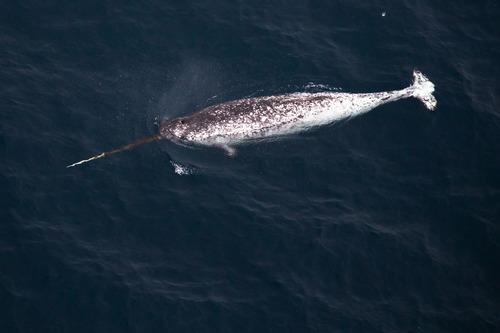
Closely related to the narwhal, sharing family Monodontidae; unlike narwhals, belugas lack a tusk and have a more rounded head, distinguishing the two species despite similar body size and Arctic habitat.
The Beluga Whale and people
Belugas can mimic human speech patterns and have been recorded producing sounds resembling human voices; they are one of the few cetaceans capable of turning their heads due to unfused neck vertebrae. Their nickname 'sea canary' stems from their diverse and audible vocalizations.
Where and how to see it
Best observed in summer months (June-September) in locations such as the Churchill River estuary in Canada, the St. Lawrence Estuary in Quebec, or Cook Inlet in Alaska, where they gather in accessible coastal waters.
Risks to humans
No notable risk to humans; belugas are generally non-aggressive and curious toward humans, though caution should be exercised to avoid disturbing wild populations.
Human uses
Historically and culturally important to Arctic Indigenous communities for subsistence hunting, providing meat, blubber (muktuk), and materials for tools; also displayed in aquariums for education and research purposes.
Myths and legends
In Inuit culture, belugas hold significant spiritual and subsistence importance, often featured in traditional stories and considered a vital resource for food, tools, and clothing throughout history.
Countries where the Beluga Whale is recorded
The 5 countries named in the range description of its IUCN Red List assessment.
Questions about the Beluga Whale
Where does the Beluga Whale live?
The Beluga Whale is recorded in Canada, Greenland, Norway, Russia and United States across Europe and North America. These countries come from the range description of its IUCN Red List assessment, and they are what place the species on the interactive map.
Is the Beluga Whale endangered?
The IUCN Red List assesses the Beluga Whale as Least Concern. The species is widespread and abundant enough not to qualify for any threatened category. It does not mean the species is safe forever, only that nothing in the current data raises an alarm.
How many are left in the wild?
Global population estimated at 150,000-200,000 individuals, with overall trend considered stable, though some regional populations like Cook Inlet (fewer than 350 individuals) are declining. This figure comes from the species assessment on the IUCN Red List; population estimates for wild mammals are ranges, not counts, and are revised at each assessment.
What habitat does the Beluga Whale live in?
Coastal Arctic and sub-Arctic waters, estuaries, bays, and river mouths; also found in offshore pack ice zones during certain seasons.
What is the scientific name of the Beluga Whale?
The Beluga Whale is Delphinapterus leucas, in the family Monodontidae, order Cetartiodactyla.
Other species in the family Monodontidae
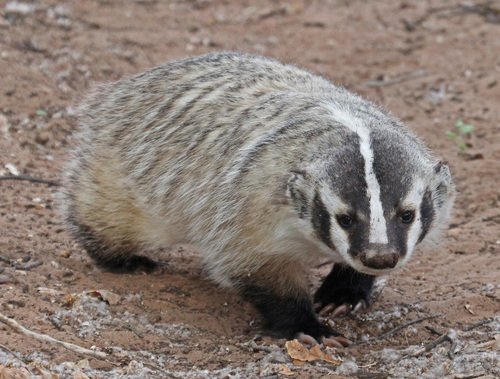
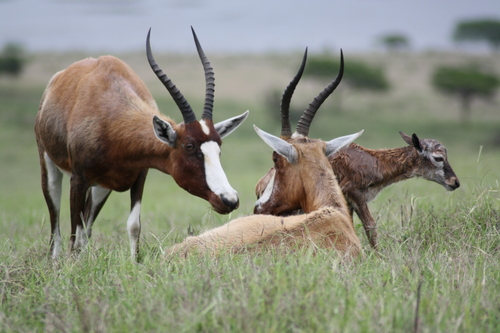
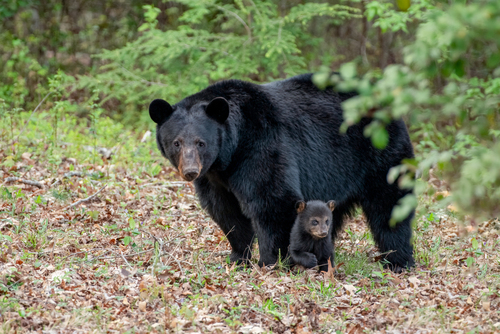
Species that share its range
Sources
Conservation status, range description and population estimate come from the IUCN Red List assessment for Delphinapterus leucas. Countries are derived from that range description, not from a mapped country list. Last refreshed on .
The distribution map is drawn from the IUCN Red List spatial data compiled in 2012. IUCN (International Union for Conservation of Nature)