
Argentine Tuco-tuco
Ctenomys argentinus
Red List assessment
Near Threatenedon the IUCN Red List
- EXExtinct
- EWExtinct in the Wild
- CRCritically Endangered
- ENEndangered
- VUVulnerable
- NTNear Threatened
- LCLeast Concern
The Argentine Tuco-tuco is recorded in one country, Argentina across South America. The IUCN Red List assesses the Argentine Tuco-tuco as Near Threatened. Population size is not precisely quantified, but is believed to be declining due to habitat fragmentation; considered locally common in remaining suitable habitat patches
- Family
- Ctenomyidae
- Order
- Rodentia
- Genus
- Ctenomys
- Countries recorded
- 1
- Continents
- South America
- Red List category
- Near Threatened
- Data updated
- August 9, 2026
What is the Argentine Tuco-tuco?
Ctenomys argentinus is a subterranean rodent endemic to northeastern Argentina, belonging to the diverse tuco-tuco genus known for its fossorial lifestyle. It inhabits sandy soils along river basins where it constructs extensive burrow systems. This species is notable for its restricted distribution and specialized adaptations to life underground, making it an interesting subject for studies on rodent diversification in South America.
Where does the Argentine Tuco-tuco live?
Northeastern Argentina, primarily in the Chaco, Corrientes, and Formosa provinces
Endemic to northeastern Argentina, found in the provinces of Chaco, Corrientes, and Formosa, within the Gran Chaco biogeographic region of South America.
Altitude and depth
Lowland habitats typically below 200m elevation; burrows extend 20-50cm below the surface
Seasonal movements
No migration; some seasonal variation in above-ground activity linked to soil moisture and temperature, with increased burrowing activity during cooler months to avoid heat stress
Habitat of the Argentine Tuco-tuco
Sandy and semi-arid soils in the Chaco ecoregion, often associated with riverbanks, grasslands, and areas with loose, easily excavated substrate near the Paraná and Paraguay river systems.
Adaptations to its environment
Possesses powerful forelimbs and enlarged claws for digging, small eyes and ears adapted to reduce injury underground, and a cylindrical body shape suited for burrow navigation. Its incisors are used for both feeding and excavation, a common trait among ctenomyids.
Conservation status and numbers
Near Threatened (NT) according to IUCN, due to a restricted geographic range and ongoing habitat degradation from agricultural expansion, though the species is not yet facing severe population decline.
Estimated population
Population size is not precisely quantified, but is believed to be declining due to habitat fragmentation; considered locally common in remaining suitable habitat patches
What threatens the Argentine Tuco-tuco?
Habitat loss from agricultural conversion, particularly soybean and cattle farming, alongside soil compaction and flooding from river management activities.
Diseases and parasites
Specific data limited, but likely susceptible to ectoparasites such as mites and fleas common to burrowing rodents
What is being done to protect it?
Limited specific conservation programs exist; some populations may benefit indirectly from protected areas within the Argentine Chaco, though targeted conservation action for this species is minimal.
Recommended actions
Increased habitat surveys to determine population status, protection of remaining sandy soil habitats along river systems, and inclusion in regional land-use planning to limit agricultural encroachment.
What the Argentine Tuco-tuco looks like
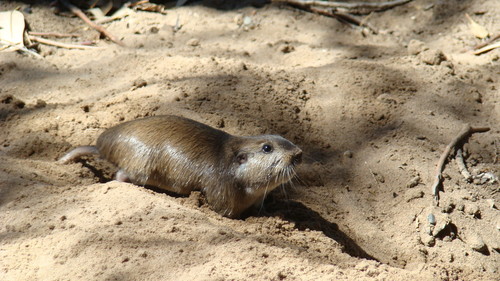
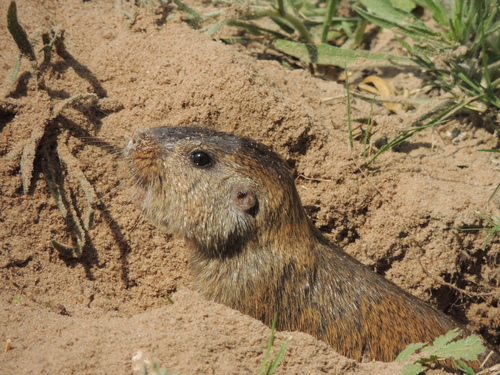
Dense, soft fur ranging from grayish-brown to reddish-brown dorsally, with lighter underparts. The body is cylindrical and robust, with a short tail, small eyes, and reduced external ears typical of fossorial rodents.
Size
Body length approximately 18-22 cm, with a short tail of 6-8 cm
Weight
Approximately 100-200 grams, with males typically slightly larger than females
Distinctive features
Distinguished from other Ctenomys species primarily through cranial morphology, karyotype differences, and specific geographic range rather than obvious external features, as many tuco-tuco species are cryptic.
Differences between males and females
Males are generally slightly larger and heavier than females, though the difference is not extreme
Behaviour and diet of the Argentine Tuco-tuco
Primarily solitary, with individuals maintaining separate burrow systems and displaying territorial behavior; aggressive interactions occur when territories overlap
When it is active
Primarily diurnal to crepuscular, though largely restricted to underground activity within burrow systems
Diet
Herbivorous, feeding on roots, tubers, stems, and grasses found near its burrow systems
Communication
Communicates through vibrational signals transmitted via burrow walls, low-frequency vocalizations, and scent marking to establish territorial boundaries
Interactions with other species
Preyed upon by raptors, foxes, and snakes when above ground; burrows may be used secondarily by other small vertebrates and invertebrates after abandonment
Role in its ecosystem
Plays a role as an ecosystem engineer through soil turnover via burrowing activity, which affects soil aeration, nutrient cycling, and plant community structure in its habitat
Reproduction and lifecycle
Breeding season likely occurs during spring/summer months; gestation lasts approximately 100-120 days, consistent with other Ctenomys species, with litter sizes typically ranging from 1-4 pups
Raising the young
Females provide primary care for altricial young within the burrow, nursing and protecting them until weaning, which occurs after several weeks
Maturity and lifespan
Sexual maturity likely reached around 6-12 months; lifespan estimated at 2-4 years in the wild, potentially longer in captivity
Taxonomy and naming of the Argentine Tuco-tuco
Classification
Class Mammalia > Order Rodentia > Family Ctenomyidae > Genus Ctenomys > Species Ctenomys argentinus
What research says
Recent studies
Molecular and karyotypic studies have helped clarify the taxonomic boundaries of C. argentinus relative to other Chaco-region Ctenomys species, contributing to understanding of speciation in this diverse genus
Genome and DNA
Ctenomys species are known for remarkable karyotype diversity across the genus; specific chromosome number for C. argentinus has been documented in taxonomic studies distinguishing it from closely related species
Compared with similar species
Similar to other Ctenomys species in the Chaco region such as C. dorbignyi, distinguished mainly through genetic and cranial characteristics rather than obvious external morphology, reflecting the extensive cryptic diversity within the genus
The Argentine Tuco-tuco and people
The genus Ctenomys is one of the most chromosomally diverse mammalian genera, with karyotypes varying dramatically even between closely related species. Tuco-tucos get their name from their distinctive repetitive vocalization that sounds like 'tuco-tuco', audible even from within their burrows.
Where and how to see it
Observation is challenging due to the fossorial nature of the species; best chances involve visiting sandy grassland habitats in Chaco province during early morning or late afternoon when individuals may be near burrow entrances.
Risks to humans
No notable risk to humans
Countries where the Argentine Tuco-tuco is recorded
The 1 countries named in the range description of its IUCN Red List assessment.
Questions about the Argentine Tuco-tuco
Where does the Argentine Tuco-tuco live?
The Argentine Tuco-tuco is recorded in Argentina across South America. These countries come from the range description of its IUCN Red List assessment, and they are what place the species on the interactive map.
Is the Argentine Tuco-tuco endangered?
The IUCN Red List assesses the Argentine Tuco-tuco as Near Threatened. The species does not qualify as threatened today, but it is close to the thresholds and likely to cross them soon. It is the category that most often changes at the next assessment.
How many are left in the wild?
Population size is not precisely quantified, but is believed to be declining due to habitat fragmentation; considered locally common in remaining suitable habitat patches This figure comes from the species assessment on the IUCN Red List; population estimates for wild mammals are ranges, not counts, and are revised at each assessment.
What habitat does the Argentine Tuco-tuco live in?
Sandy and semi-arid soils in the Chaco ecoregion, often associated with riverbanks, grasslands, and areas with loose, easily excavated substrate near the Paraná and Paraguay river systems.
What is the scientific name of the Argentine Tuco-tuco?
The Argentine Tuco-tuco is Ctenomys argentinus, in the family Ctenomyidae, order Rodentia.
Other species in the genus Ctenomys

Other species in the family Ctenomyidae
Species that share its range
Sources
Conservation status, range description and population estimate come from the IUCN Red List assessment for Ctenomys argentinus. Countries are derived from that range description, not from a mapped country list. Last refreshed on .
The distribution map is drawn from the IUCN Red List spatial data compiled in 2019. IUCN SSC Small Mammal Specialist Group