
Small Luzon Apomys
Apomys microdon
Red List assessment
Least Concernon the IUCN Red List
- EXExtinct
- EWExtinct in the Wild
- CRCritically Endangered
- ENEndangered
- VUVulnerable
- NTNear Threatened
- LCLeast Concern
The Small Luzon Apomys is recorded in one country, Philippines across Asia. The IUCN Red List assesses the Small Luzon Apomys as Least Concern. No precise population estimate exists.
- Family
- Muridae
- Order
- Rodentia
- Genus
- Apomys
- Countries recorded
- 1
- Continents
- Asia
- Red List category
- Least Concern
- Data updated
- August 9, 2026
What is the Small Luzon Apomys?
Apomys microdon is a small Philippine endemic forest mouse belonging to the genus Apomys, a group of rodents found exclusively in the Philippines. The species name 'microdon' (meaning 'small-toothed') reflects its relatively reduced dentition compared to some congeners. It inhabits montane and submontane forests of Luzon and plays an important ecological role as a seed disperser and prey item in Philippine forest ecosystems. It is considered remarkable as part of an impressive radiation of endemic Philippine murids that evolved in isolation across the archipelago.
Where does the Small Luzon Apomys live?
Endemic to Luzon Island, Philippines, particularly in the Cordillera Central and Sierra Madre mountain ranges of northern and central Luzon.
Restricted entirely to Luzon Island in the Philippines. Its range is centered in the major mountain systems including the Cordillera Central and the Sierra Madre ranges of northern and central Luzon.
Altitude and depth
Typically recorded between approximately 800 and 2,500 meters above sea level, with optimal occurrence in montane forest zones above 1,000 m.
Seasonal movements
No significant seasonal migrations are documented. Activity patterns likely remain relatively stable year-round, though reproductive activity may peak during particular wet or dry season phases typical of Philippine montane ecosystems.
Habitat of the Small Luzon Apomys
Primary and secondary montane and submontane tropical forests, including mossy and dipterocarp forest types. It favors areas with dense ground cover, leaf litter, and understory vegetation, often associated with well-preserved forest patches at mid to higher elevations.
Adaptations to its environment
Possesses reduced, fine-cusped dentition adapted for processing a range of forest floor food items including seeds and soft invertebrates. Its compact, agile body is well-suited to navigating dense forest undergrowth and root systems. Soft, insulating fur is consistent with cooler montane habitats.
Conservation status and numbers
Listed as Least Concern (LC) on the IUCN Red List, as the species is presumed to have a sufficiently wide distribution across Luzon's mountain ranges and no evidence of rapid population decline meeting threat thresholds, despite ongoing deforestation pressures.
Estimated population
No precise population estimate exists. The population trend is assumed to be slowly declining due to ongoing habitat loss, though no quantitative assessment has been published.
What threatens the Small Luzon Apomys?
Primary threats include deforestation and habitat degradation from agricultural expansion, logging (legal and illegal), slash-and-burn farming, and infrastructure development in upland Luzon. Introduced predators such as feral cats and rats may also pose localized pressure.
Diseases and parasites
Specific disease and parasite data for this species are undocumented; it likely harbors ectoparasites (mites, fleas, ticks) and endoparasites typical of Philippine forest rodents.
What is being done to protect it?
Portions of its range overlap with protected areas in Luzon such as the Northern Sierra Madre Natural Park (one of the largest protected areas in the Philippines) and sections of the Cordillera mountain protected areas. Philippine wildlife law (Republic Act 9147) provides broad protection to endemic wildlife.
Recommended actions
Strengthening enforcement of forest protection laws in upland Luzon, expanding and connecting protected area networks across the Cordillera and Sierra Madre, conducting systematic population surveys to assess abundance and distribution, and promoting community-based forest management are priority actions.
What the Small Luzon Apomys looks like
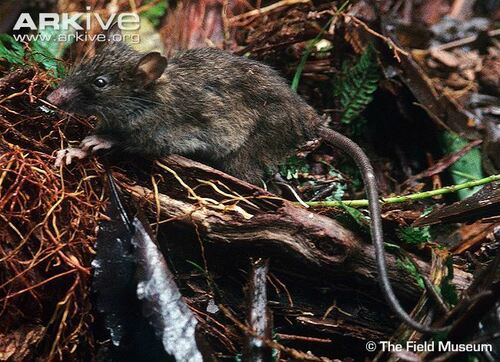
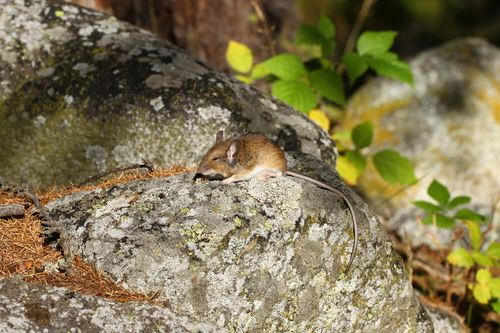
Dorsal fur is typically warm brown to grayish-brown, often with slightly darker midline coloration. The ventral surface is paler, ranging from whitish-gray to buffy white. The tail is bicolored (darker above, paler below) and lightly scaled. Eyes are moderately large and ears are rounded.
Size
Total body length approximately 100–140 mm; tail length roughly 95–135 mm (approximately equal to or slightly shorter than body length); hind foot approximately 22–26 mm.
Weight
Estimated body mass approximately 20–40 grams; precise data for this species are limited.
Distinctive features
Distinguished from larger congeners such as Apomys magnus by its notably smaller body size and reduced molar cusp dimensions (reflected in the species name 'microdon'). It can be differentiated from Apomys datae and related species by skull morphology, dental proportions, and geographic range.
Differences between males and females
Sexual dimorphism is minimal or absent, as is typical for the genus Apomys; males and females are similar in size and coloration.
Behaviour and diet of the Small Luzon Apomys
Likely solitary or loosely social, as is typical of small forest murids. Individuals probably maintain individual home ranges with limited tolerance for conspecifics outside of breeding periods.
When it is active
Primarily nocturnal or crepuscular, foraging on the forest floor and in low vegetation during nighttime hours and at dusk and dawn to minimize predation risk.
Diet
Omnivorous, consuming seeds, fruits, fungi, leaf material, and invertebrates such as insects, worms, and other small arthropods encountered in leaf litter and soil. Dietary composition likely shifts seasonally with resource availability.
How it feeds and hunts
Forages by searching through leaf litter, soil, and root systems using its vibrissae (whiskers) and olfaction to detect seeds and invertebrates. No active pursuit hunting; opportunistic gleaning of invertebrate prey.
Communication
Likely uses ultrasonic vocalizations for intraspecific communication and mate attraction, as well as scent marking via urine and glandular secretions to establish territories. Tactile communication plays a role in mother–offspring bonding.
Interactions with other species
Serves as prey for endemic Philippine raptors such as the Philippine Eagle-Owl and various serpent-eagles, as well as snakes and small carnivorous mammals. Competes with other rodent species (including other Apomys species) for food resources in sympatric zones.
Role in its ecosystem
Plays an important role as a seed disperser and seed predator in montane forest ecosystems. As a prey species, it contributes significantly to forest food webs, supporting populations of endemic predators.
Reproduction and lifecycle
Breeding biology is poorly documented. Like most murid rodents in tropical environments, it likely breeds throughout much of the year with potential peaks tied to seasonal resource abundance. Litter sizes are probably 2–5 young per birth.
Raising the young
As is typical for murids, the female provides primary parental care, nursing and protecting altricial (helpless at birth) young in a nest sheltered in ground cover or burrows. Young are weaned after approximately 3–4 weeks.
Maturity and lifespan
Sexual maturity is likely reached at approximately 2–3 months of age, consistent with other small murids. Lifespan in the wild is probably 1–2 years; captive longevity is unknown as the species is not kept in captivity.
Taxonomy and naming of the Small Luzon Apomys
Classification
Mammalia > Rodentia > Muridae > Apomys > Apomys microdon
Scientific synonyms
Originally described by Hollister in 1913; no widely recognized synonyms, though early Philippine rodent taxonomy underwent substantial revision in the 20th century.
What research says
Recent studies
Recent phylogenetic work on Philippine Apomys has used molecular data to redefine species boundaries within the genus, and some studies have investigated the biogeographic origins of the group as part of broader studies on Philippine mammal endemism. No major recent studies are dedicated exclusively to A. microdon.
Genome and DNA
Chromosome number and detailed genomic data are not well documented for this species. Phylogenetic studies using mitochondrial and nuclear markers have been used to clarify relationships within the genus Apomys.
Compared with similar species
Apomys microdon closely resembles other Luzon Apomys species but is distinguished by its smaller body size and reduced dentition relative to A. magnus (Large Luzon Apomys). It shares montane Luzon habitat with A. datae (Mt. Data Apomys) but differs in dental and cranial morphology. The genus Apomys as a whole represents a remarkable Philippine endemic radiation, analogous to the adaptive radiation of Rattus on other island systems.
The Small Luzon Apomys and people
The genus Apomys is entirely endemic to the Philippines, making these mice among the most geographically restricted rodent groups in the world. The species name 'microdon' literally means 'small-toothed' in Greek, reflecting its defining dental characteristic. Despite being a poorly studied forest mouse, A. microdon shares its island home with some of the world's most spectacular endemic wildlife, including the Philippine Eagle.
Where and how to see it
Best observed in the montane forests of the Cordillera Central (e.g., around Benguet, Mountain Province, or Ifugao) or the Sierra Madre range, using live-traps along forest trails during nighttime hours. Visits to protected areas such as the Northern Sierra Madre Natural Park offer the best chances of encountering intact small mammal communities.
Risks to humans
No notable risk to humans. Like all wild rodents, it may carry parasites or pathogens and should not be handled without appropriate precautions.
Countries where the Small Luzon Apomys is recorded
The 1 countries named in the range description of its IUCN Red List assessment.
Questions about the Small Luzon Apomys
Where does the Small Luzon Apomys live?
The Small Luzon Apomys is recorded in Philippines across Asia. These countries come from the range description of its IUCN Red List assessment, and they are what place the species on the interactive map.
Is the Small Luzon Apomys endangered?
The IUCN Red List assesses the Small Luzon Apomys as Least Concern. The species is widespread and abundant enough not to qualify for any threatened category. It does not mean the species is safe forever, only that nothing in the current data raises an alarm.
How many are left in the wild?
No precise population estimate exists. This figure comes from the species assessment on the IUCN Red List; population estimates for wild mammals are ranges, not counts, and are revised at each assessment.
What habitat does the Small Luzon Apomys live in?
Primary and secondary montane and submontane tropical forests, including mossy and dipterocarp forest types.
What is the scientific name of the Small Luzon Apomys?
The Small Luzon Apomys is Apomys microdon, in the family Muridae, order Rodentia.
Other species in the genus Apomys




Other species in the family Muridae
Sources
Conservation status, range description and population estimate come from the IUCN Red List assessment for Apomys microdon. Countries are derived from that range description, not from a mapped country list. Last refreshed on .
The distribution map is drawn from the IUCN Red List spatial data compiled in 2008. IUCN (International Union for Conservation of Nature)