
Mindanao Mossy Forest Apomys
Apomys hylocetes
Red List assessment
Least Concernon the IUCN Red List
- EXExtinct
- EWExtinct in the Wild
- CRCritically Endangered
- ENEndangered
- VUVulnerable
- NTNear Threatened
- LCLeast Concern
The Mindanao Mossy Forest Apomys is recorded in one country, Philippines across Asia. The IUCN Red List assesses the Mindanao Mossy Forest Apomys as Least Concern. No precise global population estimate exists.
- Family
- Muridae
- Order
- Rodentia
- Genus
- Apomys
- Countries recorded
- 1
- Continents
- Asia
- Red List category
- Least Concern
- Data updated
- August 9, 2026
What is the Mindanao Mossy Forest Apomys?
Apomys hylocetes is a small endemic forest mouse belonging to the Philippine-endemic genus Apomys, found exclusively in the montane mossy forests of Mindanao, the second-largest island in the Philippines. It is a member of the family Muridae and represents one of several morphologically similar but ecologically specialized Apomys species restricted to high-elevation forest habitats. The species epithet 'hylocetes' derives from Greek meaning 'forest dweller,' reflecting its strict association with dense, humid mossy forest. It is considered remarkable as part of the extraordinary radiation of Philippine endemic murids, which is among the most species-rich rodent assemblages in the world.
Where does the Mindanao Mossy Forest Apomys live?
Endemic to Mindanao island, Philippines, primarily in montane mossy forest zones of major mountain ranges such as Mt. Apo and the Central Mindanao Highlands.
Endemic to Mindanao island in the southern Philippines. Its range encompasses the major mountain massifs of Mindanao, including Mt. Apo (the highest peak in the Philippines at 2,954 m), Mt. Kitanglad, Mt. Hamiguitan, and associated mountain ranges in the Davao, Bukidnon, and Lanao del Sur provinces.
Altitude and depth
Primarily recorded from elevations between approximately 1,500 m and 2,900 m, with peak abundance in the mossy forest belt typically found between 1,800 m and 2,500 m above sea level.
Habitat of the Mindanao Mossy Forest Apomys
Strictly associated with montane mossy forests (also called cloud forests or upper montane forests), characterized by dense bryophyte and lichen cover on trees, high humidity, and persistent cloud immersion. These forests typically feature gnarled trees draped in thick moss, ferns, orchids, and rhododendrons. The species avoids disturbed habitats and agricultural margins.
Adaptations to its environment
As a forest-floor and understory dweller, it has well-developed vibrissae for navigating dense vegetation in low-light conditions and sensitive olfactory systems for locating food under leaf litter and moss. Its relatively dense fur provides insulation against the cool, moist conditions of high-altitude cloud forests. Like other Apomys, it likely has strong hindlimbs adapted for scrambling over mossy substrates and root systems.
Conservation status and numbers
Least Concern (LC) on the IUCN Red List. The species is assessed as LC because it is presumed to have a relatively stable population within its montane forest range, and because high-elevation mossy forests in Mindanao, while threatened, remain less degraded than lowland forests. No evidence of rapid population decline meeting threatened thresholds has been documented.
Estimated population
No precise global population estimate exists. The species is presumed to be moderately common within suitable high-elevation forest habitat, but population trend data are lacking. The population is considered potentially stable given ongoing IUCN LC status, though long-term declines are plausible given forest loss trends.
What threatens the Mindanao Mossy Forest Apomys?
The primary threats include deforestation and habitat degradation caused by agricultural encroachment (particularly the expansion of smallholder farming and plantation agriculture up mountain slopes), illegal logging, and conversion of forest to vegetable gardens at higher elevations. Climate change poses a long-term threat by shifting the altitudinal belt of suitable mossy forest upward, potentially compressing the available habitat. Mining activities in some mountain ranges of Mindanao also threaten forest integrity.
Diseases and parasites
No specific diseases or parasites have been formally documented for this species. As a forest rodent, it is likely host to ectoparasites (mites, fleas, ticks) and endoparasites (helminths) common to Philippine murids.
What is being done to protect it?
The species benefits from the protection of several key protected areas in Mindanao, including Mt. Apo Natural Park (a UNESCO World Heritage tentative-list site), Mt. Kitanglad Range Natural Park, and Mt. Hamiguitan Range Wildlife Sanctuary (a UNESCO World Heritage Site). The Philippine Wildlife Resources Conservation and Protection Act (Republic Act 9147) provides general legal protection for Philippine wildlife.
Recommended actions
Priority actions include strengthening enforcement of protected area boundaries against encroachment, conducting systematic population surveys across the full altitudinal and geographic range, monitoring the impact of climate change on mossy forest extent, and promoting community-based conservation programs with indigenous peoples (Lumad) who inhabit mountain regions of Mindanao.
What the Mindanao Mossy Forest Apomys looks like
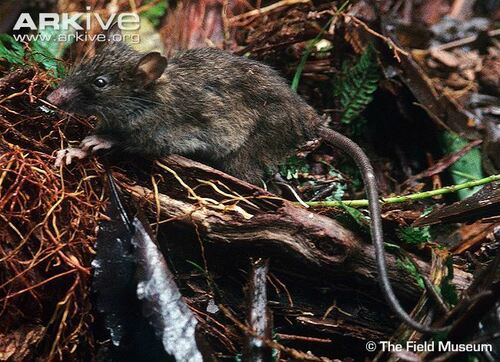
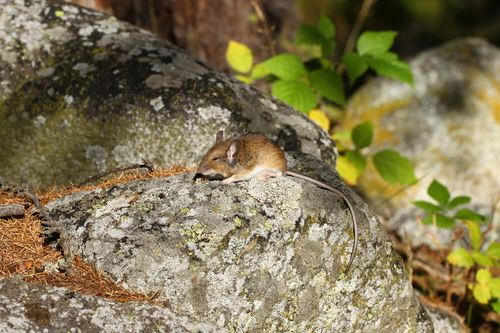
A small to medium-sized mouse with soft, dense fur typical of high-elevation forest rodents. Dorsal fur is generally brownish to greyish-brown, often with darker mid-dorsal tones, while the ventral surface is paler, ranging from whitish to light grey or buffy. The tail is moderately long, thinly haired, and slightly bicolored. The ears are rounded and moderately sized.
Size
Head-body length approximately 90–130 mm; tail length approximately 95–130 mm (roughly equal to or slightly exceeding body length); hindfoot length approximately 22–27 mm.
Weight
Estimated body mass approximately 20–45 g; no significant documented sexual size dimorphism in weight.
Distinctive features
Distinguished from other Mindanao Apomys species by a combination of body size, cranial morphology (including tooth row length and skull proportions), and its specific association with the mossy forest zone. Compared to the larger A. datae or the smaller lowland Apomys species, A. hylocetes occupies a distinct elevational niche. Molecular phylogenetic analyses of the Apomys genus are the most reliable method for species-level identification.
Differences between males and females
Sexual dimorphism is minimal; males and females are similar in size and external appearance, as is typical for the genus Apomys.
Behaviour and diet of the Mindanao Mossy Forest Apomys
Presumed to be primarily solitary or to live in loosely structured pairs or family units, as is typical for most Apomys species. No evidence of complex social group structures has been documented for this species.
When it is active
Likely nocturnal to crepuscular, consistent with the activity patterns documented for related Apomys species. Foraging activity predominantly occurs on the forest floor and in the lower understory during nighttime hours.
Diet
Omnivorous, with a diet likely comprising seeds, fruits, fungi, invertebrates (insects, worms), and plant material such as roots and shoots. The mossy forest environment provides abundant invertebrate prey, particularly in decomposing organic matter and leaf litter.
How it feeds and hunts
Forages primarily on the forest floor and among root systems, using its sensitive vibrissae and olfactory senses to locate food items hidden under moss, leaf litter, and soil. It likely uses opportunistic gleaning of invertebrates from substrates rather than active pursuit hunting.
Communication
Communication likely involves ultrasonic vocalizations (as in most murids), scent marking using urine and glandular secretions to demarcate territories and signal reproductive status, and tactile signals during social interactions.
Interactions with other species
Likely subject to predation by owls (especially Strix and Otus species endemic to the Philippines), Philippine scops-owls, small raptors, and possibly snakes adapted to montane habitats. It may compete with other small rodents sharing the mossy forest zone, including other Apomys species and Rattus montanus. It may also play a role in seed dispersal and invertebrate regulation within the mossy forest ecosystem.
Role in its ecosystem
Functions as an omnivorous consumer in the montane forest ecosystem, contributing to seed dispersal, invertebrate population regulation, and nutrient cycling through consumption and deposition of organic matter. As prey, it supports populations of forest raptors and other predators.
Reproduction and lifecycle
Specific reproductive data for A. hylocetes are limited. Based on patterns in the genus, litter sizes are typically small (1–4 offspring), and breeding may occur year-round or seasonally depending on food availability. Gestation period is estimated to be approximately 21–25 days as in related murids.
Raising the young
Altricial young are likely born hairless and with closed eyes, cared for by the mother in a nest constructed from plant material and moss. Weaning likely occurs at 3–4 weeks of age, and juveniles disperse to establish their own territories.
Maturity and lifespan
Sexual maturity likely reached at approximately 6–10 weeks of age, as is typical for small murids. Wild lifespan is estimated at 1–2 years due to predation pressure; captive lifespan data are not available for this species.
Taxonomy and naming of the Mindanao Mossy Forest Apomys
Classification
Mammalia > Rodentia > Muridae > Apomys > Apomys hylocetes
Scientific synonyms
No widely recognized taxonomic synonyms have been established; historically sometimes conflated with other Mindanao Apomys prior to modern revisions.
What research says
Recent studies
Recent phylogenetic and taxonomic revisions of the genus Apomys (particularly work by Heaney, Rickart, and colleagues at the Field Museum of Natural History) have clarified species boundaries within Mindanao Apomys using molecular and morphological data. These studies have confirmed A. hylocetes as a valid, distinct species associated with montane mossy forest habitats.
Genome and DNA
No published chromosome count or genome-level studies specific to A. hylocetes are known. Molecular phylogenetic studies placing Apomys within the broader context of Philippine murids have been conducted, identifying the genus as a monophyletic clade of Rattini.
Compared with similar species
Closely related to other Mindanao-endemic Apomys such as A. insignis (known from lower elevations) and A. musculus. It is distinguished from island-endemic Apomys found elsewhere in the Philippines (e.g., A. abrae from Luzon, A. sierrae from the Cordillera) by its geographic isolation and adaptation to Mindanao's specific montane ecosystem. The entire genus Apomys represents a spectacular in-situ radiation within the Philippines.
The Mindanao Mossy Forest Apomys and people
Mindanao's mossy forests, where this mouse lives, are so perpetually cloud-drenched that trees are blanketed in thick mosses up to 20 cm deep — creating a sponge-like world that this tiny rodent navigates entirely in the mist. The Philippines is home to the highest density of endemic mammal species per unit area of any country on Earth, and Apomys mice are a cornerstone of this extraordinary biodiversity. Despite being a member of the family Muridae (the same family as common house mice), A. hylocetes has never been considered a pest species and plays an entirely wild ecological role in its pristine mountain forest home.
Where and how to see it
Best observed in protected areas such as Mt. Apo Natural Park or Mt. Kitanglad Range Natural Park in Mindanao, Philippines. Sherman live-trapping along forest-floor transects in mossy forest above 1,800 m elevation is the standard method used by researchers. Nocturnal spotlighting along forest trails may occasionally reveal individuals foraging on the ground. Permits are required for wildlife research within Philippine protected areas.
Risks to humans
No notable risk to humans. Like all wild rodents, it may theoretically carry zoonotic pathogens if handled, but it poses no documented public health threat and is not known to bite unless cornered.
Myths and legends
Among the Lumad indigenous peoples of Mindanao, the mountain forests and their animal inhabitants are considered sacred. However, no specific myths or legends directly referencing this species by name have been documented in the scientific literature.
Countries where the Mindanao Mossy Forest Apomys is recorded
The 1 countries named in the range description of its IUCN Red List assessment.
Questions about the Mindanao Mossy Forest Apomys
Where does the Mindanao Mossy Forest Apomys live?
The Mindanao Mossy Forest Apomys is recorded in Philippines across Asia. These countries come from the range description of its IUCN Red List assessment, and they are what place the species on the interactive map.
Is the Mindanao Mossy Forest Apomys endangered?
The IUCN Red List assesses the Mindanao Mossy Forest Apomys as Least Concern. The species is widespread and abundant enough not to qualify for any threatened category. It does not mean the species is safe forever, only that nothing in the current data raises an alarm.
How many are left in the wild?
No precise global population estimate exists. This figure comes from the species assessment on the IUCN Red List; population estimates for wild mammals are ranges, not counts, and are revised at each assessment.
What habitat does the Mindanao Mossy Forest Apomys live in?
Strictly associated with montane mossy forests (also called cloud forests or upper montane forests), characterized by dense bryophyte and lichen cover on trees, high humidity, and persistent cloud immersion.
What is the scientific name of the Mindanao Mossy Forest Apomys?
The Mindanao Mossy Forest Apomys is Apomys hylocetes, in the family Muridae, order Rodentia.
Other species in the genus Apomys




Other species in the family Muridae
Sources
Conservation status, range description and population estimate come from the IUCN Red List assessment for Apomys hylocetes. Countries are derived from that range description, not from a mapped country list. Last refreshed on .
The distribution map is drawn from the IUCN Red List spatial data compiled in 2008. IUCN (International Union for Conservation of Nature)