
Long-tailed Field Mouse
Apodemus sylvaticus
Red List assessment
Least Concernon the IUCN Red List
- EXExtinct
- EWExtinct in the Wild
- CRCritically Endangered
- ENEndangered
- VUVulnerable
- NTNear Threatened
- LCLeast Concern
The Long-tailed Field Mouse is recorded in 10 countries across Africa, Asia and Europe. The IUCN Red List assesses the Long-tailed Field Mouse as Least Concern. No precise global estimate exists, but the species is considered extremely numerous, with tens of millions of individuals across Europe alone; UK populations have been estimated at 38–50 million individuals.
- Family
- Muridae
- Order
- Rodentia
- Genus
- Apodemus
- Countries recorded
- 10
- Continents
- Africa, Asia and Europe
- Red List category
- Least Concern
- Data updated
- August 9, 2026
What is the Long-tailed Field Mouse?
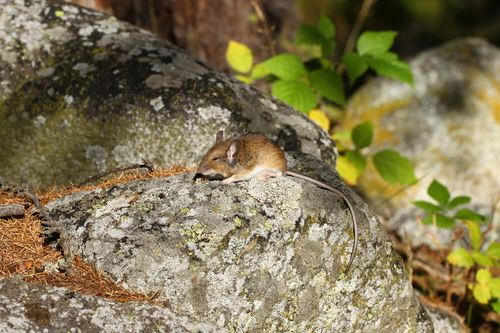
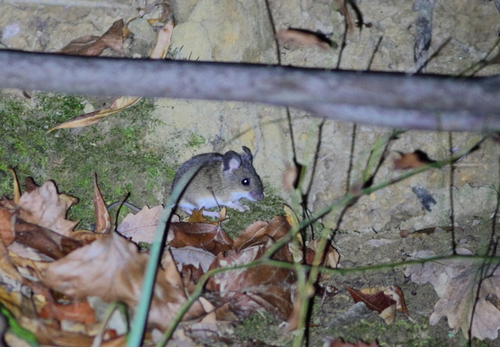
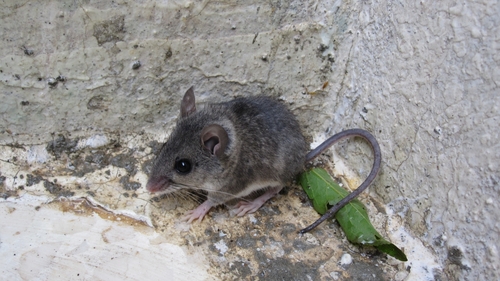
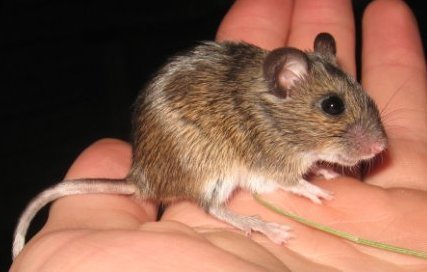
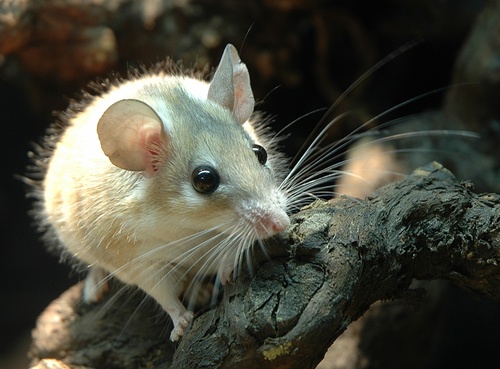
The Long-tailed Field Mouse, also widely known as the Wood Mouse, is one of the most abundant and ecologically important small rodents in Europe, found across an enormous range of terrestrial habitats from dense woodland to urban gardens. It is immediately recognizable by its disproportionately large black eyes, prominent rounded ears, warm sandy-brown dorsal fur, and a tail that equals or exceeds its body length. It plays a pivotal role in woodland food webs as both a major prey species for numerous predators and a significant disperser and predator of seeds from trees such as oak and hazel. Its high reproductive rate and broad dietary flexibility make it one of the most adaptable and resilient small mammals on the continent.
Where does the Long-tailed Field Mouse live?
Throughout Europe (British Isles to western Russia), North Africa, Turkey, and the Levant; also present on numerous offshore islands including the Hebrides, Orkney, Shetland, and the Channel Islands
Covers virtually all of Europe from the British Isles and Ireland (including dozens of offshore islands) south through the Iberian Peninsula, France, Italy, the Balkans, and into Scandinavia (up to approximately 68°N). Also occurs across North Africa (Morocco, Algeria, Tunisia), Turkey, the Levant (Israel, Lebanon, Syria), and into parts of the Caucasus and Central Asia.
Altitude and depth
Sea level up to approximately 2,000 m in the Alps, Pyrenees, and Apennines; recorded at higher elevations in parts of Turkey and the Middle East. Utilizes the full vertical gradient of its range wherever suitable cover exists.
Seasonal movements
Does not hibernate but activity may be greatly reduced during severe cold spells, with individuals occasionally entering brief bouts of torpor. Breeding is strongly seasonal, peaking from March to October across most of the range, but may continue year-round in mild climates or where indoor shelter and food are available. Populations typically crash in late winter and recover rapidly in spring.
Habitat of the Long-tailed Field Mouse
Found in a remarkably wide range of habitats including broadleaved and mixed woodland (primary habitat), hedgerows, scrub, grassland, arable fields, orchards, sand dunes, and gardens. It readily exploits outbuildings, compost heaps, and even urban structures during colder months. Requires some ground cover and a reliable seed supply, but is not tightly habitat-specialized.
Adaptations to its environment
Enlarged eyes and ears provide excellent night vision and acute hearing for nocturnal foraging and predator detection. The long, semi-prehensile tail aids balance during climbing. Food-caching behavior (storing hundreds of seeds and nuts in underground chambers or tree holes) buffers against winter food scarcity. Extremely high reproductive output allows populations to recover rapidly after predation events or harsh winters.
Conservation status and numbers
Least Concern (LC) on the IUCN Red List, reflecting its extremely broad geographic range, very large and stable global population, and tolerance of a wide variety of habitats including disturbed and agricultural landscapes. No evidence of range contraction or population decline meeting any threatened threshold.
Estimated population
No precise global estimate exists, but the species is considered extremely numerous, with tens of millions of individuals across Europe alone; UK populations have been estimated at 38–50 million individuals. Overall trend is stable, with natural annual fluctuations driven by food availability (mast years) and predator pressure.
What threatens the Long-tailed Field Mouse?
Intensive agricultural practices (pesticide use, loss of hedgerows, and tillage) locally reduce populations. Predation by domestic and feral cats is a major anthropogenic pressure near human settlements. Secondary rodenticide poisoning poses a risk. On small islands, introduced predators (rats, stoats) can severely threaten isolated and genetically distinct subspecies.
Diseases and parasites
A natural reservoir host for Borrelia burgdorferi sensu lato (causative agent of Lyme disease), transmitted via the tick Ixodes ricinus, making it epidemiologically significant in tick-borne disease ecology. The intestinal nematode Heligmosomoides polygyrus infects wood mice at very high prevalence in natural populations and has become one of the most widely used model systems in parasitology and type 2 immunity research. Also hosts various cestodes, fleas (Ctenophthalmus nobilis), mites, and multiple hantavirus strains have been detected in European populations.
What is being done to protect it?
No targeted conservation programmes are required for the species globally given its LC status. Protected indirectly by agri-environment schemes (hedgerow retention, field margin management) across the UK and EU. Island subspecies with restricted ranges may benefit from invasive predator eradication programmes on key island groups.
Recommended actions
Maintain and restore hedgerow networks and woodland corridors to preserve connectivity across agricultural landscapes. Reduce broad-spectrum pesticide use. Eradicate invasive predators from islands supporting genetically distinct subspecies. Continued monitoring of island forms to detect any decline in these vulnerable local populations.
What the Long-tailed Field Mouse looks like
Dorsal fur is warm sandy-brown to tawny-orange, paler on the flanks, transitioning to clean white or greyish-white underparts. Many individuals show a small, diffuse yellowish-buff chest spot. Eyes are large, round, and jet-black; ears are large, thin, and rounded. The sparsely haired tail is distinctly bicoloured — darker brown above and whitish below. Overall build is slender and agile.
Size
Head-body length: 80–110 mm; tail length: 70–115 mm (typically equal to or slightly longer than body); hind foot: 20–23 mm; ear length: 14–17 mm.
Weight
Typically 13–27 g; adults most commonly 18–25 g. Island subspecies such as A. s. hirtensis (St Kilda) are notably larger, occasionally exceeding 35 g. No strong sexual dimorphism in weight.
Distinctive features
Distinguished from the closely related Yellow-necked Mouse (Apodemus flavicollis) by the absence of a bold, continuous yellow collar, slightly smaller average size, and a relatively shorter tail. Separated from the House Mouse (Mus musculus) by its much larger eyes and ears, longer tail, and distinctly bicoloured fur. Smaller and more fine-featured than any rat species with which it may share habitat.
Differences between males and females
Minimal; males and females are essentially identical in coloration and nearly identical in size, though males may average marginally heavier. Reproductive condition (e.g., testes size in males, nipple visibility in lactating females) is the primary distinguishing feature between sexes.
Behaviour and diet of the Long-tailed Field Mouse
Generally solitary outside the breeding season, with individuals maintaining and defending individual home ranges. During winter, several animals may share a communal nest for thermoregulation. Males establish loose dominance hierarchies, with larger, older individuals typically being dominant and having priority access to females and food. Home range size varies from roughly 0.5 to several hectares depending on habitat quality and season.
When it is active
Strongly nocturnal, with peak activity during the first 2–4 hours after sunset. Avoids daylight exposure almost entirely, likely as a predator-avoidance strategy. During severe cold spells, individuals may remain inactive in the nest for extended periods and enter brief episodes of torpor.
Diet
Omnivorous with a seasonally shifting diet. Primary foods include seeds and nuts (especially oak acorns, hazel, ash seeds, hawthorn berries, and bramble), supplemented by fungi, green plant material, and invertebrates (beetles, earthworms, moth larvae, caterpillars). Invertebrates are especially important in spring when seeds are scarce and energy demands for breeding are high. Surplus food is routinely cached for winter use.
How it feeds and hunts
Forages primarily on the ground along established runways through leaf litter and grass, using its highly sensitive vibrissae and olfactory sense to locate food items. Climbs adeptly into shrubs and tree branches to harvest berries and seeds directly. Uses systematic scatter-hoarding, burying seeds individually or in small groups over a wide area, and builds concentrated larder caches in burrow chambers.
Communication
Uses a repertoire of ultrasonic vocalizations (typically 30–90 kHz) for mother-pup communication and during mating interactions. Scent marking with urine, feces, and secretions from specialized glands is the primary mode of territorial and reproductive communication. Tactile signals (nose-touching, grooming) occur during social interactions. Body posture and tail movement convey threat and submissive signals during agonistic encounters.
Interactions with other species
Forms a critical prey base for a diverse guild of predators including tawny owl (Strix aluco), barn owl (Tyto alba), little owl (Athene noctua), kestrel (Falco tinnunculus), weasel (Mustela nivalis), stoat (Mustela erminea), red fox (Vulpes vulpes), and domestic cat (Felis catus). Competes with the bank vole (Myodes glareolus) and Yellow-necked Mouse for food and nesting resources. Functions as a key seed disperser for woodland trees including oak (Quercus spp.) and hazel (Corylus avellana), sometimes burying and failing to retrieve seeds that subsequently germinate.
Role in its ecosystem
Occupies a central position in temperate woodland and farmland food webs as a primary consumer of seeds and invertebrates and as a prey base for multiple trophic levels of predators. Its burrowing activity aerates soil and contributes to organic matter cycling. As a scatter-hoarder, it is a net seed disperser for several ecologically important tree species. Its role as a reservoir host for tick-borne pathogens gives it additional significance in disease ecology.
Reproduction and lifecycle
Breeding season typically extends from March to October, with peak production in summer; winter breeding can occur in mild conditions or in buildings. Gestation period is approximately 25–26 days. Litter size is typically 4–6 young (range 1–9). A female may produce 3–6 litters per year under optimal conditions. Females can become pregnant almost immediately after parturition (post-partum oestrus).
Raising the young
Young are born altricial — blind, hairless, and entirely dependent — in a grass-lined nest situated in a burrow or sheltered cavity. The female alone provides all parental care; males do not participate. Eyes open at approximately 16 days; weaning occurs around 21 days. Juveniles disperse and become independent shortly after weaning, and summer-born individuals can reach sexual maturity and breed within the same season.
Maturity and lifespan
Sexual maturity is reached at approximately 6–8 weeks in summer-born individuals; overwintered animals typically do not breed until the following spring. Wild lifespan is usually less than 18 months; very few individuals survive two full winters. Maximum recorded lifespan in captivity approaches 3 years.
Taxonomy and naming of the Long-tailed Field Mouse
Classification
Mammalia > Rodentia > Muridae > Apodemus > Apodemus sylvaticus
Subspecies
Numerous subspecies are recognized, particularly island forms in the British Isles: A. s. sylvaticus (continental Europe), A. s. hirtensis (St Kilda), A. s. granti (Outer Hebrides), A. s. hamiltonii (Isle of Arran), A. s. butei (Isle of Bute), A. s. grandiculus (Shetland), A. s. maynardi (Lundy), A. s. fridariensis (Faroe Islands), A. s. celticus (western Ireland), and A. s. ichnusae (Sardinia), among others; some island forms were historically described as distinct species.
Scientific synonyms
Mus sylvaticus Linnaeus, 1758 (basionym); Mus sylvestris Oken, 1816; various island forms were formerly described under distinct species names before synonymization.
What research says
Recent studies
H. polygyrus infection in wild wood mice populations has driven major advances in understanding regulatory T cell responses and immune tolerance to parasites. Recent landscape genomics studies have quantified gene flow between mainland and island populations and identified signatures of local adaptation in island forms. Wood mice have been used as bioindicators to track tick-borne pathogen prevalence across European landscapes, with studies documenting increasing Borrelia diversity as the tick season expands with climate change.
Genome and DNA
Diploid chromosome number: 2n = 48. Population genetic studies, particularly of British island subspecies, have demonstrated significant genetic differentiation in some island forms relative to mainland populations, supporting the recognition of distinct conservation units. The species is extensively used as a natural host in experimental parasite immunology, and its immune gene repertoire has been partially characterized in this context.
Compared with similar species
The Yellow-necked Mouse (A. flavicollis) is its closest European relative, from which it differs by lacking a defined yellow neckband, being slightly smaller on average, and preferring more open habitats; the two species co-occur broadly but A. flavicollis tends to be more strictly arboreal and woodland-associated. The Striped Field Mouse (A. agrarius) is distinguished by a bold dark dorsal stripe. Compared to the House Mouse (Mus musculus), the Long-tailed Field Mouse is larger, has a longer tail, much bigger eyes and ears, and distinctly bicoloured fur.
The Long-tailed Field Mouse and people
Wood mice possess a remarkable escape mechanism: when seized by a predator, the fragile skin of the tail can 'degloving' — slipping off to expose the underlying bone, which subsequently desiccates and falls away, allowing the mouse to flee at the cost of a tail tip. They are accomplished climbers, regularly foraging in tree canopies several metres above the ground despite being primarily seen on the forest floor. In years of heavy mast production (such as a bumper acorn crop), wood mouse populations can increase by an order of magnitude within a single season, demonstrating one of the fastest density responses of any European mammal.
Where and how to see it
Best observed at night in woodland or hedgerow settings using a red-filtered torch, as red light disturbs them less than white light. Garden bird-feeding stations are excellent observation points after dark; wood mice frequently attend these nocturnally. Live-trap surveys (e.g., Longworth traps baited with oats and apple) have high capture success in appropriate habitat. The coordinates for this record (County Durham, northeast England) represent excellent habitat with abundant woodland and hedgerow cover for observation.
Risks to humans
May bite if handled carelessly, though bites are minor. The primary human health relevance is as a reservoir host for Borrelia burgdorferi (Lyme disease), with transmission occurring indirectly via Ixodes ticks rather than directly from mice to humans. Hantavirus strains have been detected in European wood mice populations; direct human infection is rare but possible through contact with infected excreta. Standard hygiene precautions are recommended when handling wild individuals.
Human uses
Extensively used as a model organism in ecology, evolutionary biology, population genetics, and immunological research — particularly as the natural definitive host for the model parasite Heligmosomoides polygyrus, which has contributed substantially to understanding of type 2 immunity and immune regulation. Historically regarded as a minor agricultural and grain storage pest. Has no significant dietary, medicinal, or commercial use.
Myths and legends
Wood mice have no strong mythological traditions specific to the species, though mice in general feature widely in European folklore as symbols of the soul, thrift (due to food-hoarding), or ill omen. In British rural tradition, an unusual abundance of mice entering farm buildings in early autumn was sometimes interpreted as a sign of an approaching harsh winter. The species has little specific named cultural symbolism compared to rats or the House Mouse.
Countries where the Long-tailed Field Mouse is recorded
The 10 countries named in the range description of its IUCN Red List assessment.
Questions about the Long-tailed Field Mouse
Where does the Long-tailed Field Mouse live?
The Long-tailed Field Mouse is recorded in Algeria, France, Ireland, Israel and Italy, among 10 countries in total across Africa, Asia and Europe. These countries come from the range description of its IUCN Red List assessment, and they are what place the species on the interactive map.
Is the Long-tailed Field Mouse endangered?
The IUCN Red List assesses the Long-tailed Field Mouse as Least Concern. The species is widespread and abundant enough not to qualify for any threatened category. It does not mean the species is safe forever, only that nothing in the current data raises an alarm.
How many are left in the wild?
No precise global estimate exists, but the species is considered extremely numerous, with tens of millions of individuals across Europe alone; UK populations have been estimated at 38–50 million individuals. This figure comes from the species assessment on the IUCN Red List; population estimates for wild mammals are ranges, not counts, and are revised at each assessment.
What habitat does the Long-tailed Field Mouse live in?
Found in a remarkably wide range of habitats including broadleaved and mixed woodland (primary habitat), hedgerows, scrub, grassland, arable fields, orchards, sand dunes, and gardens.
What is the scientific name of the Long-tailed Field Mouse?
The Long-tailed Field Mouse is Apodemus sylvaticus, in the family Muridae, order Rodentia.
Other species in the genus Apodemus
Other species in the family Muridae
Sources
Conservation status, range description and population estimate come from the IUCN Red List assessment for Apodemus sylvaticus. Countries are derived from that range description, not from a mapped country list. Last refreshed on .
The distribution map is drawn from the IUCN Red List spatial data compiled in 2014. IUCN (International Union for Conservation of Nature)