
Bailey's Shrew
Crocidura baileyi
Red List assessment
Least Concernon the IUCN Red List
- EXExtinct
- EWExtinct in the Wild
- CRCritically Endangered
- ENEndangered
- VUVulnerable
- NTNear Threatened
- LCLeast Concern
The Bailey's Shrew is recorded in one country, Ethiopia across Africa. The IUCN Red List assesses the Bailey's Shrew as Least Concern. No precise population estimate exists; the species is presumed to have a stable population within its limited range, though data are scarce.
- Family
- Soricidae
- Order
- Eulipotyphla
- Genus
- Crocidura
- Countries recorded
- 1
- Continents
- Africa
- Red List category
- Least Concern
- Data updated
- August 9, 2026
What is the Bailey's Shrew?
Bailey's Shrew is a small insectivorous mammal endemic to the highlands of Ethiopia, particularly associated with the Bale Mountains region. It belongs to the diverse white-toothed shrew genus Crocidura, which is notoriously difficult to distinguish taxonomically. This species is remarkable for its restricted range and adaptation to high-altitude Afromontane ecosystems. Little is known about its detailed ecology due to its small size and secretive habits.
Where does the Bailey's Shrew live?
Ethiopia (Bale Mountains and surrounding highlands)
Endemic to Ethiopia, primarily known from the Bale Mountains and adjacent highland areas in the southeastern part of the country. Its range is considered restricted and localized within the Ethiopian Highlands.
Altitude and depth
Approximately 2000-4000 meters above sea level, typical of Ethiopian montane and Afroalpine zones.
Seasonal movements
No known migratory behavior; activity may fluctuate slightly with wet and dry seasons affecting invertebrate prey availability.
Habitat of the Bailey's Shrew
It inhabits Afromontane grasslands, moorlands, and forest edges at high elevation. It is often found in areas with dense ground vegetation, leaf litter, and moist soil that support abundant invertebrate prey.
Adaptations to its environment
Its small size and high metabolic rate allow it to survive in cool, high-altitude environments by foraging almost continuously for insects. Dense fur provides insulation against the cold temperatures of the Ethiopian highlands.
Conservation status and numbers
Listed as Least Concern (LC) by the IUCN, as the species does not appear to be undergoing rapid population decline despite its restricted range. However, its endemic status makes it inherently vulnerable to habitat changes.
Estimated population
No precise population estimate exists; the species is presumed to have a stable population within its limited range, though data are scarce.
What threatens the Bailey's Shrew?
Habitat degradation from agricultural expansion, livestock grazing, and human settlement in the Ethiopian highlands pose potential threats. Climate change affecting Afromontane ecosystems could also impact its habitat quality.
What is being done to protect it?
Some populations occur within or near the Bale Mountains National Park, which provides a degree of habitat protection. No species-specific conservation programs are known to exist.
Recommended actions
Further ecological surveys and taxonomic studies are needed to clarify its distribution and population status. Habitat protection within the Bale Mountains ecosystem would benefit this and other endemic species.
What the Bailey's Shrew looks like
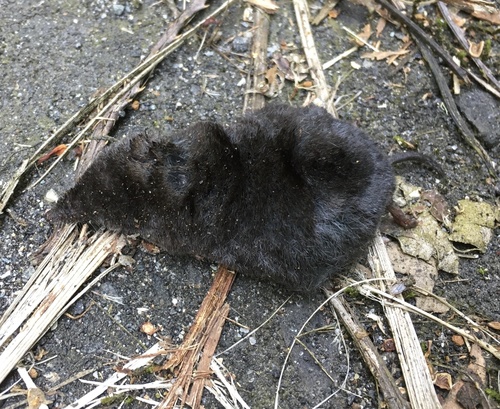
It has typical shrew morphology with a pointed snout, small eyes, and short dense fur that is grayish-brown dorsally and paler ventrally. The tail is relatively short and covered with fine hairs.
Size
Body length approximately 6-8 cm, with a tail length of about 4-5 cm, typical for small Crocidura shrews.
Weight
Estimated weight range of 4-8 grams, consistent with other small Afromontane shrews.
Distinctive features
Distinguished from other Ethiopian Crocidura species mainly through subtle cranial and dental characteristics rather than obvious external features. Genetic and morphometric analysis is often required for confident identification.
Behaviour and diet of the Bailey's Shrew
Like most shrews, it is presumed to be largely solitary outside of breeding encounters, with individuals maintaining separate foraging territories.
When it is active
Likely active both day and night with peaks during twilight hours, though specific activity patterns for this species have not been well documented.
Diet
Insectivorous, feeding primarily on small invertebrates such as insects, larvae, and possibly earthworms found in leaf litter and soil.
How it feeds and hunts
Uses acute smell and touch via vibrissae to locate prey in dense vegetation and soil, typical of shrews that forage continuously due to high metabolic demands.
Communication
Likely communicates through high-frequency vocalizations and scent marking using specialized glands, common among Crocidura species for territory and mating signaling.
Interactions with other species
Likely preyed upon by small carnivores, birds of prey, and snakes present in the Ethiopian highlands. May compete with other small insectivorous mammals for similar invertebrate prey.
Role in its ecosystem
Plays a role in controlling invertebrate populations within its montane habitat, contributing to nutrient cycling and soil health through its foraging activity.
Reproduction and lifecycle
Breeding biology is poorly documented, but likely follows the general Crocidura pattern with short gestation periods of around 20-30 days and litters of 2-4 young.
Raising the young
Presumed maternal care only, with the mother nursing and protecting the young in a nest until weaning, as is typical for shrews.
Maturity and lifespan
Sexual maturity is likely reached within a few months, as in related Crocidura species, with a typical wild lifespan of 1-2 years.
Taxonomy and naming of the Bailey's Shrew
Classification
Class Mammalia > Order Eulipotyphla > Family Soricidae > Genus Crocidura > Species Crocidura baileyi
What research says
Recent studies
Recent taxonomic studies using molecular genetics have helped clarify the boundaries between this species and other closely related Ethiopian Crocidura species, though further research is ongoing.
Compared with similar species
Similar to other Ethiopian endemic shrews such as Crocidura lucina and Crocidura fumosa, but distinguished by subtle skull and dental morphology detectable mainly through specialist examination.
The Bailey's Shrew and people
Bailey's Shrew is one of several shrew species endemic to the unique Bale Mountains ecosystem, one of Africa's most biodiverse Afromontane regions. Despite being a mammal, it has a metabolism so high it must eat almost constantly to survive.
Where and how to see it
Observation is extremely difficult due to its small size, secretive nature, and remote high-altitude habitat; best chances involve small mammal trapping surveys conducted by researchers in the Bale Mountains National Park.
Risks to humans
No notable risk to humans.
Countries where the Bailey's Shrew is recorded
The 1 countries named in the range description of its IUCN Red List assessment.
Questions about the Bailey's Shrew
Where does the Bailey's Shrew live?
The Bailey's Shrew is recorded in Ethiopia across Africa. These countries come from the range description of its IUCN Red List assessment, and they are what place the species on the interactive map.
Is the Bailey's Shrew endangered?
The IUCN Red List assesses the Bailey's Shrew as Least Concern. The species is widespread and abundant enough not to qualify for any threatened category. It does not mean the species is safe forever, only that nothing in the current data raises an alarm.
How many are left in the wild?
No precise population estimate exists; the species is presumed to have a stable population within its limited range, though data are scarce. This figure comes from the species assessment on the IUCN Red List; population estimates for wild mammals are ranges, not counts, and are revised at each assessment.
What habitat does the Bailey's Shrew live in?
It inhabits Afromontane grasslands, moorlands, and forest edges at high elevation.
What is the scientific name of the Bailey's Shrew?
The Bailey's Shrew is Crocidura baileyi, in the family Soricidae, order Eulipotyphla.
Other species in the genus Crocidura



Other species in the family Soricidae



Sources
Conservation status, range description and population estimate come from the IUCN Red List assessment for Crocidura baileyi. Countries are derived from that range description, not from a mapped country list. Last refreshed on .
The distribution map is drawn from the IUCN Red List spatial data compiled in 2008. IUCN (International Union for Conservation of Nature)