
Striped Skunk
Mephitis mephitis
Red List assessment
Least Concernon the IUCN Red List
- EXExtinct
- EWExtinct in the Wild
- CRCritically Endangered
- ENEndangered
- VUVulnerable
- NTNear Threatened
- LCLeast Concern
The Striped Skunk is recorded in 3 countries across North America. The IUCN Red List assesses the Striped Skunk as Least Concern. No precise global population estimate exists, but populations are considered abundant and stable, with some local increases in suburban areas due to human food sources.
- Family
- Mephitidae
- Order
- Carnivora
- Genus
- Mephitis
- Countries recorded
- 3
- Continents
- North America
- Red List category
- Least Concern
- Data updated
- August 9, 2026
What is the Striped Skunk?
The striped skunk is a medium-sized, iconic North American mammal best known for its black-and-white coloration and its ability to spray a potent, foul-smelling musk as a defense mechanism. It is highly adaptable, thriving in both rural and urban environments across most of the continent. Its distinctive appearance and defensive spray have made it one of the most recognizable mammals in North America.
Where does the Striped Skunk live?
North America, primarily the United States, Canada, and northern Mexico
Found throughout most of the United States and southern Canada, extending south into northern Mexico. Their range spans from the Atlantic to Pacific coasts, though they are largely absent from extreme desert regions and high mountain areas.
Altitude and depth
Typically found from sea level up to about 2,500 meters, though they are most common in lowland and moderate elevation habitats.
Seasonal movements
Skunks do not truly hibernate but enter a state of torpor during severe winter weather, often denning communally to conserve heat. Activity decreases significantly in winter months, especially in northern parts of their range.
Habitat of the Striped Skunk
Striped skunks occupy a wide range of habitats including woodlands, grasslands, agricultural areas, suburban neighborhoods, and semi-arid environments. They prefer areas with mixed cover such as brushy fields, forest edges, and hedgerows that provide denning sites and foraging opportunities.
Adaptations to its environment
Their most notable adaptation is the pair of anal scent glands capable of spraying a sulfur-based musk up to several meters as a defense against predators. Their black-and-white coloration serves as aposematic warning coloration, and they are opportunistic omnivores allowing survival across diverse habitats.
Conservation status and numbers
Listed as Least Concern by the IUCN due to their wide distribution, adaptability, and stable to increasing populations across most of their range.
Estimated population
No precise global population estimate exists, but populations are considered abundant and stable, with some local increases in suburban areas due to human food sources.
What threatens the Striped Skunk?
Main threats include vehicle collisions, habitat loss from urban development, trapping for fur, and human persecution due to conflicts with pets or property. Disease outbreaks such as rabies and distemper can also impact local populations.
Diseases and parasites
Skunks are known carriers of rabies and can also host parasites such as fleas, ticks, and roundworms. They are considered a significant rabies vector species in North America.
What is being done to protect it?
No major dedicated conservation programs exist due to their stable status, though they are protected under general wildlife regulations in many states and provinces. Some regions regulate trapping seasons and fur harvest quotas.
Recommended actions
Recommended actions include public education to reduce human-wildlife conflict, wildlife-friendly urban planning, and continued monitoring of disease transmission risks such as rabies.
What the Striped Skunk looks like
Striped skunks have a stocky body with short legs, a small triangular head, and a long bushy tail. Their fur is black with a distinctive white stripe pattern, usually forming a V-shape from the head down the back, though patterns vary among individuals.
Size
Body length ranges from 40 to 70 cm including a bushy tail of 18-25 cm; shoulder height is roughly 15-20 cm.
Weight
Adults typically weigh between 1.2 and 6.3 kg, with males generally slightly larger than females.
Distinctive features
The striped skunk is distinguished from other skunk species like the hooded or spotted skunk by its broader white dorsal stripes and larger overall body size. Its bushy tail and simple stripe pattern also differentiate it visually.
Differences between males and females
Males are generally slightly larger and heavier than females, but there is minimal difference in coloration or markings between sexes.
Behaviour and diet of the Striped Skunk
Striped skunks are largely solitary animals except during breeding season or when females share dens with young. They may den communally in winter for warmth, sometimes with multiple females and even other species.
When it is active
They are primarily nocturnal and crepuscular, foraging at night and resting in dens during the day.
Diet
Omnivorous diet consisting of insects, small mammals, eggs, amphibians, fruits, grasses, and human refuse in urban areas. Insects such as beetles and grubs make up a large portion of their diet in warmer months.
How it feeds and hunts
Skunks forage by digging in soil and leaf litter for insects and grubs, using their strong claws and keen sense of smell rather than active pursuit hunting.
Communication
Skunks communicate through body postures such as stamping feet, tail raising, and hissing as warning signals before resorting to spraying. Scent marking also plays a role in territory and reproductive signaling.
Interactions with other species
Natural predators include great horned owls, foxes, coyotes, and bobcats, though most mammalian predators avoid skunks due to their spray defense. They may compete with raccoons and opossums for similar food resources and denning sites.
Role in its ecosystem
As omnivores, striped skunks play a role in controlling insect and rodent populations while also serving as prey for various predators, particularly birds of prey that have limited sense of smell.
Reproduction and lifecycle
Breeding occurs in late winter to early spring (February to March), with a gestation period of about 60-77 days. Litters typically contain 4-7 kits, born blind and helpless in a den.
Raising the young
Only females raise the young, nursing them for about 6-8 weeks before they begin to forage alongside her. Kits remain with the mother until early autumn before dispersing to establish their own territories.
Maturity and lifespan
Sexual maturity is reached at about 10 months of age. Lifespan in the wild is typically 2-4 years, while captive individuals can live up to 10 years.
Taxonomy and naming of the Striped Skunk
Classification
Class: Mammalia > Order: Carnivora > Family: Mephitidae > Genus: Mephitis > Species: Mephitis mephitis
Subspecies
Several subspecies recognized including M. m. mephitis (eastern range), M. m. avia, M. m. elongata, M. m. hudsonica, M. m. major, M. m. nigra, M. m. spissigrada, and others, differing mainly in size and stripe pattern across their range.
Scientific synonyms
Chincha mephitis, Mephitis americana (older synonyms used in early taxonomic literature)
What research says
Recent studies
Recent studies have focused on skunk rabies strain dynamics, urban adaptation behaviors, and their role in suburban ecosystem interactions with humans and pets.
Genome and DNA
The striped skunk has a diploid chromosome number of 2n=50; genetic studies have been used to explore population structure and rabies virus transmission dynamics.
Compared with similar species
Compared to the smaller spotted skunk (Spilogale putorius), the striped skunk is larger, has simpler stripe patterns, and is less agile/climbing-oriented. It is more widely distributed than most other skunk species.
The Striped Skunk and people
Striped skunks can accurately spray their musk up to 3 meters and can hit a target up to 6 meters away. Despite their reputation, they are surprisingly gentle and prefer to avoid confrontation, using warning displays before spraying.
Where and how to see it
Best observed at dusk or night in rural or suburban areas near woodland edges; using red-filtered flashlights minimizes disturbance. Avoiding sudden movements and loud noises reduces the risk of triggering a defensive spray.
Risks to humans
Main risk to humans is the unpleasant and long-lasting spray, as well as potential rabies transmission through bites. Direct aggression toward humans is rare unless the animal feels cornered or threatened.
Human uses
Historically, skunks were trapped for their fur, and their scent glands have been studied for chemical compounds used in perfumery research. Some are also kept as descented pets in certain regions where legal.
Myths and legends
In some Native American folklore, skunks are seen as symbols of self-respect and confidence due to their ability to defend themselves without physical aggression. They also feature in various cautionary tales about respecting nature's boundaries.
Countries where the Striped Skunk is recorded
The 3 countries named in the range description of its IUCN Red List assessment.
Questions about the Striped Skunk
Where does the Striped Skunk live?
The Striped Skunk is recorded in Canada, Mexico and United States across North America. These countries come from the range description of its IUCN Red List assessment, and they are what place the species on the interactive map.
Is the Striped Skunk endangered?
The IUCN Red List assesses the Striped Skunk as Least Concern. The species is widespread and abundant enough not to qualify for any threatened category. It does not mean the species is safe forever, only that nothing in the current data raises an alarm.
How many are left in the wild?
No precise global population estimate exists, but populations are considered abundant and stable, with some local increases in suburban areas due to human food sources. This figure comes from the species assessment on the IUCN Red List; population estimates for wild mammals are ranges, not counts, and are revised at each assessment.
What habitat does the Striped Skunk live in?
Striped skunks occupy a wide range of habitats including woodlands, grasslands, agricultural areas, suburban neighborhoods, and semi-arid environments.
What is the scientific name of the Striped Skunk?
The Striped Skunk is Mephitis mephitis, in the family Mephitidae, order Carnivora.
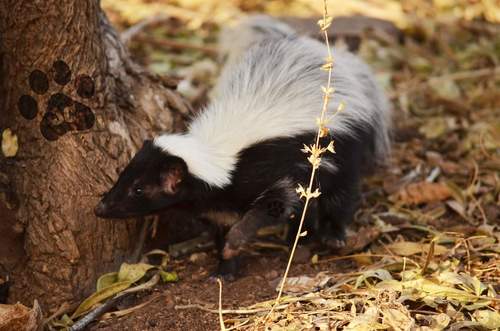
Other species in the genus Mephitis
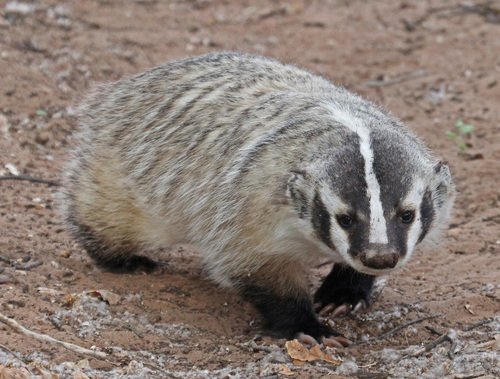
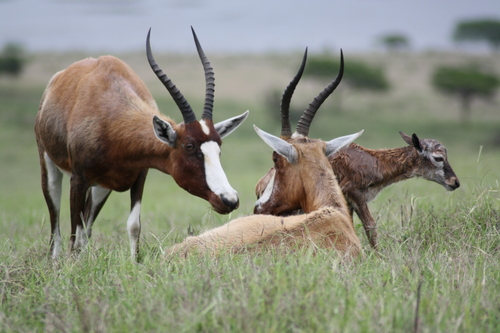
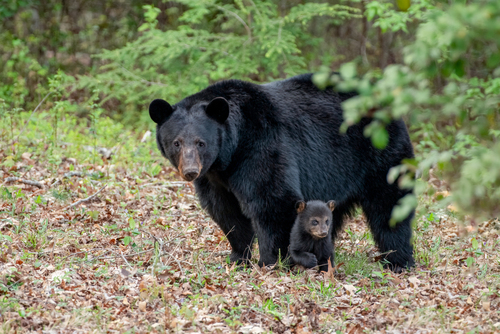
Species that share its range
Sources
Conservation status, range description and population estimate come from the IUCN Red List assessment for Mephitis mephitis. Countries are derived from that range description, not from a mapped country list. Last refreshed on .
The distribution map is drawn from the IUCN Red List spatial data compiled in 2016. IUCN (International Union for Conservation of Nature)