
Somali Hedgehog
Atelerix sclateri
Red List assessment
Least Concernon the IUCN Red List
- EXExtinct
- EWExtinct in the Wild
- CRCritically Endangered
- ENEndangered
- VUVulnerable
- NTNear Threatened
- LCLeast Concern
The Somali Hedgehog is recorded in 3 countries across Africa. The IUCN Red List assesses the Somali Hedgehog as Least Concern. Total population size is unknown and has never been formally estimated.
- Family
- Erinaceidae
- Order
- Eulipotyphla
- Genus
- Atelerix
- Countries recorded
- 3
- Continents
- Africa
- Red List category
- Least Concern
- Data updated
- August 9, 2026
What is the Somali Hedgehog?
The Somali Hedgehog is a small, spiny insectivorous mammal forming one of four recognized species within the African hedgehog genus Atelerix. It is endemic to Somalia, making it one of the most geographically restricted hedgehog species in Africa. It inhabits arid to semi-arid scrublands and bushlands, relying heavily on its dorsal spines for defense. Due to the chronic instability of Somalia as a region, this species remains one of the least-studied hedgehogs in the world, and much of our understanding is inferred from congeners.
Where does the Somali Hedgehog live?
Endemic to Somalia; potentially marginally present in adjacent border regions of Ethiopia and Djibouti, though confirmed records are almost exclusively from Somalia.
Endemic to Somalia, the species is distributed across much of the country, including the central plateau, southern lowlands, and coastal regions near the Indian Ocean. The given coordinates correspond to central Somalia. Its presence in Somaliland (northwestern Somalia) has also been reported.
Altitude and depth
Typically found from sea level up to approximately 1,500 m elevation, corresponding to the varied topography of Somalia from coastal plains to interior plateaus.
Seasonal movements
No confirmed seasonal migration is documented. Like other African hedgehogs in extremely hot or dry periods, this species may enter a state of torpor or aestivation to conserve energy and water during the harshest dry season months.
Habitat of the Somali Hedgehog
Primarily occupies dry and semi-arid scrublands, open bushland, thorny savanna, and coastal lowland habitats. It likely tolerates rocky substrates and degraded terrain with sparse vegetation. It is adapted to hot, seasonally dry conditions typical of the Horn of Africa.
Adaptations to its environment
The dorsal coat of approximately 5,000–7,000 spines (modified hollow hairs) provides passive defense against predators; the animal rolls into a tight ball when threatened. It likely has physiological adaptations to conserve water in arid environments, including concentrated urine production and the capacity for short-term torpor. Its elongated, sensitive snout allows efficient detection of invertebrate prey beneath leaf litter and soil.
Conservation status and numbers
Listed as Least Concern (LC) by the IUCN Red List. The species is presumed to be relatively stable, as there is no evidence of a population decline meeting threatened thresholds. However, the assessment is largely based on limited data given the inaccessibility of Somalia for field research.
Estimated population
Total population size is unknown and has never been formally estimated. Population trend is presumed stable based on the LC status, but data are insufficient for a reliable assessment.
What threatens the Somali Hedgehog?
Habitat degradation due to overgrazing, charcoal production, and deforestation represents the primary threat. Ongoing armed conflict in Somalia severely limits conservation monitoring and enforcement. Accidental killing by vehicles and predation pressure from introduced species (e.g., domestic dogs and cats) may also pose local risks.
Diseases and parasites
Like other hedgehogs, it is likely host to external parasites such as ticks (Ixodes species), fleas, and mites. Internal parasites including nematodes and cestodes are probable. Hedgehogs are known carriers of Salmonella and occasionally of dermatophytes (ringworm fungi), relevant for human handling.
What is being done to protect it?
No species-specific conservation programs are known to be in place. Somalia is a signatory to some international wildlife agreements, but implementation capacity is extremely limited. The species may incidentally benefit from protected areas such as Lag Badana National Park in southern Somalia.
Recommended actions
Priority actions include conducting systematic field surveys to establish baseline population data and distribution maps, habitat protection through community-based conservation in key areas, and inclusion of the species in broader Horn of Africa biodiversity monitoring programs once regional security conditions improve.
What the Somali Hedgehog looks like
The dorsal surface is covered with banded, cream-and-brown-tipped spines that create an overall grayish-brown appearance. The face, undersides, and limbs are covered in soft, pale grayish-white or cream-colored fur. The snout is pointed and mobile, the eyes are dark and beady, and the ears are moderately sized and rounded.
Size
Body length typically 15–25 cm; tail very short at 1–3 cm. Spine length averages 2–3 cm. No reliable shoulder height measurement, as the animal is a low-slung quadruped.
Weight
Estimated 200–500 g based on comparisons with congeners; no sex-specific weight data are published for this species.
Distinctive features
Atelerix sclateri is distinguished from the closely related four-toed hedgehog (A. albiventris) by subtle differences in skull morphology and geographic isolation in Somalia. It shares the characteristic bare patch of skin on the forehead (a mid-cranial parting of spines) common to all Atelerix species, distinguishing them from Hemiechinus (long-eared hedgehogs) by their smaller ears.
Differences between males and females
Sexual dimorphism is considered minimal, as in other Atelerix species. Males may be marginally larger on average, but there are no prominent morphological differences between the sexes.
Behaviour and diet of the Somali Hedgehog
Solitary by nature, like all hedgehogs. Adults maintain individual home ranges and interact primarily during the breeding season. Territories may overlap but direct social encounters outside of mating are typically avoided.
When it is active
Strictly nocturnal. The animal spends the daylight hours sheltered in dense vegetation, beneath rocks, or in burrows dug by itself or other animals. Activity peaks in the first few hours after dusk.
Diet
Opportunistic omnivore with a strong insectivorous bias. Diet likely includes beetles, termites, grasshoppers, earthworms, millipedes, small lizards, frogs, bird eggs, fallen fruit, and carrion. It is highly adaptable in its dietary choices depending on seasonal prey availability.
How it feeds and hunts
Forages by systematically covering ground using its highly sensitive nose to detect prey by smell beneath soil, leaf litter, or under rocks. Once located, invertebrates are seized with the teeth and consumed rapidly. The hedgehog is largely immune to certain venoms, allowing it to prey on scorpions and some venomous arthropods.
Communication
Primarily uses olfactory communication via scent glands and urine marking for territory advertisement. Vocalizations include snuffling and grunting during foraging, hissing and clicking when threatened, and soft chirping by young. The curious 'self-anointing' behavior, where the animal covers itself in a frothy saliva mixture after encountering strong-smelling substances, is shared with all hedgehogs but its exact communicative function remains debated.
Interactions with other species
Natural predators likely include large owls (e.g., Bubo species), raptors, large mongooses, jackals, and snakes. The rolled-up spiny posture is its primary defense against most predators. It may compete with other small insectivores in its range. It likely plays a minor role in tick dispersal as a host for ectoparasites.
Role in its ecosystem
Functions as a mid-level consumer and insectivore in semi-arid savanna ecosystems, contributing to regulation of invertebrate populations including potentially pest insects. It may serve as prey for larger carnivores and raptors, linking trophic levels within its ecosystem.
Reproduction and lifecycle
Breeding season is poorly documented for this species but likely tied to rainfall patterns and prey availability, as observed in other Atelerix species. Gestation period is estimated at approximately 35–40 days. Litter size typically ranges from 1–7 young, with 3–4 being most common in related species.
Raising the young
The female alone raises the young (hoglets), which are born in a nest lined with vegetation. Hoglets are born with soft, membrane-covered spines that harden within hours. Weaning typically occurs at 4–6 weeks, after which juveniles disperse to establish independent home ranges.
Maturity and lifespan
Sexual maturity is estimated at 6–8 months of age, consistent with congeners. Wild lifespan is likely 2–5 years; under optimal captive conditions, related species can live 4–7 years.
Taxonomy and naming of the Somali Hedgehog
Classification
Mammalia > Eulipotyphla > Erinaceidae > Atelerix > Atelerix sclateri (Thomas, 1895)
Scientific synonyms
Originally described as Erinaceus sclateri Thomas, 1895; also historically placed in the genus Paraechinus as Paraechinus sclateri before molecular and morphological revision confirmed placement within Atelerix.
What research says
Recent studies
No major peer-reviewed studies have been published specifically on Atelerix sclateri in recent years. The species is occasionally included in broader phylogenetic analyses of Erinaceidae. Given Somalia's political situation, dedicated field research has been virtually impossible.
Genome and DNA
No published genomic data are specific to Atelerix sclateri. The four-toed hedgehog (A. albiventris) has a diploid chromosome number of 2n = 48; A. sclateri is assumed similar but formally unconfirmed.
Compared with similar species
Most closely related to Atelerix albiventris (African pygmy hedgehog), which is widespread in sub-Saharan Africa and widely kept as a pet. A. sclateri is geographically isolated from A. albiventris by the Horn of Africa's unique ecological conditions. Compared to the North African hedgehog (A. algirus), A. sclateri is smaller and adapted to more arid environments. Unlike Hemiechinus (long-eared hedgehogs), Atelerix species have shorter, rounder ears suited to humid-to-arid rather than true desert conditions.
The Somali Hedgehog and people
Like all hedgehogs, the Somali Hedgehog is remarkably resistant to many natural toxins, including some snake venoms, which allows it to eat prey that would be lethal to most small mammals. The strange 'self-anointing' behavior, in which a hedgehog contorts to spread frothy saliva over its own spines after encountering an unusual scent or substance, remains one of the most puzzling unsolved behavioral mysteries in mammalogy. Despite their prickly exterior, hedgehog hoglets are born with spines hidden beneath a fluid-filled membrane that dissolves within hours of birth, protecting the mother during delivery.
Where and how to see it
Observation in the wild is extremely challenging given the current security situation in Somalia. Night surveys using red-light torches along dry riverbeds and scrubby bushland edges would offer the best opportunity. Early post-rainy season months, when invertebrate prey is most abundant, likely represent peak activity periods. Supporting local Somali naturalist networks or diaspora-led wildlife monitoring initiatives is the most realistic route to encountering this species.
Risks to humans
No venom or significant bite risk to humans. Spines can cause minor puncture wounds if the animal is handled carelessly. As with all wild hedgehogs, there is a low risk of zoonotic disease transmission (e.g., Salmonella, dermatophytes) through direct contact; standard hygiene precautions are advised.
Human uses
No documented commercial use or significant traditional use specific to this species. In other parts of Africa, hedgehogs are occasionally consumed as bushmeat or used in traditional medicine, but no such practices are formally recorded for Atelerix sclateri in Somalia.
Myths and legends
No specific myths or legends associated with Atelerix sclateri are documented in the scientific literature. In broad Somali cultural tradition, wild animals of the bush are often referenced in oral poetry and proverbs, though no specific hedgehog mythology has been formally recorded.
Countries where the Somali Hedgehog is recorded
The 3 countries named in the range description of its IUCN Red List assessment.
Questions about the Somali Hedgehog
Where does the Somali Hedgehog live?
The Somali Hedgehog is recorded in Djibouti, Ethiopia and Somalia across Africa. These countries come from the range description of its IUCN Red List assessment, and they are what place the species on the interactive map.
Is the Somali Hedgehog endangered?
The IUCN Red List assesses the Somali Hedgehog as Least Concern. The species is widespread and abundant enough not to qualify for any threatened category. It does not mean the species is safe forever, only that nothing in the current data raises an alarm.
How many are left in the wild?
Total population size is unknown and has never been formally estimated. This figure comes from the species assessment on the IUCN Red List; population estimates for wild mammals are ranges, not counts, and are revised at each assessment.
What habitat does the Somali Hedgehog live in?
Primarily occupies dry and semi-arid scrublands, open bushland, thorny savanna, and coastal lowland habitats.
What is the scientific name of the Somali Hedgehog?
The Somali Hedgehog is Atelerix sclateri, in the family Erinaceidae, order Eulipotyphla.
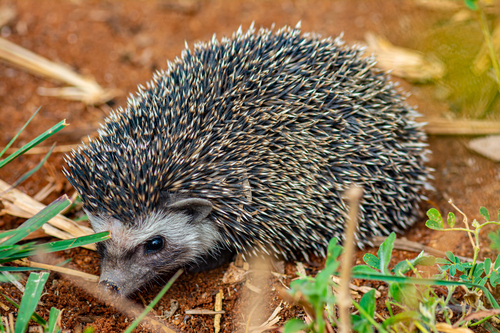
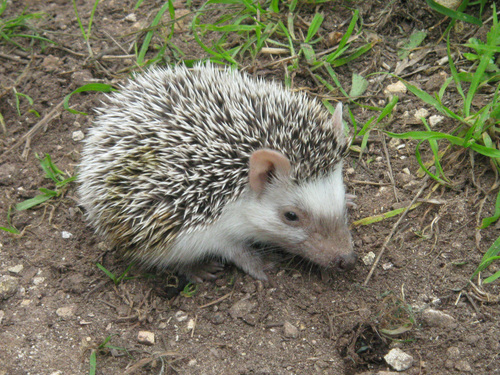
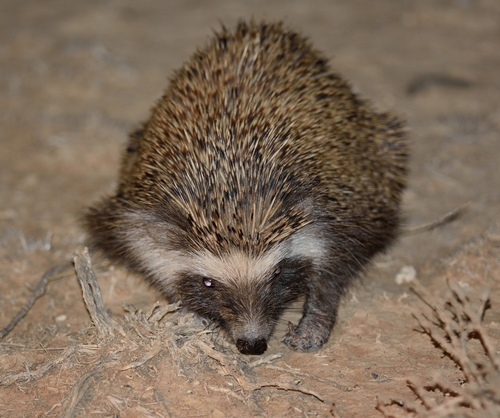
Other species in the genus Atelerix
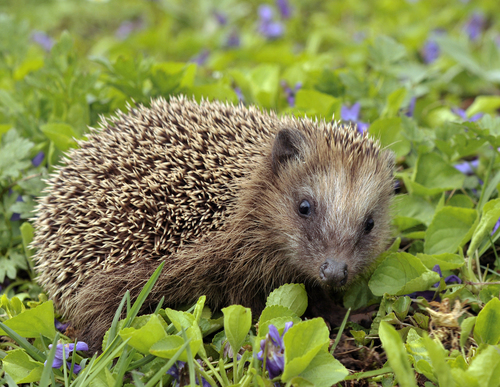
Other species in the family Erinaceidae
Species that share its range
Sources
Conservation status, range description and population estimate come from the IUCN Red List assessment for Atelerix sclateri. Countries are derived from that range description, not from a mapped country list. Last refreshed on .
The distribution map is drawn from the IUCN Red List spatial data compiled in 2008. IUCN (International Union for Conservation of Nature)