
Sinaloan Pocket Mouse
Chaetodipus pernix
Red List assessment
Least Concernon the IUCN Red List
- EXExtinct
- EWExtinct in the Wild
- CRCritically Endangered
- ENEndangered
- VUVulnerable
- NTNear Threatened
- LCLeast Concern
The Sinaloan Pocket Mouse is recorded in one country, Mexico across North America. The IUCN Red List assesses the Sinaloan Pocket Mouse as Least Concern. No precise global population estimate exists, but the species is considered common within suitable habitat; population trend is presumed stable to slightly declining due to habitat conversion.
- Family
- Heteromyidae
- Order
- Rodentia
- Genus
- Chaetodipus
- Countries recorded
- 1
- Continents
- North America
- Red List category
- Least Concern
- Data updated
- August 9, 2026
What is the Sinaloan Pocket Mouse?
The Sinaloan Pocket Mouse is a small nocturnal rodent endemic to the coastal thornscrub and tropical deciduous forest of northwestern Mexico. It belongs to the spiny pocket mice group, characterized by external fur-lined cheek pouches used for seed transport. It is remarkable for its specialized adaptations to arid, seasonally dry tropical habitats and its role as a seed disperser in these ecosystems.
Where does the Sinaloan Pocket Mouse live?
Coastal lowlands of northwestern Mexico, primarily in the state of Sinaloa and adjacent parts of Sonora and Nayarit.
Restricted to the Pacific coastal lowlands of northwestern Mexico, mainly within the state of Sinaloa, extending into southern Sonora and northern Nayarit.
Altitude and depth
Generally found at low elevations, from sea level up to approximately 500-800 meters.
Seasonal movements
Activity and reproduction are closely tied to the wet and dry seasons, with breeding peaking after seasonal rains when food availability increases; the species does not hibernate but may reduce activity during extreme dry periods.
Habitat of the Sinaloan Pocket Mouse
Found in tropical deciduous forest, thornscrub, and coastal desert scrub habitats, often on sandy or well-drained soils that facilitate burrowing.
Adaptations to its environment
Possesses external, fur-lined cheek pouches for efficient seed transport and storage, along with physiological adaptations for water conservation such as highly concentrated urine, allowing survival without drinking free water. Fossorial burrowing behavior provides thermal refuge from high daytime temperatures.
Conservation status and numbers
Listed as Least Concern by the IUCN due to a relatively wide distribution and presumed large population, although habitat loss in parts of its range is a concern.
Estimated population
No precise global population estimate exists, but the species is considered common within suitable habitat; population trend is presumed stable to slightly declining due to habitat conversion.
What threatens the Sinaloan Pocket Mouse?
Habitat degradation from agricultural expansion, urban development, and conversion of thornscrub to farmland along the Pacific coastal plain of Mexico.
Diseases and parasites
Specific studies are limited, but like other heteromyid rodents, it likely hosts ectoparasites such as fleas and mites, and may be a reservoir for regional zoonotic pathogens.
What is being done to protect it?
No species-specific conservation programs exist; some populations may benefit indirectly from protected natural areas within its range in Sinaloa and Nayarit.
Recommended actions
Recommended actions include habitat monitoring, protection of remaining tropical deciduous forest and thornscrub patches, and further taxonomic and population studies to clarify subspecies status and abundance.
What the Sinaloan Pocket Mouse looks like
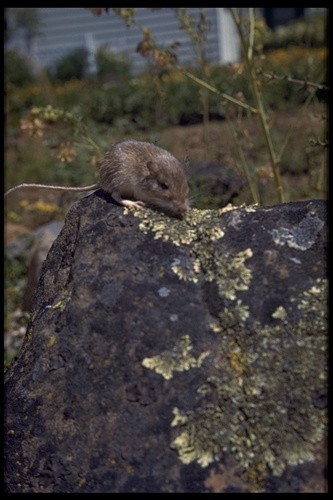
The fur is soft with a mix of spiny and normal hairs on the back, generally pale grayish to buffy brown dorsally with white or pale underparts, and long hind feet adapted for bipedal hopping locomotion.
Size
Total length approximately 170-200 mm, including a tail that is typically longer than the head-body length.
Weight
Adults typically weigh between 15 and 25 grams.
Distinctive features
Distinguished from related Chaetodipus species by subtle differences in pelage coloration, skull morphology, and the relative spininess of dorsal fur, often requiring cranial measurements for definitive identification.
Differences between males and females
Sexual dimorphism is minimal, with males and females similar in size and coloration, though males may be marginally larger.
Behaviour and diet of the Sinaloan Pocket Mouse
Primarily solitary, coming together only briefly for mating; individuals maintain separate burrow systems and forage independently.
When it is active
Strictly nocturnal, emerging after dusk to forage and returning to burrows before dawn to avoid heat and predators.
Diet
Primarily granivorous, feeding on seeds of grasses and desert plants, supplemented occasionally with insects and green vegetation when available.
How it feeds and hunts
Forages by searching the ground and using cheek pouches to collect and transport seeds back to burrow caches for storage.
Communication
Communication likely involves scent marking of burrows and foraging areas, along with some vocalizations and foot-drumming behaviors typical of heteromyid rodents for predator alerts or territorial signaling.
Interactions with other species
Preyed upon by owls, snakes, foxes, and other small carnivores; competes with other rodent species for seed resources within the same habitat.
Role in its ecosystem
Plays an important ecological role as a seed disperser and seed predator, influencing plant community composition, and serves as a prey base supporting local predator populations.
Reproduction and lifecycle
Breeding typically occurs in conjunction with the rainy season when food resources peak; litters usually consist of 2-6 young after a gestation period of about 25 days.
Raising the young
Females provide sole parental care, nursing and sheltering young in the burrow until weaning, after which juveniles disperse to establish their own territories.
Maturity and lifespan
Sexual maturity is generally reached within a few months of birth; lifespan in the wild is typically short, around 1-2 years, though captive individuals of related species have lived slightly longer.
Taxonomy and naming of the Sinaloan Pocket Mouse
Classification
Class Mammalia > Order Rodentia > Family Heteromyidae > Genus Chaetodipus > Species Chaetodipus pernix
Subspecies
Several subspecies have been described, including C. p. pernix, C. p. cinerascens, and C. p. rudinoris, differing slightly in pelage coloration and distributed across different parts of coastal Sinaloa and adjacent areas, though taxonomic boundaries are not fully resolved.
Scientific synonyms
Perognathus pernix (original combination before generic reassignment to Chaetodipus).
What research says
Recent studies
Recent taxonomic and phylogenetic studies using molecular data have helped clarify relationships within the Chaetodipus genus, though species-specific ecological research on C. pernix remains limited.
Genome and DNA
Specific chromosome number data for this species is limited, though related Chaetodipus species typically have diploid numbers around 2n=52-60, subject to further genetic study.
Compared with similar species
Similar in general appearance to other coastal Chaetodipus species such as C. baileyi and C. arenarius, but distinguished by geographic range and subtle morphological differences in fur and skull structure.
The Sinaloan Pocket Mouse and people
This tiny rodent can survive without ever drinking water, obtaining all moisture from its seed diet through highly efficient kidneys. Its external cheek pouches, unlike internal ones in other rodents, open outward and are used like built-in shopping bags for seeds.
Where and how to see it
Best observed at night using a flashlight or headlamp in thornscrub habitats of coastal Sinaloa during the warmer, wetter months when activity is highest; patience near burrow entrances at dusk increases chances of sighting.
Risks to humans
No notable risk to humans; it is a small, non-aggressive rodent that avoids human contact.
Countries where the Sinaloan Pocket Mouse is recorded
The 1 countries named in the range description of its IUCN Red List assessment.
Questions about the Sinaloan Pocket Mouse
Where does the Sinaloan Pocket Mouse live?
The Sinaloan Pocket Mouse is recorded in Mexico across North America. These countries come from the range description of its IUCN Red List assessment, and they are what place the species on the interactive map.
Is the Sinaloan Pocket Mouse endangered?
The IUCN Red List assesses the Sinaloan Pocket Mouse as Least Concern. The species is widespread and abundant enough not to qualify for any threatened category. It does not mean the species is safe forever, only that nothing in the current data raises an alarm.
How many are left in the wild?
No precise global population estimate exists, but the species is considered common within suitable habitat; population trend is presumed stable to slightly declining due to habitat conversion. This figure comes from the species assessment on the IUCN Red List; population estimates for wild mammals are ranges, not counts, and are revised at each assessment.
What habitat does the Sinaloan Pocket Mouse live in?
Found in tropical deciduous forest, thornscrub, and coastal desert scrub habitats, often on sandy or well-drained soils that facilitate burrowing.
What is the scientific name of the Sinaloan Pocket Mouse?
The Sinaloan Pocket Mouse is Chaetodipus pernix, in the family Heteromyidae, order Rodentia.
Other species in the genus Chaetodipus
Other species in the family Heteromyidae
Sources
Conservation status, range description and population estimate come from the IUCN Red List assessment for Chaetodipus pernix. Countries are derived from that range description, not from a mapped country list. Last refreshed on .
The distribution map is drawn from the IUCN Red List spatial data compiled in 2008. IUCN (International Union for Conservation of Nature)