
Narrow-skulled Pocket Mouse
Chaetodipus artus
Red List assessment
Least Concernon the IUCN Red List
- EXExtinct
- EWExtinct in the Wild
- CRCritically Endangered
- ENEndangered
- VUVulnerable
- NTNear Threatened
- LCLeast Concern
The Narrow-skulled Pocket Mouse is recorded in one country, Mexico across North America. The IUCN Red List assesses the Narrow-skulled Pocket Mouse as Least Concern. Population size is not precisely quantified but is considered stable based on current habitat availability and lack of significant range contraction.
- Family
- Heteromyidae
- Order
- Rodentia
- Genus
- Chaetodipus
- Countries recorded
- 1
- Continents
- North America
- Red List category
- Least Concern
- Data updated
- August 9, 2026
What is the Narrow-skulled Pocket Mouse?
Chaetodipus artus, the Narrow-skulled Pocket Mouse, is a small nocturnal rodent endemic to the Pacific coastal lowlands of northwestern Mexico. It belongs to the pocket mouse family, characterized by external fur-lined cheek pouches used for seed transport. This species is notable for its adaptation to arid tropical deciduous forest and thorn scrub habitats, occupying a relatively narrow geographic range along the Sinaloan coastal plain.
Where does the Narrow-skulled Pocket Mouse live?
Western Mexico, primarily the states of Sonora and Sinaloa
Endemic to a narrow coastal strip in northwestern Mexico, spanning southern Sonora and Sinaloa states along the Gulf of California lowlands.
Altitude and depth
Sea level to approximately 500 meters elevation
Seasonal movements
Activity and reproduction correlate with seasonal rainfall patterns; more active and reproductively engaged during the wet season when food resources are abundant.
Habitat of the Narrow-skulled Pocket Mouse
Inhabits arid tropical deciduous forests, thornscrub, and coastal scrubland with sandy or well-drained soils suitable for burrowing. Often found in areas with scattered vegetation providing seed resources and cover from predators.
Adaptations to its environment
Possesses external cheek pouches for efficient seed caching and transport back to burrows. Exhibits nocturnal behavior and burrowing habits to avoid extreme daytime heat and desiccation typical of arid environments.
Conservation status and numbers
Least Concern (LC) according to IUCN, as the species maintains a stable population within its endemic range without significant evidence of decline.
Estimated population
Population size is not precisely quantified but is considered stable based on current habitat availability and lack of significant range contraction.
What threatens the Narrow-skulled Pocket Mouse?
Habitat conversion for agriculture, urban development, and livestock grazing in coastal Sinaloa and Sonora poses localized threats to remaining thornscrub habitat.
What is being done to protect it?
No species-specific conservation programs are documented; general habitat protection occurs incidentally through Mexican protected natural areas within its range.
Recommended actions
Monitoring of habitat loss trends in coastal Sinaloa, protection of remaining tropical deciduous forest fragments, and further ecological studies to establish baseline population data.
What the Narrow-skulled Pocket Mouse looks like
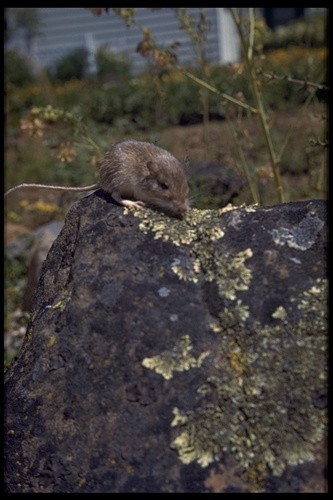
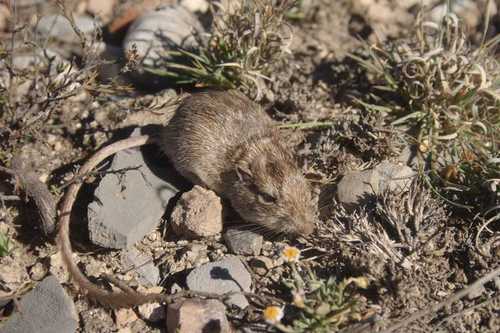
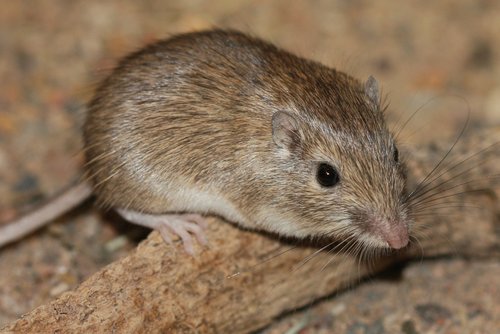
Pale to grayish-brown dorsal fur with lighter, whitish underparts, consistent with typical Heteromyidae coloration for camouflage in arid habitats. Possesses external fur-lined cheek pouches, a long tail, and elongated hind limbs suited for hopping locomotion.
Size
Total length approximately 170-200 mm, including a tail that is typically longer than the body length
Weight
Approximately 15-25 grams
Distinctive features
Distinguished from congeners primarily by cranial morphology, particularly a narrower skull shape as reflected in its common name, along with specific dental and pelage characteristics used in taxonomic identification.
Behaviour and diet of the Narrow-skulled Pocket Mouse
Generally solitary outside of breeding encounters, with individuals maintaining separate burrow systems and foraging ranges.
When it is active
Strictly nocturnal, emerging after dusk to forage and returning to burrows before daylight to avoid predation and thermal stress.
Diet
Primarily granivorous, feeding on seeds of native grasses and shrubs; may supplement diet with some plant material and occasional insects when available.
How it feeds and hunts
Forages by searching leaf litter and soil surface for seeds, using cheek pouches to collect and transport food to burrow caches for storage.
Communication
Likely relies on scent marking and tactile communication typical of solitary nocturnal rodents, with limited vocalization documented.
Interactions with other species
Preyed upon by nocturnal predators such as owls, snakes, and small carnivores; may compete with other sympatric heteromyid and cricetid rodents for seed resources.
Role in its ecosystem
Plays a role in seed dispersal and predation within arid scrubland ecosystems, influencing plant community dynamics through selective seed caching and consumption.
Reproduction and lifecycle
Breeding likely occurs during and after the rainy season when food is abundant; litters are presumed small, consistent with related Chaetodipus species, though specific data for this species is limited.
Raising the young
Presumed maternal care typical of heteromyid rodents, with females nursing and protecting young in burrow nests until weaning, though detailed observations are lacking.
Maturity and lifespan
Sexual maturity likely reached within the first year of life; lifespan in the wild is estimated at 1-3 years, consistent with similar small heteromyid rodents.
Taxonomy and naming of the Narrow-skulled Pocket Mouse
Classification
Class Mammalia > Order Rodentia > Family Heteromyidae > Genus Chaetodipus > Species Chaetodipus artus
Scientific synonyms
Previously classified as a subspecies of Chaetodipus pernix or included within Perognathus baileyi complex in older literature
What research says
Recent studies
Limited recent taxonomic and phylogenetic studies have helped clarify the species' distinct status within the Chaetodipus genus using molecular and morphological data.
Compared with similar species
Closely related to other Chaetodipus species such as C. pernix and C. baileyi, but distinguished by its narrower skull morphology and restricted coastal Sinaloan range.
The Narrow-skulled Pocket Mouse and people
This species has one of the most geographically restricted ranges among Chaetodipus pocket mice, found only in a narrow coastal band of Mexico. Its cheek pouches can be turned inside out for cleaning, a unique feature among rodents.
Where and how to see it
Best observed at night using red-filtered flashlights in thornscrub habitats of coastal Sinaloa during the warmer, wetter months when activity is highest; live trapping surveys are the primary method used by researchers.
Risks to humans
No notable risk to humans
Countries where the Narrow-skulled Pocket Mouse is recorded
The 1 countries named in the range description of its IUCN Red List assessment.
Questions about the Narrow-skulled Pocket Mouse
Where does the Narrow-skulled Pocket Mouse live?
The Narrow-skulled Pocket Mouse is recorded in Mexico across North America. These countries come from the range description of its IUCN Red List assessment, and they are what place the species on the interactive map.
Is the Narrow-skulled Pocket Mouse endangered?
The IUCN Red List assesses the Narrow-skulled Pocket Mouse as Least Concern. The species is widespread and abundant enough not to qualify for any threatened category. It does not mean the species is safe forever, only that nothing in the current data raises an alarm.
How many are left in the wild?
Population size is not precisely quantified but is considered stable based on current habitat availability and lack of significant range contraction. This figure comes from the species assessment on the IUCN Red List; population estimates for wild mammals are ranges, not counts, and are revised at each assessment.
What habitat does the Narrow-skulled Pocket Mouse live in?
Inhabits arid tropical deciduous forests, thornscrub, and coastal scrubland with sandy or well-drained soils suitable for burrowing.
What is the scientific name of the Narrow-skulled Pocket Mouse?
The Narrow-skulled Pocket Mouse is Chaetodipus artus, in the family Heteromyidae, order Rodentia.
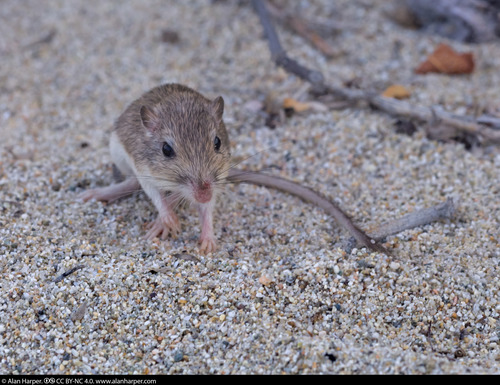
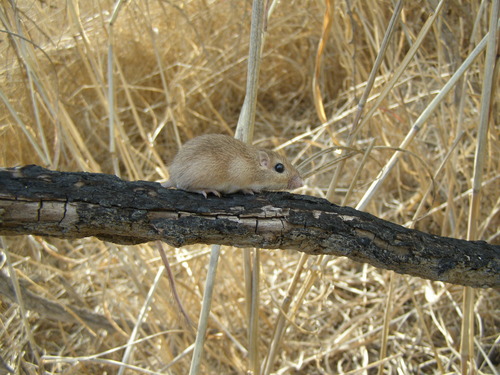
Other species in the genus Chaetodipus
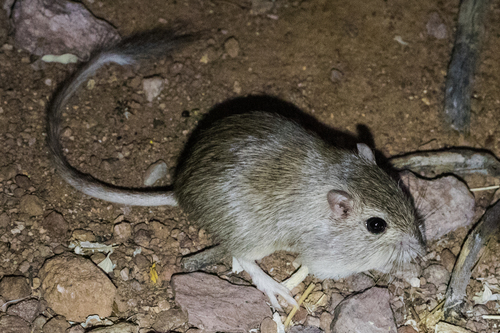
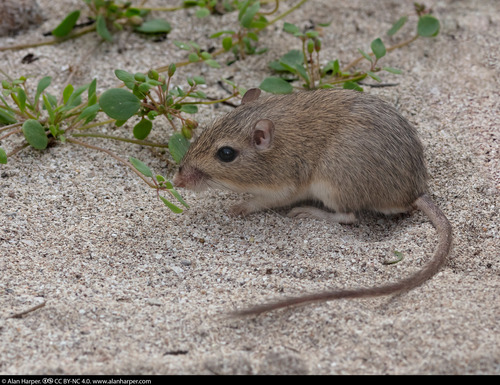
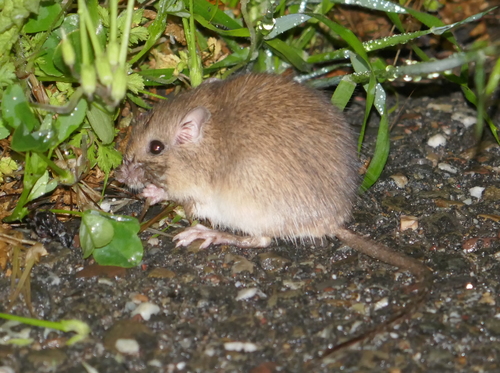
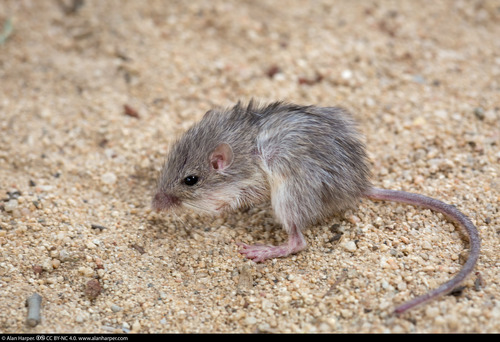
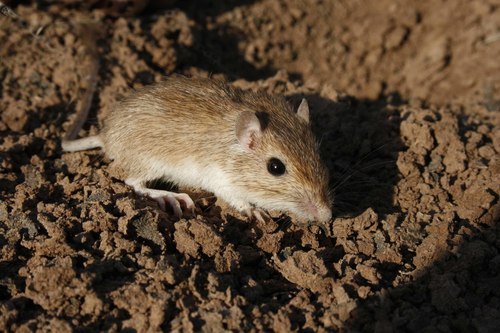
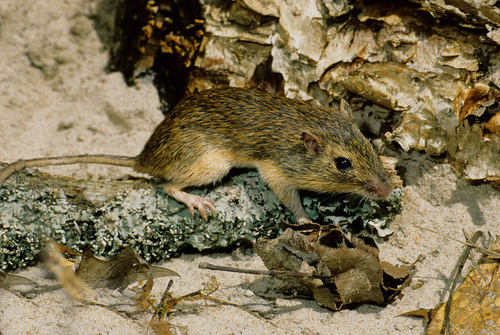
Other species in the family Heteromyidae
Sources
Conservation status, range description and population estimate come from the IUCN Red List assessment for Chaetodipus artus. Countries are derived from that range description, not from a mapped country list. Last refreshed on .
The distribution map is drawn from the IUCN Red List spatial data compiled in 2008. IUCN (International Union for Conservation of Nature)