
Goldman's Pocket Mouse
Chaetodipus goldmani
Red List assessment
Near Threatenedon the IUCN Red List
- EXExtinct
- EWExtinct in the Wild
- CRCritically Endangered
- ENEndangered
- VUVulnerable
- NTNear Threatened
- LCLeast Concern
The Goldman's Pocket Mouse is recorded in one country, Mexico across North America. The IUCN Red List assesses the Goldman's Pocket Mouse as Near Threatened. No precise global population estimate exists, but the population is suspected to be declining due to habitat conversion within its restricted geographic range.
- Family
- Heteromyidae
- Order
- Rodentia
- Genus
- Chaetodipus
- Countries recorded
- 1
- Continents
- North America
- Red List category
- Near Threatened
- Data updated
- August 9, 2026
What is the Goldman's Pocket Mouse?
Goldman's Pocket Mouse is a small, nocturnal rodent endemic to the arid and semi-arid lowlands of northwestern Mexico. It belongs to the heteromyid family, characterized by external fur-lined cheek pouches used for seed transport. The species is notable for its specialized desert adaptations and its restricted, poorly studied range along the Gulf of California coastal plains.
Where does the Goldman's Pocket Mouse live?
Northwestern Mexico, primarily the states of Sonora and Sinaloa
Endemic to northwestern Mexico, found primarily in the coastal lowlands of Sonora and northern Sinaloa along the Gulf of California. Its range is relatively narrow compared to other Chaetodipus species, limited to specific arid ecosystems in this region.
Altitude and depth
Typically found at low elevations, from sea level up to approximately 1000 meters.
Seasonal movements
Activity levels fluctuate seasonally, with reduced surface activity during extreme heat or cold; some torpor-like reduction in activity may occur during resource-poor periods.
Habitat of the Goldman's Pocket Mouse
Inhabits arid scrubland, thorn forest, and desert grassland habitats, often on sandy or gravelly soils that facilitate burrowing. It is commonly associated with Sonoran desert vegetation communities including cacti, mesquite, and other xerophytic shrubs.
Adaptations to its environment
Possesses external cheek pouches for efficient seed caching, highly efficient kidneys to minimize water loss, and nocturnal habits to avoid daytime heat. Its sandy-colored fur provides camouflage against desert substrates.
Conservation status and numbers
Listed as Near Threatened (NT) by the IUCN due to its restricted range and ongoing habitat degradation, though it does not yet meet the thresholds for a more severe threat category.
Estimated population
No precise global population estimate exists, but the population is suspected to be declining due to habitat conversion within its restricted geographic range.
What threatens the Goldman's Pocket Mouse?
Habitat loss from agricultural expansion, urban development, and livestock grazing in its limited range are the primary threats, compounded by potential climate change impacts on desert ecosystems.
Diseases and parasites
Susceptible to ectoparasites such as fleas and mites typical of desert rodents, which can also serve as vectors for regional zoonotic diseases like hantavirus.
What is being done to protect it?
Some populations may occur within protected natural areas in Sonora, though species-specific conservation programs are lacking; general habitat protection in the region provides indirect benefit.
Recommended actions
Recommended actions include habitat surveys to better delineate range and population size, protection of remaining arid scrubland habitat, and monitoring of land-use changes in Sonora and Sinaloa.
What the Goldman's Pocket Mouse looks like
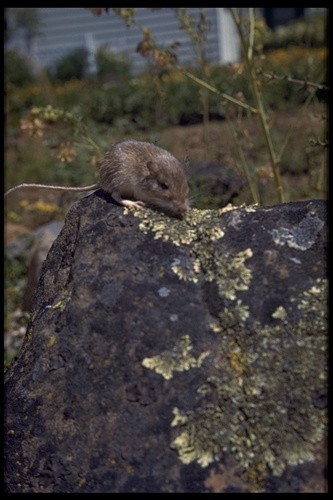
Has soft, pale buffy to grayish-brown dorsal fur that blends with desert soils, with a lighter or whitish underside. The tail is long, often crested, and darker above than below.
Size
Total body length typically ranges from 170 to 200 mm, including a tail that is often longer than the body.
Weight
Adults typically weigh between 15 and 25 grams.
Distinctive features
Distinguished from related Chaetodipus species by subtle differences in pelage coloration, skull morphology, and the degree of spininess in the fur along the rump.
Differences between males and females
Minimal sexual dimorphism; males and females are similar in size and coloration with only slight average size differences.
Behaviour and diet of the Goldman's Pocket Mouse
Primarily solitary, coming together only briefly for mating; individuals maintain separate burrow systems and forage independently.
When it is active
Strictly nocturnal, emerging after dusk to forage and returning to burrows before dawn to avoid predators and heat.
Diet
Primarily granivorous, feeding on seeds of desert grasses, shrubs, and forbs; may supplement diet with some green vegetation and insects when available.
How it feeds and hunts
Forages by searching the ground and shrub bases for seeds, using cheek pouches to collect and transport food back to burrow caches for later consumption.
Communication
Communicates primarily through scent marking of burrows and pathways, along with some vocalizations and foot-drumming behaviors typical of heteromyid rodents.
Interactions with other species
Preyed upon by owls, snakes, foxes, and other desert predators; may compete with other small heteromyids and rodents for seed resources in the same habitat.
Role in its ecosystem
Plays an important ecological role as a seed disperser and seed predator, influencing desert plant community composition, and serves as a prey base for numerous desert predators.
Reproduction and lifecycle
Breeding likely occurs during warmer, wetter months when food resources are more abundant, with litters typically consisting of 2 to 5 young after a gestation of roughly 25 days.
Raising the young
Females provide all parental care, nursing and sheltering young in the burrow until they are weaned and capable of independent foraging within a few weeks.
Maturity and lifespan
Reaches sexual maturity within a few months of birth; lifespan in the wild is typically short, around 1 to 2 years, due to high predation pressure.
Taxonomy and naming of the Goldman's Pocket Mouse
Classification
Class Mammalia > Order Rodentia > Family Heteromyidae > Genus Chaetodipus > Species Chaetodipus goldmani
Subspecies
Several subspecies have been described across its Sonoran-Sinaloan range, though taxonomic boundaries remain debated; further genetic study is needed to clarify subspecific status.
Scientific synonyms
Previously classified within a broader Chaetodipus baileyi or Perognathus species complex before being recognized as a distinct species.
What research says
Recent studies
Recent taxonomic and phylogeographic studies have focused on clarifying species boundaries within the Chaetodipus genus using molecular data, though species-specific ecological studies remain scarce.
Genome and DNA
Specific genome studies are limited, though as with other Chaetodipus species, karyotype studies have contributed to species delimitation within the genus.
Compared with similar species
Similar in general appearance to other Sonoran pocket mice like Chaetodipus baileyi and Chaetodipus penicillatus, but distinguished by subtle morphological and genetic differences and a more restricted range.
The Goldman's Pocket Mouse and people
Like other pocket mice, it can survive without ever drinking water, obtaining all necessary moisture from its seed diet through metabolic water production. Its cheek pouches are external and fur-lined, unlike the internal pouches of many other rodents.
Where and how to see it
Best observed at night using red-filtered flashlights in Sonoran desert scrub habitats of coastal Sonora, particularly during cooler months when activity may be more concentrated in early evening hours.
Risks to humans
No notable risk to humans, though as with many desert rodents, indirect risk exists through potential hantavirus transmission from contact with droppings or nesting material.
Countries where the Goldman's Pocket Mouse is recorded
The 1 countries named in the range description of its IUCN Red List assessment.
Questions about the Goldman's Pocket Mouse
Where does the Goldman's Pocket Mouse live?
The Goldman's Pocket Mouse is recorded in Mexico across North America. These countries come from the range description of its IUCN Red List assessment, and they are what place the species on the interactive map.
Is the Goldman's Pocket Mouse endangered?
The IUCN Red List assesses the Goldman's Pocket Mouse as Near Threatened. The species does not qualify as threatened today, but it is close to the thresholds and likely to cross them soon. It is the category that most often changes at the next assessment.
How many are left in the wild?
No precise global population estimate exists, but the population is suspected to be declining due to habitat conversion within its restricted geographic range. This figure comes from the species assessment on the IUCN Red List; population estimates for wild mammals are ranges, not counts, and are revised at each assessment.
What habitat does the Goldman's Pocket Mouse live in?
Inhabits arid scrubland, thorn forest, and desert grassland habitats, often on sandy or gravelly soils that facilitate burrowing.
What is the scientific name of the Goldman's Pocket Mouse?
The Goldman's Pocket Mouse is Chaetodipus goldmani, in the family Heteromyidae, order Rodentia.
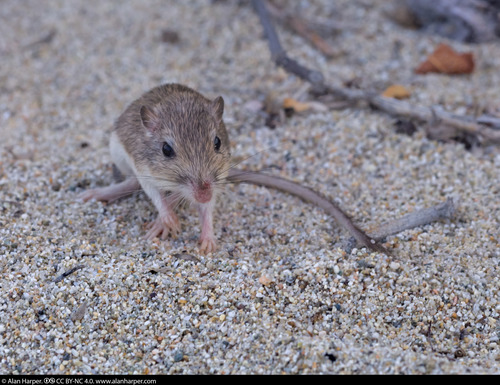
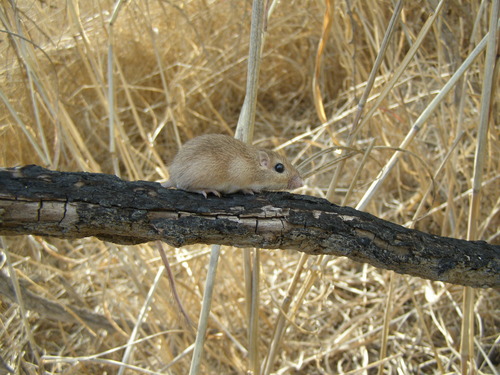
Other species in the genus Chaetodipus
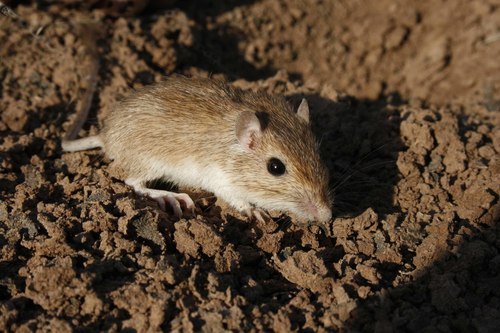
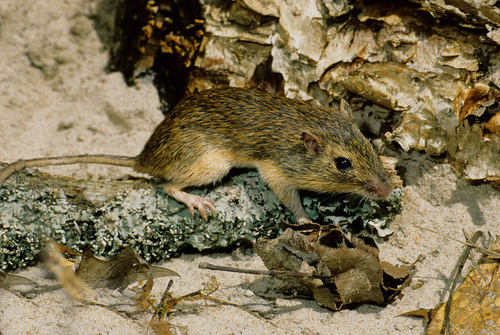
Other species in the family Heteromyidae
Sources
Conservation status, range description and population estimate come from the IUCN Red List assessment for Chaetodipus goldmani. Countries are derived from that range description, not from a mapped country list. Last refreshed on .
The distribution map is drawn from the IUCN Red List spatial data compiled in 2019. IUCN SSC Small Mammal Specialist Group