
California Pocket Mouse
Chaetodipus californicus
Red List assessment
Least Concernon the IUCN Red List
- EXExtinct
- EWExtinct in the Wild
- CRCritically Endangered
- ENEndangered
- VUVulnerable
- NTNear Threatened
- LCLeast Concern
The California Pocket Mouse is recorded in 2 countries across North America. The IUCN Red List assesses the California Pocket Mouse as Least Concern. No precise global population estimate exists, but the species is considered common and stable within its range in California
- Family
- Heteromyidae
- Order
- Rodentia
- Genus
- Chaetodipus
- Countries recorded
- 2
- Continents
- North America
- Red List category
- Least Concern
- Data updated
- August 9, 2026
What is the California Pocket Mouse?
The California Pocket Mouse is a small nocturnal rodent endemic to California and adjacent Baja California, known for its external fur-lined cheek pouches used to carry seeds. It inhabits chaparral, grassland, and scrubland habitats, playing an important role in seed dispersal and soil aeration. This species is notable for its long tail relative to body size and its bristly guard hairs on the rump, a distinguishing feature of the genus Chaetodipus.
Where does the California Pocket Mouse live?
Western United States, primarily California, with a small range extending into Baja California, Mexico
Endemic to California, ranging from the San Francisco Bay Area south through the Coast Ranges and Transverse Ranges to northern Baja California, Mexico
Altitude and depth
Sea level up to approximately 2,300 meters in foothill and mountain habitats
Seasonal movements
Exhibits reduced activity or torpor during colder winter months and drought periods; breeding and activity peak in spring and summer when food is abundant
Habitat of the California Pocket Mouse
Prefers chaparral, coastal sage scrub, oak woodland edges, and grassland habitats with sandy or loose soils suitable for burrowing; often found in areas with moderate shrub cover
Adaptations to its environment
Possesses external cheek pouches for efficient seed transport and caching, highly efficient kidneys to minimize water loss, and nocturnal habits to avoid heat and predators; can survive on metabolic water derived from seeds without drinking free water
Conservation status and numbers
Listed as Least Concern by the IUCN due to its relatively wide distribution and stable population across suitable habitat in California
Estimated population
No precise global population estimate exists, but the species is considered common and stable within its range in California
What threatens the California Pocket Mouse?
Habitat loss from urban development, agriculture, and altered fire regimes in California; localized threats from habitat fragmentation in rapidly urbanizing coastal areas
Diseases and parasites
Susceptible to fleas and mites that can carry pathogens such as plague bacteria, though this is not commonly a major issue for the species
What is being done to protect it?
Benefits indirectly from protection of chaparral and coastal sage scrub habitats in state parks, reserves, and open space preserves throughout California
Recommended actions
Continued preservation of native scrubland habitat, monitoring of urban expansion impacts, and maintenance of habitat connectivity in fragmented landscapes
What the California Pocket Mouse looks like
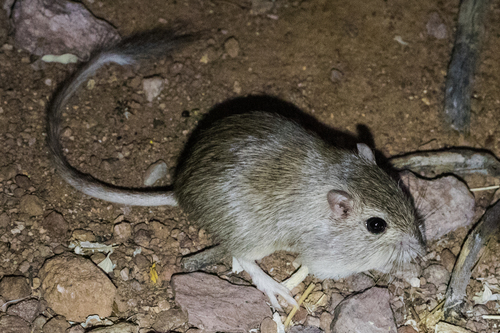
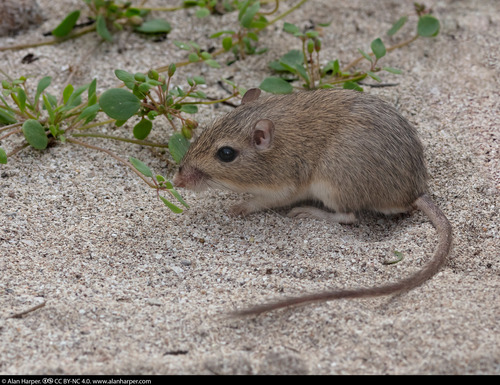
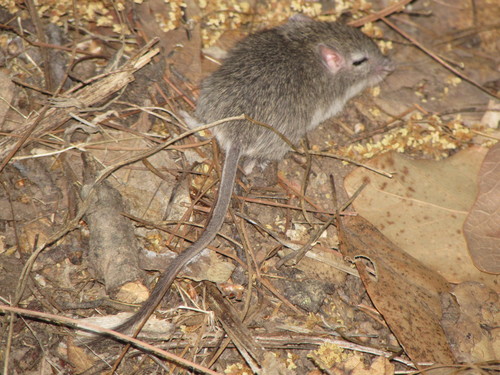
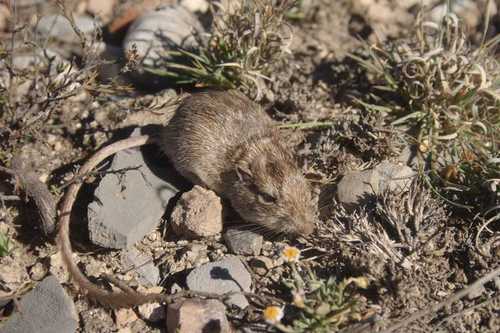
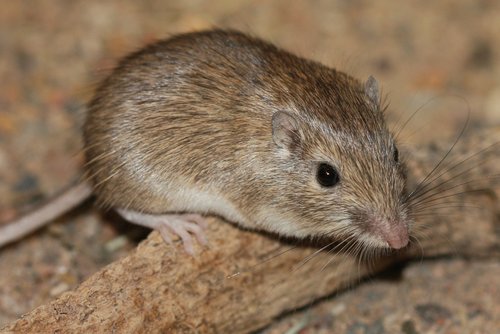
Grayish-brown to yellowish fur on the back with white or pale underparts, and a long bicolored tail with a distinct tuft at the tip; possesses spiny guard hairs mixed with softer fur along the rump
Size
Body length (head and body) ranges from 8-10 cm, with tail length often exceeding body length at 10-13 cm
Weight
Typically weighs between 15-30 grams
Distinctive features
Distinguished from similar Perognathus species by longer tail, coarser and spinier fur especially on the hips, and larger overall body size within the pocket mouse group
Differences between males and females
Minimal sexual dimorphism; males and females are similar in size and coloration with only slight variation in body mass
Behaviour and diet of the California Pocket Mouse
Primarily solitary, with individuals maintaining separate burrow systems and foraging ranges except during breeding season
When it is active
Strictly nocturnal, emerging after dusk to forage and returning to burrows before dawn to avoid predators and daytime heat
Diet
Primarily granivorous, feeding on seeds of grasses and shrubs, supplemented occasionally with insects and green vegetation when available
How it feeds and hunts
Forages by searching leaf litter and soil for seeds, using cheek pouches to collect and transport food back to burrow caches for storage
Communication
Communicates primarily through scent marking of burrows and pathways, along with limited vocalizations and tactile interactions during breeding encounters
Interactions with other species
Preyed upon by owls, snakes, foxes, and other small carnivores; competes with other rodent species such as deer mice for seed resources
Role in its ecosystem
Plays a key ecological role as a seed disperser and predator of seeds, influencing plant community composition, and serves as prey base for many predators in chaparral ecosystems
Reproduction and lifecycle
Breeding season typically occurs from spring through summer; gestation lasts about 21-25 days, with litters averaging 2-6 young born in underground burrows
Raising the young
Females provide sole parental care, nursing and protecting young in the burrow until weaning at approximately 3-4 weeks of age
Maturity and lifespan
Reaches sexual maturity around 2-3 months of age; lifespan in the wild is typically 1-2 years, potentially longer in captivity
Taxonomy and naming of the California Pocket Mouse
Classification
Class Mammalia > Order Rodentia > Family Heteromyidae > Genus Chaetodipus > Species C. californicus
Subspecies
Several subspecies recognized including C. c. californicus (coastal California), C. c. femoralis, C. c. dispar, and C. c. ochrus, differing mainly in coloration and distribution along California's coastal and foothill regions
Scientific synonyms
Perognathus californicus (former genus placement before Chaetodipus was split off)
What research says
Recent studies
Recent phylogeographic studies have examined subspecies boundaries and genetic diversity across California populations to better understand historical range fragmentation
Genome and DNA
Has a diploid chromosome number of 2n=48, typical for many Chaetodipus species, though detailed genomic studies remain limited
Compared with similar species
Similar to other pocket mice like Chaetodipus fallax and Perognathus longimembris, but distinguished by larger size, longer tail, and coarser pelage with more pronounced spiny hairs
The California Pocket Mouse and people
This species can survive without ever drinking water, obtaining all necessary moisture from the seeds it eats; it also caches seeds in numerous small underground stores to survive lean periods.
Where and how to see it
Best observed at night using red-filtered flashlights in chaparral or scrubland areas of coastal California during spring and summer when activity is highest
Risks to humans
No notable risk to humans, though as with all wild rodents there is minor potential for flea-borne disease transmission
Countries where the California Pocket Mouse is recorded
The 2 countries named in the range description of its IUCN Red List assessment.
Questions about the California Pocket Mouse
Where does the California Pocket Mouse live?
The California Pocket Mouse is recorded in Mexico and United States across North America. These countries come from the range description of its IUCN Red List assessment, and they are what place the species on the interactive map.
Is the California Pocket Mouse endangered?
The IUCN Red List assesses the California Pocket Mouse as Least Concern. The species is widespread and abundant enough not to qualify for any threatened category. It does not mean the species is safe forever, only that nothing in the current data raises an alarm.
How many are left in the wild?
No precise global population estimate exists, but the species is considered common and stable within its range in California This figure comes from the species assessment on the IUCN Red List; population estimates for wild mammals are ranges, not counts, and are revised at each assessment.
What habitat does the California Pocket Mouse live in?
Prefers chaparral, coastal sage scrub, oak woodland edges, and grassland habitats with sandy or loose soils suitable for burrowing; often found in areas with moderate shrub cover
What is the scientific name of the California Pocket Mouse?
The California Pocket Mouse is Chaetodipus californicus, in the family Heteromyidae, order Rodentia.
Other species in the genus Chaetodipus
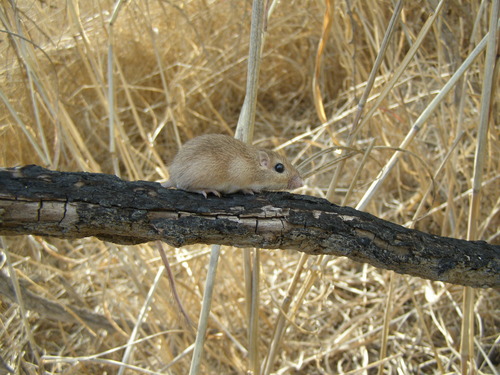
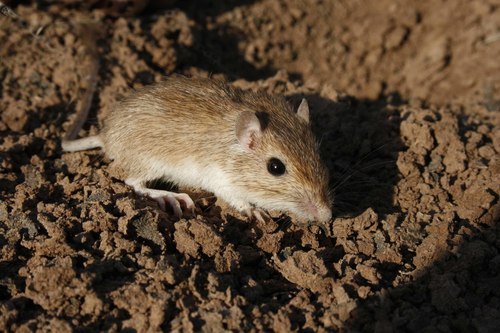
Other species in the family Heteromyidae
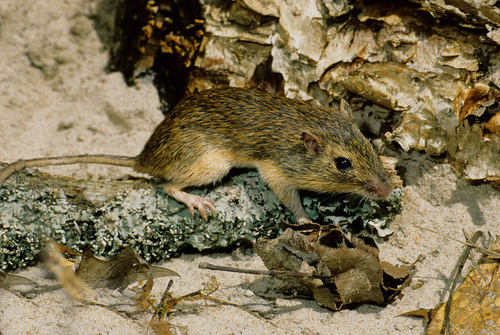
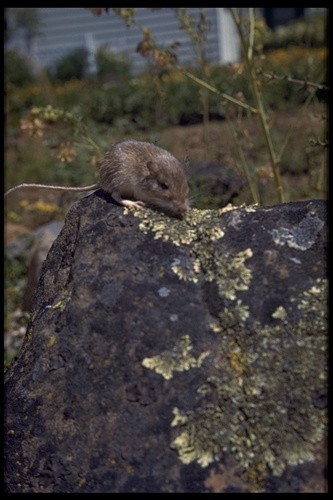
Sources
Conservation status, range description and population estimate come from the IUCN Red List assessment for Chaetodipus californicus. Countries are derived from that range description, not from a mapped country list. Last refreshed on .
The distribution map is drawn from the IUCN Red List spatial data compiled in 2008. IUCN (International Union for Conservation of Nature)