
Rock Pocket Mouse
Chaetodipus intermedius
Red List assessment
Least Concernon the IUCN Red List
- EXExtinct
- EWExtinct in the Wild
- CRCritically Endangered
- ENEndangered
- VUVulnerable
- NTNear Threatened
- LCLeast Concern
The Rock Pocket Mouse is recorded in 2 countries across North America. The IUCN Red List assesses the Rock Pocket Mouse as Least Concern. No precise global population estimate exists, but the species is considered common and stable within suitable rocky desert habitat throughout its range.
- Family
- Heteromyidae
- Order
- Rodentia
- Genus
- Chaetodipus
- Countries recorded
- 2
- Continents
- North America
- Red List category
- Least Concern
- Data updated
- August 9, 2026
What is the Rock Pocket Mouse?
The Rock Pocket Mouse is a small nocturnal desert rodent renowned in evolutionary biology as a model organism for studying rapid adaptive melanism. It inhabits rocky outcrops and lava flows in arid regions of the American Southwest and Mexico, where its coat color closely matches the substrate it lives on. This species has become iconic for demonstrating convergent evolution of dark coloration on black lava rock through mutations in the Mc1r gene.
Where does the Rock Pocket Mouse live?
Southwestern United States and northern Mexico, including Arizona, New Mexico, Texas, and the Chihuahuan and Sonoran Desert regions.
Found in the southwestern United States (Arizona, New Mexico, western Texas) and northern Mexico (Sonora, Chihuahua, Coahuila), typically in the Sonoran and Chihuahuan Desert ecoregions.
Altitude and depth
Generally found at elevations between 300 and 1800 meters in rocky desert terrain.
Seasonal movements
Reduces activity during extreme summer heat and cold winter periods, entering torpor-like states; breeding activity peaks in spring and again in late summer/fall following rains.
Habitat of the Rock Pocket Mouse
Rocky, arid and semi-arid desert habitats including boulder fields, rocky slopes, canyon walls, and volcanic lava flows with sparse vegetation.
Adaptations to its environment
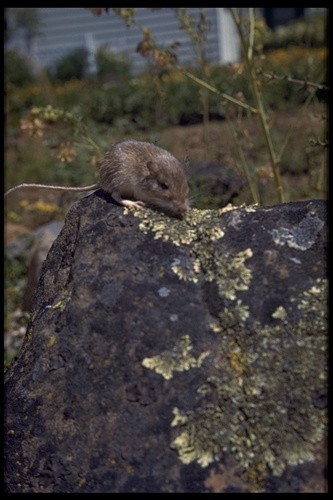
Exhibits striking coat-color polymorphism matching local rock substrate (dark on lava flows, light on pale rocks) for camouflage against predators, has efficient kidneys to minimize water loss, and is highly nocturnal to avoid desert heat.
Conservation status and numbers
Listed as Least Concern by the IUCN due to its wide distribution, presumed large population, and lack of significant range-wide threats.
Estimated population
No precise global population estimate exists, but the species is considered common and stable within suitable rocky desert habitat throughout its range.
What threatens the Rock Pocket Mouse?
Habitat degradation from urban development, off-road vehicle use, and livestock grazing in some areas; climate change may alter desert vegetation and rainfall patterns affecting food availability.
Diseases and parasites
Susceptible to fleas, mites, and other ectoparasites common to desert rodents, as well as occasional exposure to hantaviruses, though not considered a major reservoir species.
What is being done to protect it?
No specific conservation programs target this species due to its stable status; some populations occur within protected areas such as national parks and monuments in Arizona and New Mexico.
Recommended actions
Continued habitat monitoring in areas of urban expansion, protection of rocky desert corridors, and further genetic research to understand adaptive evolution in changing environments.
What the Rock Pocket Mouse looks like
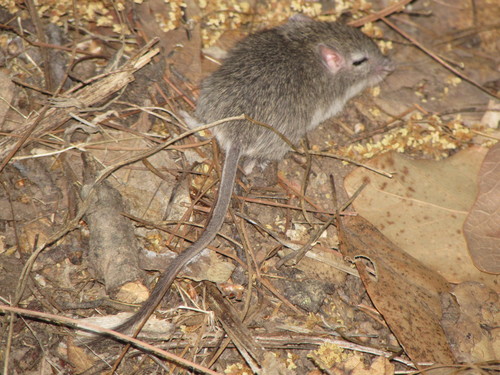
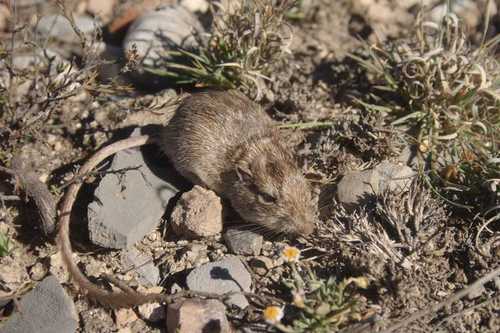
Coat coloration varies from pale sandy-gray on light-colored rocks to dark blackish-brown on volcanic lava substrates, with soft fur, large hind feet, and external fur-lined cheek pouches used for carrying seeds.
Size
Body length typically 165-195 mm including tail, with the tail often longer than the body; head-body length alone is about 75-90 mm.
Weight
Adults typically weigh between 12 and 20 grams.
Distinctive features
Distinguished from related pocket mice by its spiny-textured fur on the rump, longer tail relative to body length, and the remarkable substrate-matching melanism found in populations on lava flows.
Differences between males and females
Minimal sexual dimorphism; males and females are similar in size and coloration, though males may be slightly larger on average.
Behaviour and diet of the Rock Pocket Mouse
Primarily solitary and territorial, with individuals maintaining separate burrow systems and rarely interacting outside of breeding encounters.
When it is active
Strictly nocturnal, emerging after sunset to forage and returning to burrows before dawn to avoid heat and diurnal predators.
Diet
Primarily granivorous, feeding on seeds of desert plants such as grasses and forbs, supplemented occasionally with insects and green vegetation when available.
How it feeds and hunts
Forages by scatter-hoarding seeds, using well-developed fur-lined cheek pouches to transport food back to burrow caches for storage and later consumption.
Communication
Communicates primarily through scent marking of burrows and territories, along with limited vocalizations and foot-drumming behaviors used in some heteromyid species for alarm signaling.
Interactions with other species
Preyed upon by owls, snakes, foxes, and other desert carnivores; competes with other rodent species for seed resources in the same rocky habitats.
Role in its ecosystem
Plays an important ecological role as a seed disperser and prey species within desert ecosystems, and serves as a key model organism for studying rapid evolutionary adaptation.
Reproduction and lifecycle
Breeding occurs mainly in spring and again after summer monsoon rains, with gestation lasting about 25-30 days and litters typically containing 2-6 young.
Raising the young
Females provide sole parental care, nursing and sheltering young in the burrow until weaning at around 3-4 weeks of age, after which juveniles disperse to establish their own territories.
Maturity and lifespan
Reaches sexual maturity at about 2-3 months of age; lifespan in the wild is typically 2-3 years, potentially longer in captivity.
Taxonomy and naming of the Rock Pocket Mouse
Classification
Class Mammalia > Order Rodentia > Family Heteromyidae > Genus Chaetodipus > Species Chaetodipus intermedius
Subspecies
Several subspecies have been described, including C. i. intermedius and C. i. pinacate, distinguished mainly by pelage color adapted to local rock substrates across their range in Arizona, New Mexico, Texas, and Mexico.
Scientific synonyms
Perognathus intermedius (former genus placement before Chaetodipus was elevated to genus status).
What research says
Recent studies
Landmark studies by Hopi Hoekstra and colleagues have used this species to demonstrate rapid, repeated evolution of camouflage coloration through independent genetic mutations in different populations, making it a textbook example of adaptive evolution.
Genome and DNA
Famous in genetics research for mutations in the melanocortin-1 receptor (Mc1r) gene, which underlie convergent evolution of dark coat color in populations living on black lava substrates.
Compared with similar species
Similar to other Chaetodipus and Perognathus pocket mice but distinguished by its unique substrate-matching coloration and its significance as a model for studying melanism evolution, unlike its more uniformly colored relatives.
The Rock Pocket Mouse and people
This species is one of the best-documented examples of rapid evolution in vertebrates, having independently evolved dark coloration multiple times on different lava flows; its cheek pouches can be turned inside out for cleaning, a unique feature among rodents.
Where and how to see it
Best observed at night using red-filtered flashlights in rocky desert areas of Arizona or New Mexico, particularly near lava flows such as those in the Pinacate region, during warmer months when activity is highest.
Risks to humans
No notable risk; this species poses no direct threat to humans and rarely comes into contact with people.
Human uses
Not used commercially or traditionally by humans, but holds significant scientific value as a model organism in evolutionary biology and genetics research.
Countries where the Rock Pocket Mouse is recorded
The 2 countries named in the range description of its IUCN Red List assessment.
Questions about the Rock Pocket Mouse
Where does the Rock Pocket Mouse live?
The Rock Pocket Mouse is recorded in Mexico and United States across North America. These countries come from the range description of its IUCN Red List assessment, and they are what place the species on the interactive map.
Is the Rock Pocket Mouse endangered?
The IUCN Red List assesses the Rock Pocket Mouse as Least Concern. The species is widespread and abundant enough not to qualify for any threatened category. It does not mean the species is safe forever, only that nothing in the current data raises an alarm.
How many are left in the wild?
No precise global population estimate exists, but the species is considered common and stable within suitable rocky desert habitat throughout its range. This figure comes from the species assessment on the IUCN Red List; population estimates for wild mammals are ranges, not counts, and are revised at each assessment.
What habitat does the Rock Pocket Mouse live in?
Rocky, arid and semi-arid desert habitats including boulder fields, rocky slopes, canyon walls, and volcanic lava flows with sparse vegetation.
What is the scientific name of the Rock Pocket Mouse?
The Rock Pocket Mouse is Chaetodipus intermedius, in the family Heteromyidae, order Rodentia.
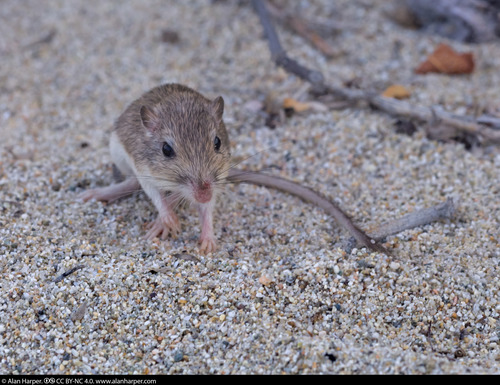
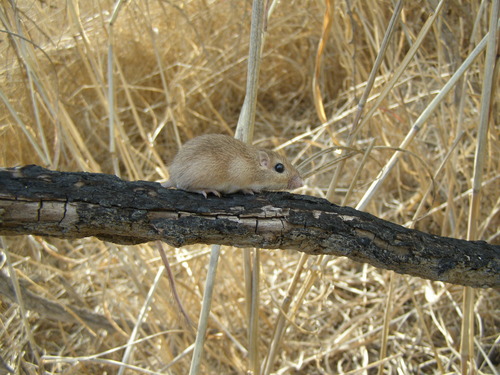
Other species in the genus Chaetodipus
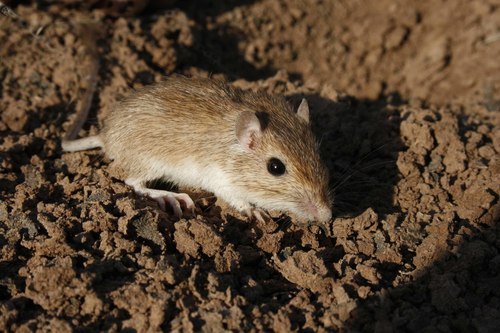
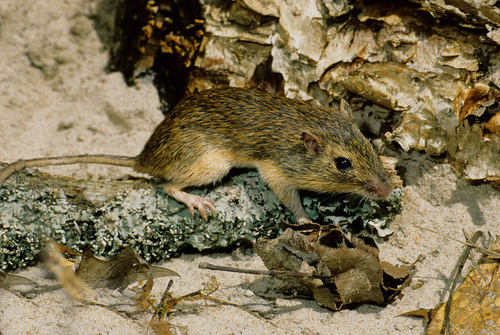
Other species in the family Heteromyidae
Sources
Conservation status, range description and population estimate come from the IUCN Red List assessment for Chaetodipus intermedius. Countries are derived from that range description, not from a mapped country list. Last refreshed on .
The distribution map is drawn from the IUCN Red List spatial data compiled in 2008. IUCN (International Union for Conservation of Nature)