
Pale Grey Shrew
Crocidura pergrisea
Red List assessment
Data Deficienton the IUCN Red List
- EXExtinct
- EWExtinct in the Wild
- CRCritically Endangered
- ENEndangered
- VUVulnerable
- NTNear Threatened
- LCLeast Concern
Data Deficient has no position on the scale above — it records the absence of an assessment, not a degree of risk.
The Pale Grey Shrew is recorded in 2 countries across Asia. The IUCN Red List records the Pale Grey Shrew as Data Deficient. Population size is unknown; no reliable estimates exist due to the paucity of records and lack of dedicated surveys targeting this species
- Family
- Soricidae
- Order
- Eulipotyphla
- Genus
- Crocidura
- Countries recorded
- 2
- Continents
- Asia
- Red List category
- Data Deficient
- Data updated
- August 9, 2026
What is the Pale Grey Shrew?
The Pale Grey Shrew is a small, poorly studied insectivorous mammal endemic to the high-altitude regions of Kashmir in the western Himalayas. It is known from only a handful of museum specimens, making it one of the least understood shrew species in the world. Its pale grey coloration distinguishes it from many sympatric Crocidura species. Due to extreme rarity of records, almost all aspects of its biology remain speculative.
Where does the Pale Grey Shrew live?
Western Himalayas, primarily in the Kashmir region spanning northern Pakistan and northern India
Restricted to the Kashmir region of the western Himalayas, with historical records from northern Pakistan and northern India. The species has an extremely limited known range, with very few confirmed localities recorded since its original description.
Altitude and depth
Estimated to occur between 2500-4000 meters, based on the alpine and subalpine habitats typical of the Kashmir Himalayas where specimens have been collected
Seasonal movements
No specific data available on seasonal behavior; likely experiences reduced activity during harsh Himalayan winters given the extreme cold at high altitudes
Habitat of the Pale Grey Shrew
Believed to inhabit alpine meadows, subalpine scrublands, and rocky terrain at high elevations in the Himalayan region. Likely prefers areas with moist soil and dense low vegetation that support invertebrate prey. Specific habitat preferences remain poorly documented due to the scarcity of field observations.
Adaptations to its environment
Presumed to have a dense fur coat suited to cold, high-altitude environments typical of Himalayan shrews. Small body size may allow efficient thermoregulation and access to insect prey in leaf litter and soil crevices. Specific physiological adaptations remain unstudied.
Conservation status and numbers
Listed as Data Deficient (DD) by IUCN due to extremely limited specimen records and lack of recent field surveys. Insufficient information exists on population size, distribution, or trends to assess extinction risk accurately.
Estimated population
Population size is unknown; no reliable estimates exist due to the paucity of records and lack of dedicated surveys targeting this species
What threatens the Pale Grey Shrew?
Potential threats include habitat degradation from grazing, climate change affecting alpine ecosystems, and human encroachment into high-altitude areas. However, since the species is so rarely recorded, actual threat levels are unknown.
What is being done to protect it?
No specific conservation programs target this species directly, though it may benefit incidentally from protected areas within its presumed Himalayan range, such as national parks in Kashmir. No captive breeding or dedicated monitoring programs are known.
Recommended actions
Priority actions include conducting targeted field surveys in Kashmir to confirm current distribution and status, genetic studies to clarify taxonomic validity, and habitat assessments in known and potential range areas. Increased funding for small mammal research in the region is critically needed.
What the Pale Grey Shrew looks like
Characterized by pale grey dorsal fur, which distinguishes it from browner or darker congeners in the region. Has the typical elongated snout, small eyes, and short dense fur typical of shrews. Ventral fur is likely lighter than the dorsal coloration.
Size
Estimated body length of 55-70mm (head-body), typical for small Crocidura shrews, though exact measurements from limited specimens may vary
Weight
Estimated weight of 4-8 grams, consistent with similarly sized Crocidura species from high-altitude regions
Distinctive features
The notably pale grey coloration is the primary distinguishing feature separating it from other Crocidura species found in the Himalayan region, which tend to have darker or more brownish fur
Behaviour and diet of the Pale Grey Shrew
Presumed to be solitary, consistent with most Crocidura shrew species, though no direct behavioral observations have been documented for this specific species
When it is active
Likely nocturnal or crepuscular, consistent with typical shrew activity patterns, though no specific data exists confirming activity rhythms for this species
Diet
Presumed insectivorous diet consisting of small invertebrates such as insects, spiders, and worms found in soil and leaf litter, typical of the Crocidura genus
How it feeds and hunts
Likely forages by actively searching through leaf litter, soil, and vegetation using its sensitive whiskers and snout to detect prey, as is typical for shrews
Communication
Likely uses high-frequency vocalizations and scent marking for communication, as is common among shrews, though no specific studies have documented this species' communication methods
Interactions with other species
Likely predated upon by small carnivores, birds of prey, and snakes present in its high-altitude habitat; may compete with other small mammals for invertebrate prey resources
Role in its ecosystem
Likely plays a role as a predator of soil and leaf-litter invertebrates, contributing to pest control and nutrient cycling in its alpine ecosystem, similar to other shrew species
Reproduction and lifecycle
No specific reproductive data exists for this species; likely follows the general Crocidura pattern of multiple litters per year with short gestation periods of around 20-30 days
Raising the young
Presumed maternal care only, with females likely nursing and protecting offspring in a nest until weaning, consistent with typical shrew parental behavior
Maturity and lifespan
No specific data available; likely reaches sexual maturity within a few months as typical for small shrews, with a lifespan of 1-2 years in the wild similar to related Crocidura species
Taxonomy and naming of the Pale Grey Shrew
Classification
Class Mammalia > Order Eulipotyphla > Family Soricidae > Genus Crocidura > Species Crocidura pergrisea
Scientific synonyms
Originally described as Crocidura pergrisea Miller, 1913; no widely recognized synonyms are documented in current literature
What research says
Recent studies
Very few recent studies have focused specifically on this species due to its rarity; most references are limited to taxonomic reviews of Himalayan Crocidura species and museum specimen catalogs
Compared with similar species
Distinguished from other Himalayan shrews such as Crocidura kashmirensis by its notably paler grey fur coloration; overall body size and shape are similar to other small Crocidura species in the region
The Pale Grey Shrew and people
This species is known from remarkably few specimens, making it one of the most enigmatic mammals in the Himalayas. Its very name 'pergrisea' reflects its distinctive pale grey coloring, a rare trait among regional shrews.
Where and how to see it
Due to its extreme rarity and poorly documented range, there are no established locations or techniques for reliably observing this species in the wild. Any sighting would represent a significant contribution to scientific knowledge of this data-deficient species.
Risks to humans
No notable risk
Countries where the Pale Grey Shrew is recorded
The 2 countries named in the range description of its IUCN Red List assessment.
Questions about the Pale Grey Shrew
Where does the Pale Grey Shrew live?
The Pale Grey Shrew is recorded in India and Pakistan across Asia. These countries come from the range description of its IUCN Red List assessment, and they are what place the species on the interactive map.
Is the Pale Grey Shrew endangered?
The IUCN Red List assesses the Pale Grey Shrew as Data Deficient. There is not enough information to judge the risk of extinction, usually because the species is rarely seen or has never been surveyed. It is not a reassuring category: several species were Data Deficient right up to the point they were found to be Critically Endangered.
How many are left in the wild?
Population size is unknown; no reliable estimates exist due to the paucity of records and lack of dedicated surveys targeting this species This figure comes from the species assessment on the IUCN Red List; population estimates for wild mammals are ranges, not counts, and are revised at each assessment.
What habitat does the Pale Grey Shrew live in?
Believed to inhabit alpine meadows, subalpine scrublands, and rocky terrain at high elevations in the Himalayan region.
What is the scientific name of the Pale Grey Shrew?
The Pale Grey Shrew is Crocidura pergrisea, in the family Soricidae, order Eulipotyphla.
Other species in the genus Crocidura

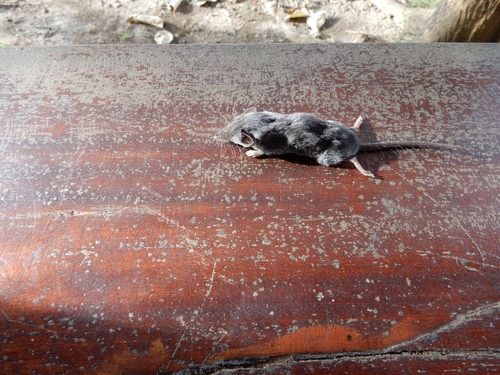


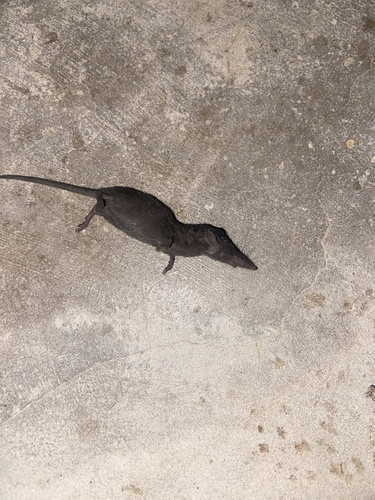
Other species in the family Soricidae


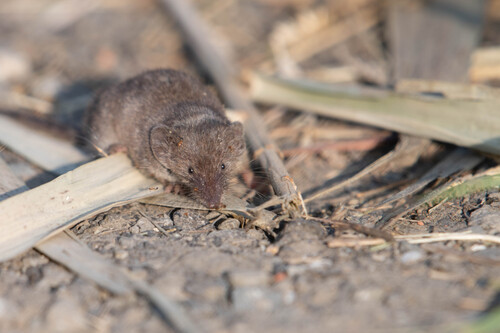


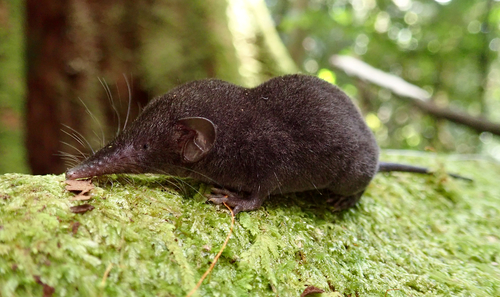
Sources
Conservation status, range description and population estimate come from the IUCN Red List assessment for Crocidura pergrisea. Countries are derived from that range description, not from a mapped country list. Last refreshed on .
The distribution map is drawn from the IUCN Red List spatial data compiled in 2008. IUCN (International Union for Conservation of Nature)