
Armenian Shrew
Crocidura armenica
Red List assessment
Data Deficienton the IUCN Red List
- EXExtinct
- EWExtinct in the Wild
- CRCritically Endangered
- ENEndangered
- VUVulnerable
- NTNear Threatened
- LCLeast Concern
Data Deficient has no position on the scale above — it records the absence of an assessment, not a degree of risk.
The Armenian Shrew is recorded in 3 countries across Asia. The IUCN Red List records the Armenian Shrew as Data Deficient. No reliable population estimate exists; the species is known from very few specimens and locations, making trend assessment impossible with current data.
- Family
- Soricidae
- Order
- Eulipotyphla
- Genus
- Crocidura
- Countries recorded
- 3
- Continents
- Asia
- Red List category
- Data Deficient
- Data updated
- August 9, 2026
What is the Armenian Shrew?
The Armenian Shrew is a small, poorly studied insectivorous mammal endemic to the South Caucasus region, primarily documented in Armenia. It belongs to the white-toothed shrew genus Crocidura and is notable for its restricted range and status as a Data Deficient species due to limited field research. Its taxonomy has been debated, with some researchers questioning its validity as a distinct species versus a subspecies of a more widespread Crocidura taxon.
Where does the Armenian Shrew live?
Armenia and adjacent parts of the South Caucasus, primarily in mountainous regions of Armenia and possibly bordering areas of Turkey and Azerbaijan
Endemic to Armenia, with the type locality typically cited in the Armenian highlands; possible range extension into adjacent areas of Turkey, Georgia, or Azerbaijan remains uncertain and unconfirmed.
Altitude and depth
Likely found at mid to high elevations in the Armenian highlands, roughly 1000-2500m, though precise data is lacking.
Habitat of the Armenian Shrew
Believed to inhabit mountainous and rocky terrain, including grasslands, shrublands, and possibly forest edges typical of the Armenian highlands. Specific habitat preferences remain poorly documented due to the scarcity of field studies.
Adaptations to its environment
As a shrew, it likely possesses a high metabolic rate requiring near-constant feeding, sensitive whiskers and snout for detecting prey in low visibility, and small body size suited to navigating rocky crevices and dense vegetation.
Conservation status and numbers
Listed as Data Deficient (DD) by the IUCN due to insufficient information on population size, distribution, and ecological requirements to assess extinction risk accurately.
Estimated population
No reliable population estimate exists; the species is known from very few specimens and locations, making trend assessment impossible with current data.
What threatens the Armenian Shrew?
Potential threats include habitat degradation from agriculture, overgrazing, and land-use changes in the Armenian highlands, though specific threats have not been well quantified due to limited research on this species.
What is being done to protect it?
No species-specific conservation programs are known to exist; general habitat protections in Armenian nature reserves may incidentally benefit this species if it occurs within protected areas.
Recommended actions
Priority actions include taxonomic clarification through genetic studies, systematic field surveys to determine distribution and population status, and habitat assessment within its presumed range.
What the Armenian Shrew looks like
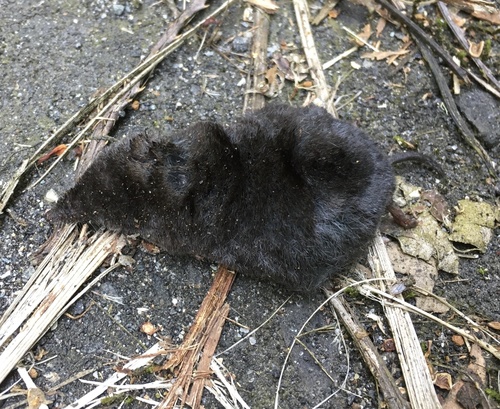
Presumed to have typical Crocidura shrew morphology: soft grayish-brown fur, a pointed snout, small eyes, and a long tail relative to body size, similar to related white-toothed shrews.
Size
Estimated body length of 5-7 cm (head-body), typical for small Crocidura shrews, though precise morphometric data for this species is limited.
Weight
Likely weighs between 4-10 grams, consistent with other small Crocidura species, though specific weight data has not been well documented.
Distinctive features
Distinguished from related Crocidura species primarily through subtle cranial and dental morphology and genetic differences rather than obvious external characteristics visible in the field.
Behaviour and diet of the Armenian Shrew
Likely solitary, as is typical for most Crocidura shrew species, with minimal social interaction outside of breeding encounters.
When it is active
Presumed to be primarily nocturnal or crepuscular, consistent with the activity patterns of most shrew species, though direct behavioral observations are lacking.
Diet
Likely insectivorous, feeding on small invertebrates such as insects, spiders, and worms, consistent with the diet of other Crocidura shrews.
How it feeds and hunts
Presumably uses its sensitive whiskers and acute sense of smell to locate prey in leaf litter, soil, and rocky crevices, typical of shrew foraging behavior.
Communication
Likely relies on ultrasonic vocalizations, scent marking, and tactile whisker contact for communication, as documented in related Crocidura species.
Interactions with other species
Likely preyed upon by owls, small carnivores, and snakes native to the Armenian highlands; may compete with other small insectivores for food resources.
Role in its ecosystem
Plays a role as an insectivorous predator controlling invertebrate populations and serves as prey for higher trophic level predators within its highland ecosystem.
Reproduction and lifecycle
Reproductive biology is undocumented for this species; related Crocidura species typically breed during warmer months with litters of 2-6 offspring after a gestation of about 25-30 days.
Raising the young
Presumed to follow typical shrew maternal care patterns, with females solely responsible for nursing and protecting young until weaning, based on related species.
Maturity and lifespan
Sexual maturity and lifespan data are unavailable; related Crocidura species typically reach maturity within a few months and live 1-3 years in the wild.
Taxonomy and naming of the Armenian Shrew
Classification
Class Mammalia > Order Eulipotyphla > Family Soricidae > Genus Crocidura > Species Crocidura armenica
Scientific synonyms
Previously considered a subspecies or synonym of Crocidura gueldenstaedtii in some older taxonomic treatments
What research says
Recent studies
Recent taxonomic reviews have used mitochondrial DNA analysis to assess the validity of Crocidura armenica as a distinct species within the Crocidura gueldenstaedtii species complex.
Genome and DNA
Limited genetic studies exist; molecular data has been used primarily to clarify its taxonomic status relative to other Caucasian Crocidura species.
Compared with similar species
Closely related to and sometimes confused with Crocidura gueldenstaedtii (Gueldenstaedt's shrew) and other Caucasian white-toothed shrews, differing mainly in subtle genetic and cranial features.
The Armenian Shrew and people
This shrew is known from very few museum specimens, making it one of the least-documented mammals in the Caucasus region. Its very existence as a distinct species has been a subject of ongoing scientific debate among taxonomists.
Where and how to see it
Due to its rarity, small size, and nocturnal habits, observing this species in the wild is extremely difficult and not recommended for casual wildlife watchers; sightings are typically limited to specialized scientific trapping surveys in Armenia.
Risks to humans
No notable risk to humans; this species poses no threat and has no significant interactions with human populations.
Countries where the Armenian Shrew is recorded
The 3 countries named in the range description of its IUCN Red List assessment.
Questions about the Armenian Shrew
Where does the Armenian Shrew live?
The Armenian Shrew is recorded in Armenia, Azerbaijan and Georgia across Asia. These countries come from the range description of its IUCN Red List assessment, and they are what place the species on the interactive map.
Is the Armenian Shrew endangered?
The IUCN Red List assesses the Armenian Shrew as Data Deficient. There is not enough information to judge the risk of extinction, usually because the species is rarely seen or has never been surveyed. It is not a reassuring category: several species were Data Deficient right up to the point they were found to be Critically Endangered.
How many are left in the wild?
No reliable population estimate exists; the species is known from very few specimens and locations, making trend assessment impossible with current data. This figure comes from the species assessment on the IUCN Red List; population estimates for wild mammals are ranges, not counts, and are revised at each assessment.
What habitat does the Armenian Shrew live in?
Believed to inhabit mountainous and rocky terrain, including grasslands, shrublands, and possibly forest edges typical of the Armenian highlands.
What is the scientific name of the Armenian Shrew?
The Armenian Shrew is Crocidura armenica, in the family Soricidae, order Eulipotyphla.
Other species in the genus Crocidura



Other species in the family Soricidae



Sources
Conservation status, range description and population estimate come from the IUCN Red List assessment for Crocidura armenica. Countries are derived from that range description, not from a mapped country list. Last refreshed on .
The distribution map is drawn from the IUCN Red List spatial data compiled in 2008. IUCN (International Union for Conservation of Nature)