
Ansell's Shrew
Crocidura ansellorum
Red List assessment
Endangeredon the IUCN Red List
- EXExtinct
- EWExtinct in the Wild
- CRCritically Endangered
- ENEndangered
- VUVulnerable
- NTNear Threatened
- LCLeast Concern
The Ansell's Shrew is recorded in 2 countries across Africa. The IUCN Red List assesses the Ansell's Shrew as Endangered. No reliable population estimate exists; the species is known from only a few museum specimens, and its population trend is presumed to be declining due to habitat pressures.
- Family
- Soricidae
- Order
- Eulipotyphla
- Genus
- Crocidura
- Countries recorded
- 2
- Continents
- Africa
- Red List category
- Endangered
- Data updated
- August 9, 2026
What is the Ansell's Shrew?
Crocidura ansellorum, or Ansell's Shrew, is a small insectivorous mammal known only from a handful of specimens collected in the montane grasslands of northeastern Zambia. It is one of the least-studied members of the diverse Crocidura genus, with its taxonomy and biology inferred mostly from museum specimens. Its extremely restricted range and rarity make it a species of high conservation concern. Named in honor of zoologist W.F.H. Ansell, who contributed significantly to Zambian mammalogy.
Where does the Ansell's Shrew live?
Endemic to a very restricted area of northeastern Zambia, near the border with Malawi, in the Mafinga Hills/Nyika Plateau region.
Restricted to a small area of northeastern Zambia, specifically the Mafinga Hills near the Malawian border, with the type locality in this high-altitude region; possibly extending marginally into adjacent Malawian highlands.
Altitude and depth
Approximately 1800-2200 meters above sea level, associated with the Afromontane plateau habitats of the region.
Habitat of the Ansell's Shrew
Found in montane grassland and moist evergreen forest patches (dambo and riverine vegetation) at high elevation, typical of the Afromontane ecosystems of the Mafinga Hills and Nyika Plateau region.
Adaptations to its environment
Like other Crocidura shrews, it likely possesses a high metabolic rate and continuous feeding behavior to cope with cool montane temperatures, along with dense fur for thermoregulation at higher altitudes. Its small size and voracious appetite for invertebrates are typical adaptations of soricids in cool, humid habitats.
Conservation status and numbers
Classified as Endangered (EN) by the IUCN due to its extremely limited known distribution, restricted to a single or very few localities, combined with ongoing habitat degradation in the Mafinga Hills region.
Estimated population
No reliable population estimate exists; the species is known from only a few museum specimens, and its population trend is presumed to be declining due to habitat pressures.
What threatens the Ansell's Shrew?
Habitat loss from agricultural expansion, logging, and burning of montane grasslands; the restricted range makes the species highly vulnerable to any localized environmental disturbance or climate shifts.
What is being done to protect it?
No specific conservation programs target this species directly; however, it may benefit indirectly from broader habitat protection efforts in the Nyika-Mafinga transboundary conservation landscape between Zambia and Malawi.
Recommended actions
Priority actions include conducting updated field surveys to confirm current distribution and population status, protecting remaining montane habitat in the Mafinga Hills, and integrating the species into regional conservation planning for Afromontane biodiversity.
What the Ansell's Shrew looks like
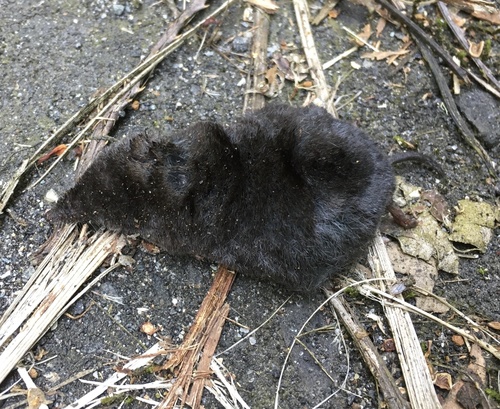
Likely has grayish-brown to dark brown dorsal fur with paler, grayish underparts, a pointed snout, small eyes, and short dense fur typical of Crocidura shrews.
Size
Head-body length approximately 55-70 mm, with a tail length of roughly 35-45 mm, consistent with other small Crocidura species.
Weight
Estimated body weight between 4-8 grams, typical for small African shrews of this genus.
Distinctive features
Distinguished from closely related Crocidura species by subtle differences in skull morphology, dental characteristics, and body proportions noted in the original taxonomic description; field identification is very difficult without specimen examination.
Behaviour and diet of the Ansell's Shrew
Presumed to be solitary and territorial, as is typical for most Crocidura shrew species, with limited social interaction outside of breeding encounters.
When it is active
Likely primarily nocturnal to crepuscular, consistent with the general activity patterns observed in related shrew species, though direct behavioral data is lacking.
Diet
Insectivorous, feeding on small invertebrates such as insects, larvae, and other arthropods found in leaf litter and soil of its montane habitat.
How it feeds and hunts
Presumably forages by actively searching through leaf litter and soil using its keen sense of smell and touch via sensitive whiskers, as is typical for Crocidura shrews.
Communication
Likely relies on scent marking and high-frequency vocalizations for communication, similar to other shrew species, though this has not been specifically documented.
Interactions with other species
Likely preyed upon by small carnivorous mammals, owls, and snakes present in its montane habitat; may compete with other small insectivores for invertebrate prey resources.
Role in its ecosystem
Plays a role as a small insectivorous predator, helping regulate invertebrate populations within its montane grassland and forest ecosystem.
Reproduction and lifecycle
Reproductive biology is undocumented for this species, but likely resembles other Crocidura shrews with short gestation periods of around 25-30 days and litters of 2-5 young.
Raising the young
No specific data exists, but based on related species, females likely provide sole parental care, nursing and protecting young in a nest until weaning.
Maturity and lifespan
Specific data unavailable, but based on related Crocidura species, sexual maturity is likely reached within a few months, with a natural lifespan of about 1-2 years in the wild.
Taxonomy and naming of the Ansell's Shrew
Classification
Class Mammalia > Order Eulipotyphla > Family Soricidae > Genus Crocidura > Species Crocidura ansellorum
What research says
Recent studies
Very few studies have been published on this species since its original description; most modern references rely on historical museum specimens with limited ecological or genetic follow-up research.
Compared with similar species
Similar in general appearance to other Zambian and Malawian montane Crocidura species, such as Crocidura zaphiri, but distinguished by specific cranial and dental measurements identified by taxonomists.
The Ansell's Shrew and people
Ansell's Shrew is known from remarkably few specimens, making it one of the most enigmatic small mammals of Zambia. It was named after W.F.H. Ansell, a pioneering figure in Zambian wildlife research. Its restricted range in the remote Mafinga Hills means it remains virtually unknown to science beyond a handful of records.
Where and how to see it
Due to its extreme rarity and remote habitat, observation in the wild is essentially impossible for the general public; any sighting would require specialized fieldwork permits and expertise in the Mafinga Hills region of Zambia.
Risks to humans
No notable risk to humans.
Countries where the Ansell's Shrew is recorded
The 2 countries named in the range description of its IUCN Red List assessment.
Questions about the Ansell's Shrew
Where does the Ansell's Shrew live?
The Ansell's Shrew is recorded in Malawi and Zambia across Africa. These countries come from the range description of its IUCN Red List assessment, and they are what place the species on the interactive map.
Is the Ansell's Shrew endangered?
Yes. The IUCN Red List assesses the Ansell's Shrew as Endangered, one of the three threatened categories. The species faces a very high risk of extinction in the wild — a step below Critically Endangered, but still on a trajectory that ends badly without intervention.
How many are left in the wild?
No reliable population estimate exists; the species is known from only a few museum specimens, and its population trend is presumed to be declining due to habitat pressures. This figure comes from the species assessment on the IUCN Red List; population estimates for wild mammals are ranges, not counts, and are revised at each assessment.
What habitat does the Ansell's Shrew live in?
Found in montane grassland and moist evergreen forest patches (dambo and riverine vegetation) at high elevation, typical of the Afromontane ecosystems of the Mafinga Hills and Nyika Plateau region.
What is the scientific name of the Ansell's Shrew?
The Ansell's Shrew is Crocidura ansellorum, in the family Soricidae, order Eulipotyphla.
Other species in the genus Crocidura



Other species in the family Soricidae



Sources
Conservation status, range description and population estimate come from the IUCN Red List assessment for Crocidura ansellorum. Countries are derived from that range description, not from a mapped country list. Last refreshed on .
The distribution map is drawn from the IUCN Red List spatial data compiled in 2008. IUCN (International Union for Conservation of Nature)