
Ender's Small-eared Shrew
Cryptotis endersi
Red List assessment
Endangeredon the IUCN Red List
- EXExtinct
- EWExtinct in the Wild
- CRCritically Endangered
- ENEndangered
- VUVulnerable
- NTNear Threatened
- LCLeast Concern
The Ender's Small-eared Shrew is recorded in one country, Panama across North America. The IUCN Red List assesses the Ender's Small-eared Shrew as Endangered. No precise population estimate exists; the species is considered rare and is inferred to be declining due to continued habitat destruction across its limited range.
- Family
- Soricidae
- Order
- Eulipotyphla
- Genus
- Cryptotis
- Countries recorded
- 1
- Continents
- North America
- Red List category
- Endangered
- Data updated
- August 9, 2026
What is the Ender's Small-eared Shrew?
Ender's Small-eared Shrew is a tiny insectivorous mammal endemic to the Azuero Peninsula of Panama. It is one of the least-known members of the diverse Neotropical genus Cryptotis, distinguished by its restricted range and dependence on humid forest habitats. Its rarity and highly localized distribution make it a species of significant conservation concern in Central America.
Where does the Ender's Small-eared Shrew live?
Panama, specifically the Azuero Peninsula
Endemic to Panama, known only from the Azuero Peninsula in the southern part of the country, a region that has experienced extensive deforestation. Its range is extremely limited compared to other Cryptotis species found more broadly across Central and South America.
Altitude and depth
Approximately 0-1000 meters above sea level, primarily in lowland to lower premontane forest zones.
Seasonal movements
No known seasonal migration; shrews of this genus are active year-round with possible minor shifts in foraging intensity related to wet and dry seasons.
Habitat of the Ender's Small-eared Shrew
The species inhabits humid lowland and premontane tropical forests, often in areas with dense leaf litter and moist soil that support its subterranean and litter-foraging lifestyle. It is closely tied to intact forest understory rather than degraded or open habitats.
Adaptations to its environment
Like other small-eared shrews, it likely possesses a high metabolic rate, small eyes, and reduced external ears adapted for a fossorial, litter-dwelling lifestyle. Its small body size and specialized diet allow it to exploit invertebrate-rich forest floor microhabitats.
Conservation status and numbers
Listed as Endangered by the IUCN due to its extremely restricted geographic range, ongoing habitat loss, and fragmented, poorly documented populations. The species' entire known distribution falls within a heavily deforested peninsula, increasing extinction risk.
Estimated population
No precise population estimate exists; the species is considered rare and is inferred to be declining due to continued habitat destruction across its limited range.
What threatens the Ender's Small-eared Shrew?
Primary threats include deforestation for agriculture and cattle ranching, habitat fragmentation, and the small size of its range which leaves it vulnerable to any localized disturbance or environmental change.
What is being done to protect it?
Specific conservation programs targeting this species are lacking, though it may benefit indirectly from broader forest protection initiatives and protected areas within Panama. Increased survey effort has been recommended by regional conservation biologists.
Recommended actions
Priority actions include systematic surveys to clarify its current distribution and population status, protection of remaining forest fragments on the Azuero Peninsula, and inclusion in national biodiversity conservation strategies.
What the Ender's Small-eared Shrew looks like
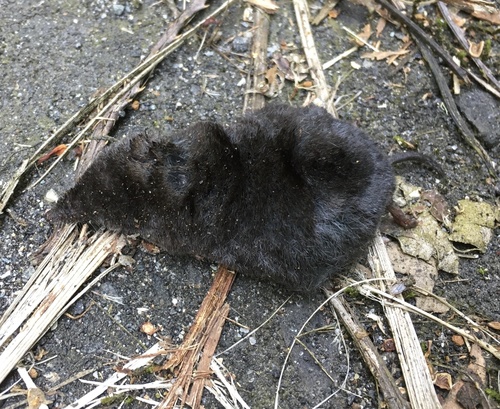
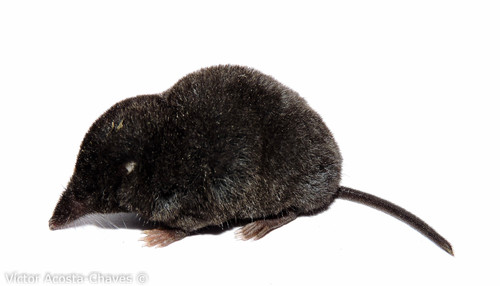
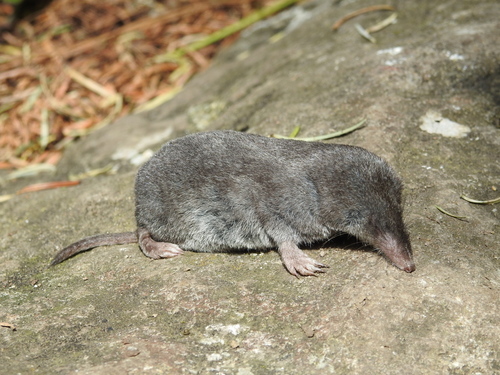
The shrew has a velvety, dark brown to blackish dorsal pelage with slightly paler underparts, a pointed snout, and very small, barely visible external ears typical of the genus Cryptotis.
Size
Body length is estimated at approximately 50-70 mm, typical for small Cryptotis species, with a short tail of around 15-20 mm.
Weight
Estimated body weight is likely in the range of 4-8 grams, consistent with other small-eared shrews in the genus.
Distinctive features
It is distinguished from related Cryptotis species primarily by subtle cranial and dental characteristics, as well as its unique restricted geographic distribution on the Azuero Peninsula.
Behaviour and diet of the Ender's Small-eared Shrew
Presumed solitary, as is typical for small shrews, with individuals maintaining separate foraging territories and minimal social interaction outside of breeding.
When it is active
Likely active both day and night in short bursts, as shrews generally require near-constant feeding due to their extremely high metabolic rates.
Diet
Primarily insectivorous, feeding on soil and litter-dwelling invertebrates such as insects, insect larvae, earthworms, and other small arthropods.
How it feeds and hunts
Forages by probing through leaf litter and soil using its sensitive snout and whiskers to detect and capture invertebrate prey, relying on touch and smell rather than vision.
Communication
Likely relies on high-frequency vocalizations, echolocation-like clicks, and scent marking for intraspecific communication, as documented in related shrew species.
Interactions with other species
Likely preyed upon by small forest carnivores, owls, and snakes; competes with other small insectivorous mammals for invertebrate prey resources within its forest habitat.
Role in its ecosystem
Plays an important ecological role as an insectivore, helping regulate invertebrate populations and contributing to nutrient cycling within tropical forest leaf litter ecosystems.
Reproduction and lifecycle
Specific reproductive data for this species is lacking, but related Cryptotis species typically breed year-round in tropical climates, with short gestation periods and litters of 2-5 young.
Raising the young
Presumed to follow the general shrew pattern where the female alone cares for and nurses the altricial young in a nest until weaning, with no paternal involvement.
Maturity and lifespan
Specific data is unavailable, but shrews in this genus typically reach sexual maturity within a few months and have short lifespans of about 1-2 years in the wild.
Taxonomy and naming of the Ender's Small-eared Shrew
Classification
Class Mammalia > Order Eulipotyphla > Family Soricidae > Genus Cryptotis > Species Cryptotis endersi
What research says
Recent studies
Limited recent research exists specifically on this species; most knowledge is extrapolated from broader taxonomic and phylogenetic studies of the genus Cryptotis in Central America.
Compared with similar species
Compared to other Cryptotis species such as Cryptotis nigrescens or Cryptotis mera, C. endersi is distinguished mainly by cranial morphology and its uniquely restricted Azuero Peninsula distribution rather than obvious external features.
The Ender's Small-eared Shrew and people
This shrew is one of the smallest mammals endemic to Panama and remains so poorly studied that basic aspects of its biology are still unknown. It belongs to one of the most species-rich mammalian genera in the Americas, yet is among its rarest and most range-restricted members.
Where and how to see it
Due to its rarity, cryptic behavior, and tiny size, observing this species in the wild is extremely difficult; any potential sighting would require targeted small-mammal trapping surveys in remaining forest fragments of the Azuero Peninsula with proper research permits.
Risks to humans
No notable risk to humans; this species poses no threat and has no history of aggressive behavior or disease transmission to people.
Countries where the Ender's Small-eared Shrew is recorded
The 1 countries named in the range description of its IUCN Red List assessment.
Questions about the Ender's Small-eared Shrew
Where does the Ender's Small-eared Shrew live?
The Ender's Small-eared Shrew is recorded in Panama across North America. These countries come from the range description of its IUCN Red List assessment, and they are what place the species on the interactive map.
Is the Ender's Small-eared Shrew endangered?
Yes. The IUCN Red List assesses the Ender's Small-eared Shrew as Endangered, one of the three threatened categories. The species faces a very high risk of extinction in the wild — a step below Critically Endangered, but still on a trajectory that ends badly without intervention.
How many are left in the wild?
No precise population estimate exists; the species is considered rare and is inferred to be declining due to continued habitat destruction across its limited range. This figure comes from the species assessment on the IUCN Red List; population estimates for wild mammals are ranges, not counts, and are revised at each assessment.
What habitat does the Ender's Small-eared Shrew live in?
The species inhabits humid lowland and premontane tropical forests, often in areas with dense leaf litter and moist soil that support its subterranean and litter-foraging lifestyle.
What is the scientific name of the Ender's Small-eared Shrew?
The Ender's Small-eared Shrew is Cryptotis endersi, in the family Soricidae, order Eulipotyphla.
Other species in the genus Cryptotis
Other species in the family Soricidae



Sources
Conservation status, range description and population estimate come from the IUCN Red List assessment for Cryptotis endersi. Countries are derived from that range description, not from a mapped country list. Last refreshed on .
The distribution map is drawn from the IUCN Red List spatial data compiled in 2017. IUCN SSC Small Mammal Specialist Group