
Cretan Shrew
Crocidura zimmermanni
Red List assessment
Endangeredon the IUCN Red List
- EXExtinct
- EWExtinct in the Wild
- CRCritically Endangered
- ENEndangered
- VUVulnerable
- NTNear Threatened
- LCLeast Concern
The Cretan Shrew is recorded in one country, Greece across Europe. The IUCN Red List assesses the Cretan Shrew as Endangered. Population size is not precisely quantified but is presumed to be declining due to habitat fragmentation and degradation across its limited range on Crete.
- Family
- Soricidae
- Order
- Eulipotyphla
- Genus
- Crocidura
- Countries recorded
- 1
- Continents
- Europe
- Red List category
- Endangered
- Data updated
- August 9, 2026
What is the Cretan Shrew?
The Cretan Shrew is a small insectivorous mammal endemic to the Greek island of Crete, found nowhere else on Earth. It inhabits rocky, mountainous terrain and is notable as one of the few endemic mammal species of the Mediterranean islands. Its restricted range and specific habitat requirements make it a species of significant conservation concern.
Where does the Cretan Shrew live?
Endemic to the island of Crete, Greece, particularly the mountainous regions
Restricted entirely to the island of Crete in the eastern Mediterranean, Greece, with populations concentrated in the White Mountains, Psiloritis, and Dikti mountain ranges.
Altitude and depth
0-2400m, though most commonly found between 200-1500m in mountainous terrain
Seasonal movements
No migration; shrews remain active year-round though activity may decrease slightly during the hottest, driest summer months and coldest winter periods
Habitat of the Cretan Shrew
Found in rocky mountainous areas, phrygana (low scrubland), stone walls, and areas with scattered vegetation and boulder fields; often associated with human-modified landscapes like agricultural terraces and old stone structures.
Adaptations to its environment
Small body size and high metabolism typical of shrews allow rapid foraging in rocky crevices; the species has adapted to arid Mediterranean conditions and rocky substrates unique to Crete's karst landscape.
Conservation status and numbers
Endangered (EN) according to IUCN, primarily due to its extremely restricted range confined to a single island and ongoing habitat degradation from agricultural intensification and urbanization.
Estimated population
Population size is not precisely quantified but is presumed to be declining due to habitat fragmentation and degradation across its limited range on Crete.
What threatens the Cretan Shrew?
Habitat loss from agricultural expansion, tourism development, overgrazing, use of pesticides, and potential competition or predation pressure from introduced species.
Diseases and parasites
Specific disease and parasite data are limited, though like other shrews it likely hosts various ectoparasites such as fleas and mites, and endoparasites including helminths.
What is being done to protect it?
Protected under Greek national law and included in Natura 2000 network sites on Crete; some populations occur within protected mountain areas like the Samaria National Park.
Recommended actions
Increased habitat protection in mountainous zones, restriction of pesticide use in agricultural areas near known populations, further population surveys, and monitoring of habitat quality across its range.
What the Cretan Shrew looks like
Small shrew with soft grayish-brown to reddish-brown dorsal fur, paler grayish underparts, a pointed snout, small eyes, and a moderately long tail covered with fine hairs.
Size
Head-body length approximately 6-8 cm, with tail length of about 3-4.5 cm
Weight
Approximately 4-7 grams
Distinctive features
Distinguished from other Crocidura species by subtle differences in skull morphology, dental characteristics, and genetic markers; visually very similar to other white-toothed shrews making field identification difficult without specialist examination.
Differences between males and females
Minimal sexual dimorphism; males and females are similar in size and coloration
Behaviour and diet of the Cretan Shrew
Generally solitary and territorial, as is typical for shrews, with individuals maintaining separate foraging areas except during breeding encounters.
When it is active
Primarily nocturnal and crepuscular, though may show some activity during daylight hours, especially in cooler seasons.
Diet
Insectivorous diet consisting mainly of small invertebrates including insects, spiders, woodlice, and other arthropods found in leaf litter and rocky crevices.
How it feeds and hunts
Forages by actively searching through rock crevices, leaf litter, and soil using its sensitive whiskers and snout to detect prey through touch and smell rather than sight.
Communication
Communication likely involves high-frequency vocalizations, scent marking through glandular secretions, and tactile signals, though specific studies on this species are limited.
Interactions with other species
Predated upon by owls, other raptors, and possibly snakes; may compete with other small mammals for insect prey within its limited habitat range.
Role in its ecosystem
Plays a role as an insectivorous predator helping control invertebrate populations within its rocky mountain ecosystem, and serves as a prey source for various raptors and small carnivores.
Reproduction and lifecycle
Breeding likely occurs primarily in spring and summer months; gestation is estimated at around 3-4 weeks with litter sizes typically ranging from 2-6 young, consistent with other Crocidura species.
Raising the young
Females provide sole parental care, nursing and protecting young in nest sites until weaning, which likely occurs within a few weeks of birth as in related shrew species.
Maturity and lifespan
Sexual maturity likely reached within a few months of birth; lifespan in the wild is estimated at 1-2 years, typical for small shrew species.
Taxonomy and naming of the Cretan Shrew
Classification
Class Mammalia > Order Eulipotyphla > Family Soricidae > Genus Crocidura > Species Crocidura zimmermanni
Scientific synonyms
Previously considered a subspecies of Crocidura suaveolens by some authors before being recognized as a distinct species
What research says
Recent studies
Recent taxonomic and genetic studies have focused on clarifying its phylogenetic relationships with other Mediterranean Crocidura species and assessing population genetics across Crete's mountain ranges.
Genome and DNA
Limited genetic studies exist; molecular phylogenetic analyses have helped confirm its status as a distinct species separate from mainland Crocidura populations.
Compared with similar species
Similar in general appearance to the more widespread Crocidura suaveolens (lesser white-toothed shrew) but distinguished by genetic divergence and slight morphological differences reflecting its isolated evolutionary history on Crete.
The Cretan Shrew and people
This shrew is one of only a handful of mammal species entirely endemic to Crete, representing a unique product of island evolution; despite its tiny size, it has an extremely high metabolic rate requiring near-constant feeding.
Where and how to see it
Best observed at dusk or night in rocky mountainous areas of Crete such as the White Mountains or Psiloritis range; patience and use of small mammal trapping surveys by researchers are typically needed as the species is elusive and rarely seen casually.
Risks to humans
No notable risk to humans
Countries where the Cretan Shrew is recorded
The 1 countries named in the range description of its IUCN Red List assessment.
Questions about the Cretan Shrew
Where does the Cretan Shrew live?
The Cretan Shrew is recorded in Greece across Europe. These countries come from the range description of its IUCN Red List assessment, and they are what place the species on the interactive map.
Is the Cretan Shrew endangered?
Yes. The IUCN Red List assesses the Cretan Shrew as Endangered, one of the three threatened categories. The species faces a very high risk of extinction in the wild — a step below Critically Endangered, but still on a trajectory that ends badly without intervention.
How many are left in the wild?
Population size is not precisely quantified but is presumed to be declining due to habitat fragmentation and degradation across its limited range on Crete. This figure comes from the species assessment on the IUCN Red List; population estimates for wild mammals are ranges, not counts, and are revised at each assessment.
What habitat does the Cretan Shrew live in?
Found in rocky mountainous areas, phrygana (low scrubland), stone walls, and areas with scattered vegetation and boulder fields; often associated with human-modified landscapes like agricultural terraces and old stone structures.
What is the scientific name of the Cretan Shrew?
The Cretan Shrew is Crocidura zimmermanni, in the family Soricidae, order Eulipotyphla.
Other species in the genus Crocidura

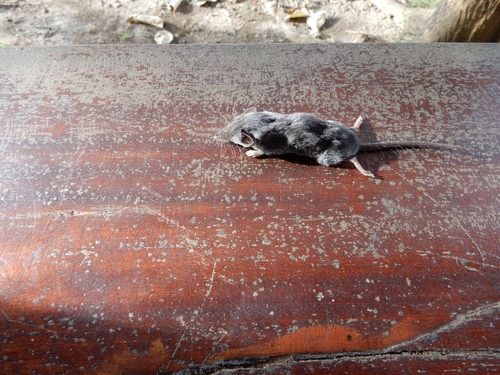


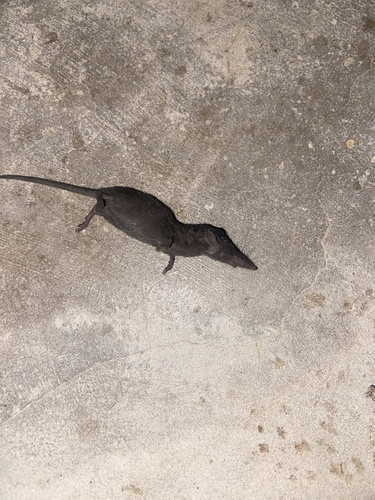
Other species in the family Soricidae


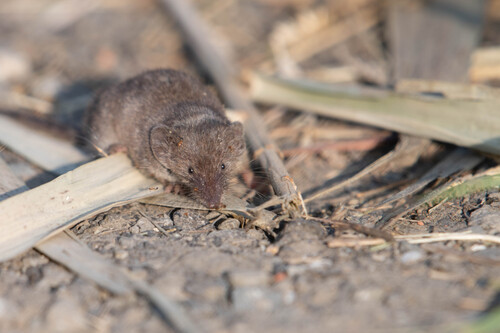


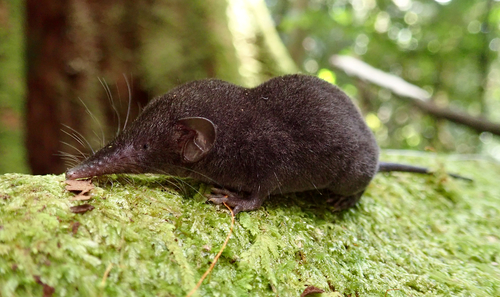
Sources
Conservation status, range description and population estimate come from the IUCN Red List assessment for Crocidura zimmermanni. Countries are derived from that range description, not from a mapped country list. Last refreshed on .
The distribution map is drawn from the IUCN Red List spatial data compiled in 2023. IUCN SSC Small Mammal Specialist Group