
São Tomé Shrew
Crocidura thomensis
Red List assessment
Endangeredon the IUCN Red List
- EXExtinct
- EWExtinct in the Wild
- CRCritically Endangered
- ENEndangered
- VUVulnerable
- NTNear Threatened
- LCLeast Concern
The São Tomé Shrew is recorded in 2 countries across Africa. The IUCN Red List assesses the São Tomé Shrew as Endangered. No precise population estimate exists; the species is considered rare with a presumed small and possibly declining population due to ongoing habitat pressure.
- Family
- Soricidae
- Order
- Eulipotyphla
- Genus
- Crocidura
- Countries recorded
- 2
- Continents
- Africa
- Red List category
- Endangered
- Data updated
- August 9, 2026
What is the São Tomé Shrew?
The São Tomé Shrew is a small insectivorous mammal endemic to the island of São Tomé in the Gulf of Guinea. It is one of the rarest shrew species in the world, known from very few specimens and localities. Its extreme rarity and restricted range make it a flagship species for conservation on the island.
Where does the São Tomé Shrew live?
São Tomé Island, São Tomé and Príncipe (Gulf of Guinea, West Africa)
Endemic to the island of São Tomé, part of the São Tomé and Príncipe archipelago in the Gulf of Guinea, off the coast of Central West Africa. Known records are restricted to a small number of localities within the island's interior forested zones.
Altitude and depth
Approximately 400-1400 meters above sea level, mostly in mid to high elevation forest zones.
Habitat of the São Tomé Shrew
Found in primary and secondary tropical moist forest, particularly in higher elevation forest areas with dense leaf litter and humid conditions. It appears to favor undisturbed native forest over agricultural or heavily degraded land.
Adaptations to its environment
Like other Crocidura shrews, it has a high metabolic rate and must feed almost continuously to survive, an adaptation to its small body size and high surface-area-to-volume ratio. Its elongated flexible snout and keen sense of smell/touch aid in locating invertebrate prey in leaf litter under humid forest conditions.
Conservation status and numbers
Classified as Endangered (EN) by the IUCN due to its extremely restricted range, small and fragmented population, and ongoing habitat loss on São Tomé Island. The species is known from very few confirmed records, raising concern about its true population status.
Estimated population
No precise population estimate exists; the species is considered rare with a presumed small and possibly declining population due to ongoing habitat pressure.
What threatens the São Tomé Shrew?
Primary threats include deforestation and habitat degradation from agriculture (notably cocoa and other plantations), logging, and human settlement expansion. Introduced predators such as rats and feral cats may also pose risks to this small ground-dwelling mammal.
What is being done to protect it?
Some of its range overlaps with the Obô Natural Park of São Tomé, which affords partial habitat protection. Broader conservation initiatives on the island targeting endemic species and forest conservation indirectly benefit this shrew.
Recommended actions
Recommended actions include systematic surveys to clarify distribution and population size, strengthening protection of remaining native forest habitat, and controlling invasive predators. Community engagement and monitoring programs would help ensure long-term species survival.
What the São Tomé Shrew looks like
Small shrew with dense, soft grayish-brown to dark brown fur, a pointed elongated snout, small eyes, and short limbs. The tail is moderately haired and proportionate to body length.
Size
Body length approximately 6-8 cm, with a tail adding roughly 4-5 cm, typical of small Crocidura shrews.
Weight
Estimated body weight around 5-10 grams, consistent with similarly sized African shrews.
Distinctive features
Distinguished from other African Crocidura species mainly by subtle cranial and dental characteristics identified through specimen analysis, as external morphology is similar to related shrews. Its island endemism and restricted habitat are key identifying ecological traits.
Behaviour and diet of the São Tomé Shrew
Presumed solitary, as is typical for most Crocidura shrew species, with individuals maintaining separate foraging territories.
When it is active
Likely primarily nocturnal or crepuscular, consistent with the activity patterns of most shrews, though specific behavioral data for this species is lacking.
Diet
Insectivorous, feeding on small invertebrates such as insects, larvae, and other arthropods found in leaf litter and soil.
How it feeds and hunts
Forages by actively probing leaf litter and soil with its sensitive snout, relying on smell and touch rather than vision to detect prey.
Communication
Likely uses high-frequency vocalizations, scent marking via specialized glands, and tactile cues, as documented in related Crocidura species.
Interactions with other species
Potential predators may include owls, snakes, and introduced mammals such as rats and cats. It may compete with other small insectivores for invertebrate prey resources on the island.
Role in its ecosystem
Plays a role in controlling invertebrate populations within its forest habitat, contributing to nutrient cycling and ecosystem balance as an insectivorous predator.
Reproduction and lifecycle
Reproductive biology is poorly documented, but likely resembles other Crocidura species with multiple litters per year, short gestation periods, and small litter sizes.
Raising the young
Presumed maternal care only, with the mother nursing and protecting the young in a nest until weaning, typical of shrew species.
Maturity and lifespan
Specific data unavailable, but comparable Crocidura shrews typically reach sexual maturity within a few months and have short lifespans of about 1-2 years in the wild.
Taxonomy and naming of the São Tomé Shrew
Classification
Mammalia > Eulipotyphla > Soricidae > Crocidura > Crocidura thomensis
What research says
Recent studies
Recent taxonomic and conservation assessments have focused on clarifying the species' distribution and confirming its distinct status through limited specimen collection and genetic comparison with mainland Crocidura species.
Compared with similar species
Similar in size and general appearance to other African Crocidura shrews, but distinguished by its endemic island distribution and specific morphological details noted in taxonomic descriptions. It is ecologically comparable to the Príncipe Island shrew, another Gulf of Guinea endemic.
The São Tomé Shrew and people
This shrew is among the least-known mammals in Africa, with very few specimens ever collected. It survives on a tiny volcanic island ecosystem, making it one of the most geographically restricted terrestrial mammals in the world.
Where and how to see it
Observation is extremely difficult due to its rarity and secretive nocturnal habits; specialized research expeditions with live-trapping in the Obô Natural Park forest interior would offer the best chance of encountering this species.
Risks to humans
No notable risk to humans.
Countries where the São Tomé Shrew is recorded
The 2 countries named in the range description of its IUCN Red List assessment.
Questions about the São Tomé Shrew
Where does the São Tomé Shrew live?
The São Tomé Shrew is recorded in Guinea and São Tomé and Príncipe across Africa. These countries come from the range description of its IUCN Red List assessment, and they are what place the species on the interactive map.
Is the São Tomé Shrew endangered?
Yes. The IUCN Red List assesses the São Tomé Shrew as Endangered, one of the three threatened categories. The species faces a very high risk of extinction in the wild — a step below Critically Endangered, but still on a trajectory that ends badly without intervention.
How many are left in the wild?
No precise population estimate exists; the species is considered rare with a presumed small and possibly declining population due to ongoing habitat pressure. This figure comes from the species assessment on the IUCN Red List; population estimates for wild mammals are ranges, not counts, and are revised at each assessment.
What habitat does the São Tomé Shrew live in?
Found in primary and secondary tropical moist forest, particularly in higher elevation forest areas with dense leaf litter and humid conditions.
What is the scientific name of the São Tomé Shrew?
The São Tomé Shrew is Crocidura thomensis, in the family Soricidae, order Eulipotyphla.
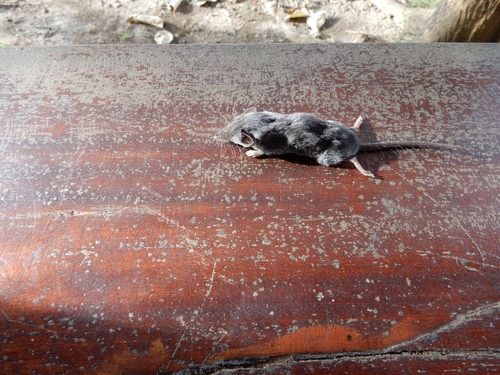
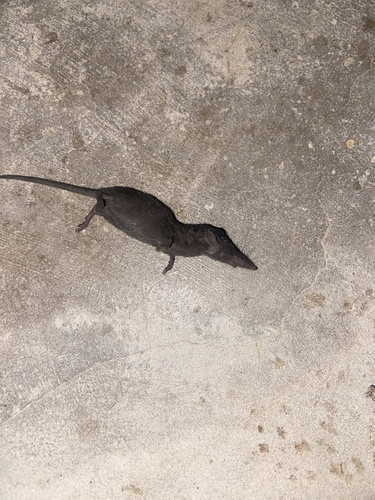
Other species in the genus Crocidura



Other species in the family Soricidae


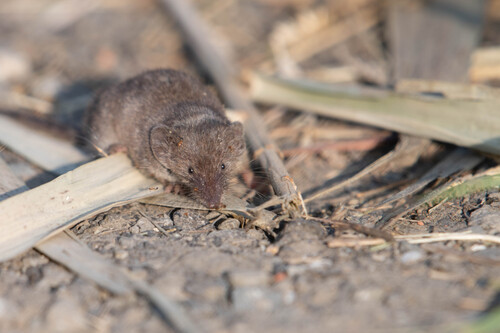


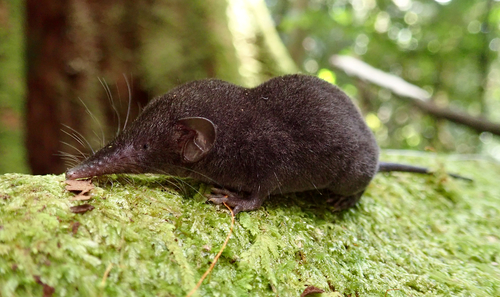
Sources
Conservation status, range description and population estimate come from the IUCN Red List assessment for Crocidura thomensis. Countries are derived from that range description, not from a mapped country list. Last refreshed on .
The distribution map is drawn from the IUCN Red List spatial data compiled in 2008. IUCN (International Union for Conservation of Nature)