
Naked Mole Rat
Heterocephalus glaber
Red List assessment
Least Concernon the IUCN Red List
- EXExtinct
- EWExtinct in the Wild
- CRCritically Endangered
- ENEndangered
- VUVulnerable
- NTNear Threatened
- LCLeast Concern
The Naked Mole Rat is recorded in 3 countries across Africa. The IUCN Red List assesses the Naked Mole Rat as Least Concern. No precise global population estimate exists, but the species is considered common and stable within its range, with local densities influenced by soil quality and food distribution.
- Family
- Heterocephalidae
- Order
- Rodentia
- Genus
- Heterocephalus
- Countries recorded
- 3
- Continents
- Africa
- Red List category
- Least Concern
- Data updated
- August 9, 2026
What is the Naked Mole Rat?
The naked mole rat is a small, subterranean rodent native to the arid regions of East Africa, renowned for its eusocial colony structure unique among mammals. It lives almost entirely underground in extensive burrow systems and is famous for extreme longevity, cancer resistance, and tolerance to low oxygen and pain. Its wrinkled, hairless pink skin and lack of thermoregulation make it one of the most biologically unusual mammals known.
Where does the Naked Mole Rat live?
East Africa, primarily Kenya, Ethiopia, and Somalia
Restricted to the Horn of Africa, including central and southern Kenya, southern Ethiopia, and parts of Somalia. Populations are patchily distributed following suitable soil and vegetation conditions.
Altitude and depth
Burrows typically 0-2m below surface, with tunnel systems extending up to several kilometers; surface elevation of habitat ranges from near sea level to about 1200m.
Habitat of the Naked Mole Rat
Arid and semi-arid grasslands and savannas with sandy, easily excavated soils that support extensive tunnel systems. Found in areas with scattered tuberous plants that serve as their primary food source.
Adaptations to its environment
Naked mole rats are poikilothermic, relying on the stable temperature of their burrows rather than internal thermoregulation, and possess extremely low metabolic rates to survive in low-oxygen, high-CO2 tunnel environments. Their skin lacks pain-sensing neuropeptides like substance P, allowing tolerance to acid and capsaicin, and their teeth are used externally like tools for digging, controlled by muscles outside the mouth to avoid ingesting soil.
Conservation status and numbers
Least Concern (LC) according to IUCN, as the species has a wide range, stable population, and is not currently facing major population declines. Its subterranean lifestyle also limits exposure to many surface-level threats.
Estimated population
No precise global population estimate exists, but the species is considered common and stable within its range, with local densities influenced by soil quality and food distribution.
What threatens the Naked Mole Rat?
Habitat degradation from agricultural expansion and overgrazing, though the burrowing lifestyle provides some buffer against surface disturbances. Predation by snakes when moving between burrow systems is also a natural threat.
Diseases and parasites
Naked mole rats show remarkable resistance to cancer and are studied for unique immune responses, though they can host external parasites such as mites in captivity and potentially in wild populations. Specific wild disease data remains limited due to their cryptic lifestyle.
What is being done to protect it?
No specific conservation programs target this species due to its stable status; general habitat protection in East African reserves incidentally benefits populations. It is a major model organism in aging and cancer research, ensuring continued scientific interest and captive breeding.
Recommended actions
Continued monitoring of habitat conditions in East Africa and protection of arid grassland ecosystems from overgrazing. Further research into wild population dynamics would help refine conservation assessments.
What the Naked Mole Rat looks like
The skin is wrinkled, pale pink to yellowish, and nearly hairless except for sparse whiskers and tactile hairs used for spatial orientation in dark tunnels. Eyes are tiny and vision is poor, while the incisors are large and protrude prominently for digging.
Size
Body length typically 8-10 cm, with a short tail of about 3-4 cm.
Weight
Adults typically weigh 30-35 grams, though breeding queens can weigh up to 50-80 grams due to spinal elongation supporting larger litters.
Distinctive features
Unlike most rodents, naked mole rats have almost no fur, wrinkled translucent skin, and a cylindrical body adapted for tunnel life. Their eusocial colony structure with a single reproductive queen is unique among mammals, resembling social insects like ants or termites.
Differences between males and females
Minimal external dimorphism except in breeding queens, which develop an elongated spine and larger body size to accommodate large litters; non-breeding workers of both sexes are similar in size and appearance.
Behaviour and diet of the Naked Mole Rat
Naked mole rats live in large eusocial colonies of 20 to 300 individuals, with a strict reproductive hierarchy dominated by a single breeding queen and one to three breeding males. Non-breeding workers perform cooperative tasks such as digging, foraging, and colony defense based on size and age castes.
When it is active
Primarily active in short bursts throughout both day and night, following an ultradian rhythm suited to underground life without natural light cues. Activity levels correlate with colony tasks such as foraging, tunnel maintenance, and pup care.
Diet
Herbivorous, feeding mainly on large underground tubers and roots, which they can partially regenerate by eating from the inside without killing the plant. Their sparse desert habitat vegetation is efficiently exploited through cooperative tunnel networks that allow access to widely dispersed food sources.
Communication
Naked mole rats communicate through a diverse repertoire of vocalizations, including chirps, grunts, and soft squeaks, with distinct 'soft chirps' used to identify colony membership. Tactile communication and pheromonal cues via feces and urine also help maintain colony cohesion and hierarchy.
Interactions with other species
Primary predators include snakes that can invade burrow systems, against which colonies mount coordinated defensive responses led by soldier-like workers. They have few competitors due to their specialized subterranean niche, though they may share habitat ranges with other burrowing rodents.
Role in its ecosystem
As ecosystem engineers, naked mole rats create extensive tunnel systems that aerate soil and influence plant root distribution and water infiltration in arid grasslands. Their feeding on tubers can also affect local plant population dynamics without typically destroying the food plants entirely.
Reproduction and lifecycle
Reproduction is restricted to the dominant queen and her chosen male mates, with breeding occurring year-round in favorable conditions. Gestation lasts about 70 days, producing litters averaging 10-12 pups, though litters of up to 27 have been recorded.
Raising the young
The queen nurses pups initially, but non-breeding colony members assist in feeding, grooming, and protecting the young. Pups are gradually integrated into worker roles as they mature, with colony-wide cooperative care being essential to survival.
Maturity and lifespan
Sexual maturity in workers can be delayed indefinitely until a breeding position becomes available, sometimes not occurring at all in a lifetime; queens and breeding males mature within their first year. Naked mole rats are the longest-lived rodents known, with lifespans exceeding 30 years in captivity, far surpassing typical rodent longevity.
Taxonomy and naming of the Naked Mole Rat
Classification
Mammalia > Rodentia > Heterocephalidae > Heterocephalus > Heterocephalus glaber
Scientific synonyms
Heterocephalus phillipsi (historical synonym, now considered same species)
What research says
Recent studies
Recent research continues to explore their resistance to cancer through high-molecular-weight hyaluronic acid, their unusual pain insensitivity mechanisms, and their unique eusocial biology as models for human aging and disease research. Studies also investigate their tolerance to extreme hypoxia, revealing potential applications in stroke and heart attack treatment research.
Genome and DNA
The naked mole rat genome has been sequenced and is intensively studied for genes related to cancer resistance, hypoxia tolerance, and longevity, revealing unique adaptations such as high-molecular-mass hyaluronan production. It has 2n=60 chromosomes.
Compared with similar species
Naked mole rats differ from the closely related Damaraland mole rat, which has sparse fur and slightly different social structure, though both share eusocial behavior rare among mammals. Compared to typical burrowing rodents, naked mole rats have far more extreme physiological and social adaptations.
The Naked Mole Rat and people
Naked mole rats are essentially immune to cancer and can survive up to 18 minutes without oxygen by switching to a fructose-based metabolism similar to plants. They are also one of the only known eusocial mammals, living in colonies structured much like bee or ant societies.
Where and how to see it
Wild observation is extremely difficult due to their fully subterranean lifestyle; they are best observed in research institutions or zoos with dedicated tunnel habitat displays. Facilities such as the Smithsonian National Zoo maintain naked mole rat colonies with glass tunnel systems for public viewing.
Risks to humans
No notable risk to humans, as they are small, non-aggressive, and rarely encountered outside of research settings.
Human uses
Naked mole rats are extensively used in biomedical research as model organisms for studying aging, cancer resistance, and hypoxia tolerance. They hold no traditional agricultural or culinary use due to their subterranean habits and small size.
Countries where the Naked Mole Rat is recorded
The 3 countries named in the range description of its IUCN Red List assessment.
Questions about the Naked Mole Rat
Where does the Naked Mole Rat live?
The Naked Mole Rat is recorded in Ethiopia, Kenya and Somalia across Africa. These countries come from the range description of its IUCN Red List assessment, and they are what place the species on the interactive map.
Is the Naked Mole Rat endangered?
The IUCN Red List assesses the Naked Mole Rat as Least Concern. The species is widespread and abundant enough not to qualify for any threatened category. It does not mean the species is safe forever, only that nothing in the current data raises an alarm.
How many are left in the wild?
No precise global population estimate exists, but the species is considered common and stable within its range, with local densities influenced by soil quality and food distribution. This figure comes from the species assessment on the IUCN Red List; population estimates for wild mammals are ranges, not counts, and are revised at each assessment.
What habitat does the Naked Mole Rat live in?
Arid and semi-arid grasslands and savannas with sandy, easily excavated soils that support extensive tunnel systems.
What is the scientific name of the Naked Mole Rat?
The Naked Mole Rat is Heterocephalus glaber, in the family Heterocephalidae, order Rodentia.
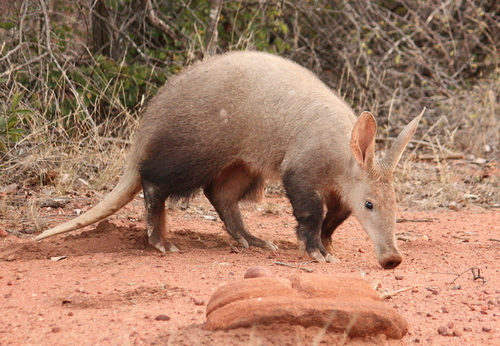
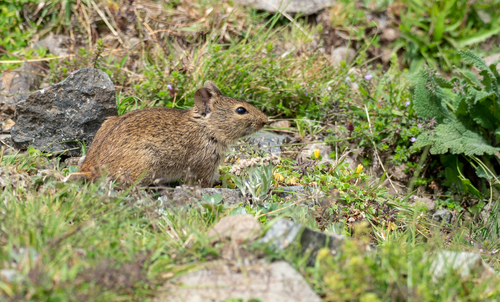
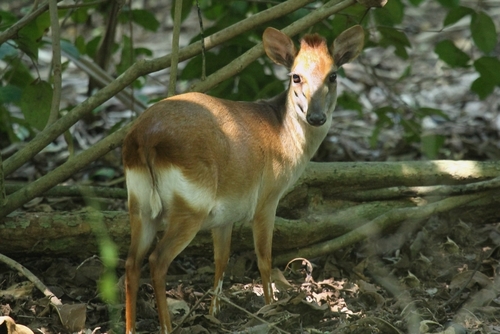
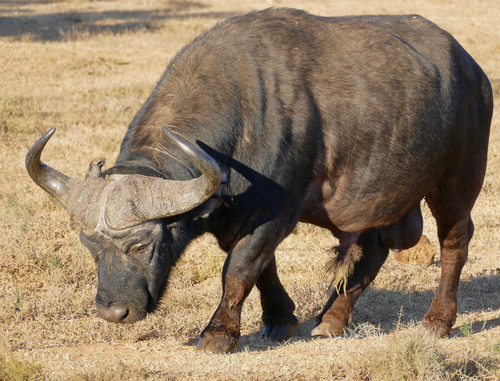
Species that share its range

Sources
Conservation status, range description and population estimate come from the IUCN Red List assessment for Heterocephalus glaber. Countries are derived from that range description, not from a mapped country list. Last refreshed on .
The distribution map is drawn from the IUCN Red List spatial data compiled in 2008. IUCN (International Union for Conservation of Nature)