
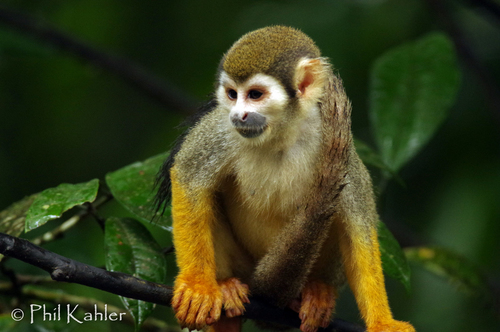
Black-crowned Central American Squirrel Monkey
Saimiri oerstedii
Red List assessment
Endangeredon the IUCN Red List
- EXExtinct
- EWExtinct in the Wild
- CRCritically Endangered
- ENEndangered
- VUVulnerable
- NTNear Threatened
- LCLeast Concern
The IUCN Red List assesses the Black-crowned Central American Squirrel Monkey as Endangered.
- Genus
- Saimiri
- Red List category
- Endangered
- Data updated
- August 9, 2026
We haven't written this profile yet
The Black-crowned Central American Squirrel Monkey is one of the mammals assessed by the IUCN Red List, so it has a page here — with its scientific name, Saimiri oerstedii, its conservation category and, where one is known, a recorded observation on the map. What is missing is the rest: habitat, distribution, diet, behaviour, threats and the conservation work under way.
Each profile is researched and checked one species at a time, and there are thousands to go. You can put this one at the front of the queue.
In the meantime, the full assessment is on the IUCN Red List.
Questions about the Black-crowned Central American Squirrel Monkey
Is the Black-crowned Central American Squirrel Monkey endangered?
Yes. The IUCN Red List assesses the Black-crowned Central American Squirrel Monkey as Endangered, one of the three threatened categories. The species faces a very high risk of extinction in the wild — a step below Critically Endangered, but still on a trajectory that ends badly without intervention.
What is the scientific name of the Black-crowned Central American Squirrel Monkey?
The Black-crowned Central American Squirrel Monkey is Saimiri oerstedii.
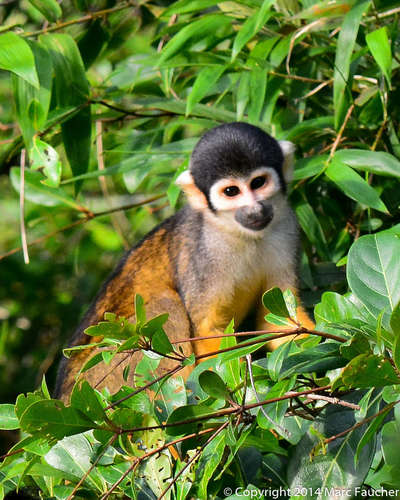
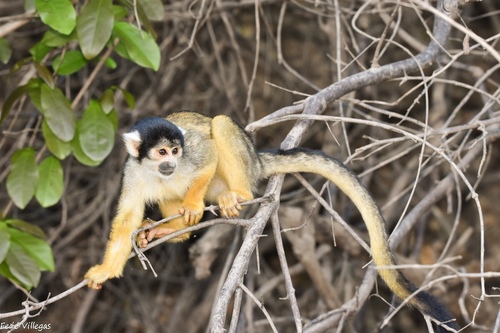
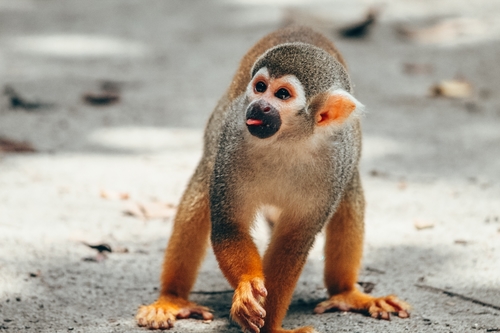
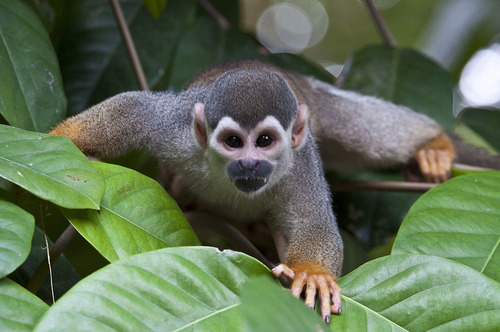
Other species in the genus Saimiri
Sources
Conservation status, range description and population estimate come from the IUCN Red List assessment for Saimiri oerstedii. Countries are derived from that range description, not from a mapped country list. Last refreshed on .
The distribution map is drawn from the IUCN Red List spatial data compiled in 2020. IUCN (International Union for Conservation of Nature)